


FIFA’s long-term vision for the World Cup has taken another intriguing turn after fresh reports revealed a significant development surrounding a possible 64-team tournament for 2030. With Gianni Infantino once again at the center of discussions, uncertainty continues to surround whether soccer’s biggest competition could grow even further after its historic expansion to 48 teams in 2026.
The debate comes as the 2026 World Cup is already the largest in history, featuring 48 national teams across the United States, Canada, and Mexico. While supporters have embraced the opportunity for more nations to compete, the possibility of adding another 16 teams for the tournament’s centenary has divided soccer’s governing bodies.
Supporters of a larger World Cup argue that expanding to 64 teams would allow more nations to experience soccer’s biggest stage. Countries such as Cape Verde, Curacao, Haiti, Jordan, and Uzbekistan have already benefited from the jump to 48 participants at the 2026 tournament, demonstrating how expansion can create new stories and broaden the competition’s global appeal.
At the same time, several well-established soccer nations have still missed out on qualification despite the larger field. Italy, Nigeria, Greece, Cameroon, Costa Rica, and Venezuela have all been highlighted as examples of countries whose absence has fueled arguments that an even bigger tournament could strengthen both sporting interest and commercial value.

Tahith Chong of Curacao celebrates scoring a goal.
Some analysts also believe a 64-team format could actually simplify the tournament structure, as revealed by Diario AS. Instead of relying on complicated rankings involving third-placed teams, a competition featuring 16 groups of four teams, with the top two progressing, would restore a more traditional knockout pathway.
Infantino’s stance on the 64-team proposal comes to light
According to French outlet RMC Sport, the proposal to expand the 2030 World Cup to 64 teams is no longer gathering the same momentum it enjoyed when it was first raised by CONMEBOL. The South American confederation had promoted the idea as a fitting way to celebrate the 100th anniversary of the competition, which began in Uruguay in 1930.
The 2030 edition is already set to be historic. Spain, Portugal, and Morocco will serve as the primary hosts, while Uruguay, Argentina, and Paraguay will stage selected matches to commemorate the tournament’s centennial, making it the first World Cup to span multiple continents.
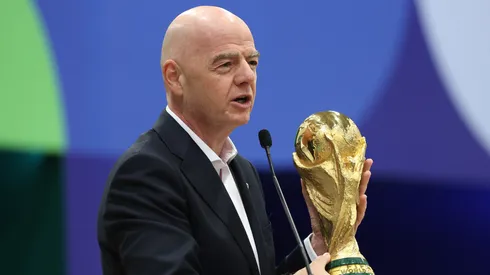
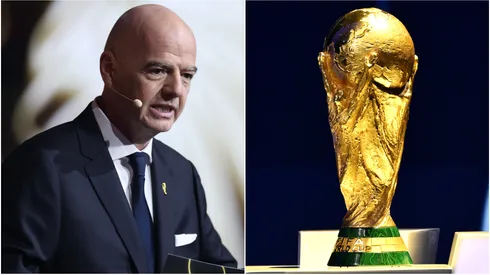
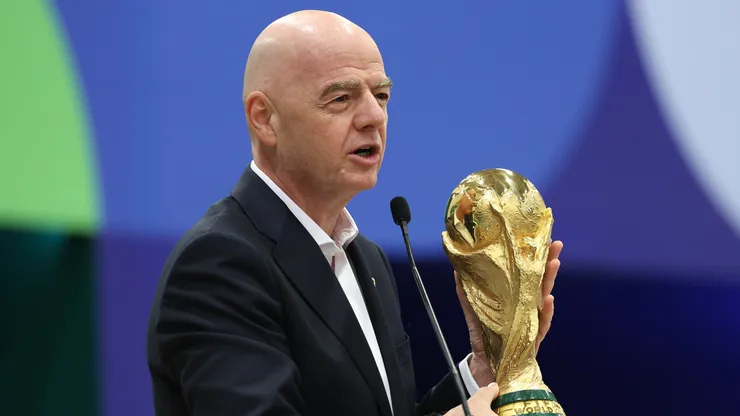
Although the proposal initially generated widespread discussion, reports now suggest that Gianni Infantino is not showing much enthusiasm for the idea internally. RMC Sport claims FIFA‘s president has reservations about enlarging the competition beyond its newly expanded 48-team format, making another increase appear increasingly unlikely.
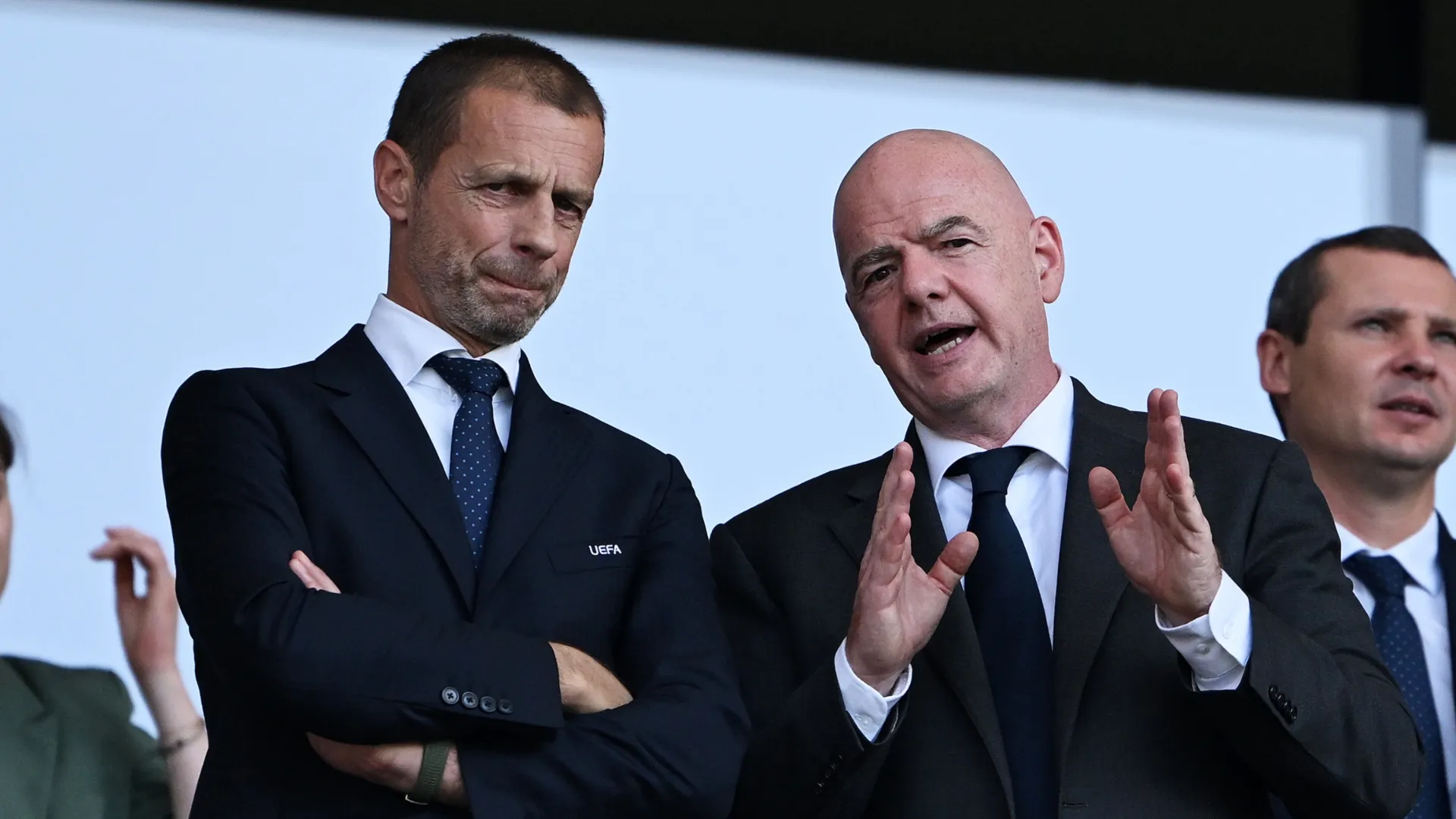
Aleksander Ceferin, President of UEFA, (L) speaks with Gianni Infantino, President of FIFA (R).
Why UEFA and AFC remain unconvinced
The reported lack of enthusiasm from within FIFA comes as several influential confederations continue to express concerns over another expansion. UEFA remains firmly opposed, while the Asian Football Confederation (AFC) is also said to have significant doubts about the proposal.
Those concerns revolve around the already demanding international calendar, logistical challenges, and the complexity of organizing an even larger tournament. With the 2026 competition only recently expanding from 32 to 48 teams, many stakeholders believe it may be too soon to consider another dramatic increase.
Earlier in the discussion, Gianni Infantino publicly appeared open to exploring the proposal, saying: “Every idea is worth considering.” However, more recent reports indicate that behind the scenes, support for the project has cooled considerably.