



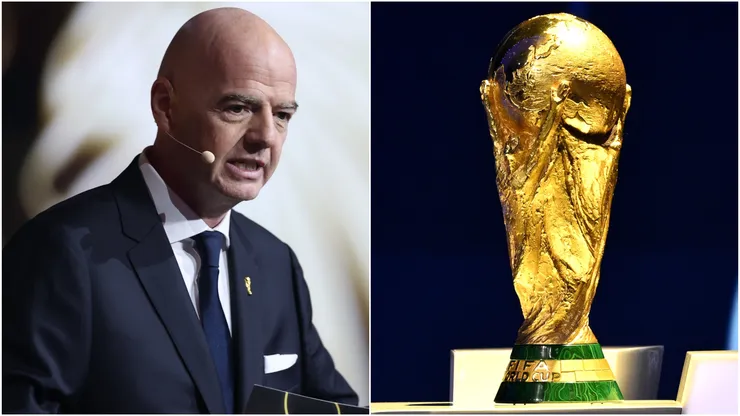
Gianni Infantino has been an outspoken advocate for rule changes in recent years, and a new bundle of regulations has now been approved ahead of the 2026 World Cup. With less than two weeks until the competition begins, FIFA has confirmed updates that include expanded VAR powers and a red card for players who cover their mouths during confrontations.
As reported by BBC Sport, the Chairman of the FIFA Referees Committee Pierluigi Collina announced the changes following a meeting held in coordination with the International Football Association Board. Among the most significant expansions is the authority granted to VAR to check attacking fouls that occur before the ball is in play.
A prime example of where this new power will come into effect is during dead-ball situations such as corners or free kicks, where an attacking player commits a foul against a defender to impede their ability to contest the ball, and a goal is scored as a result. “We think this is very unfair, that the goal is given when the defender is prevented from being able to defend. A clear, illegal block made by an attacker. The only objective was to prevent the defender from being able to defend on his opponent,” Collina stated.
While that VAR expansion is still awaiting formal IFAB approval, the rule penalizing players for covering their mouths during confrontations has already been given the green light. The change was prompted by the high-profile controversy in which Vinicius Junior accused Gianluca Prestianni of racial abuse during a Champions League match, an episode in which FIFA president Infantino also weighed in publicly.
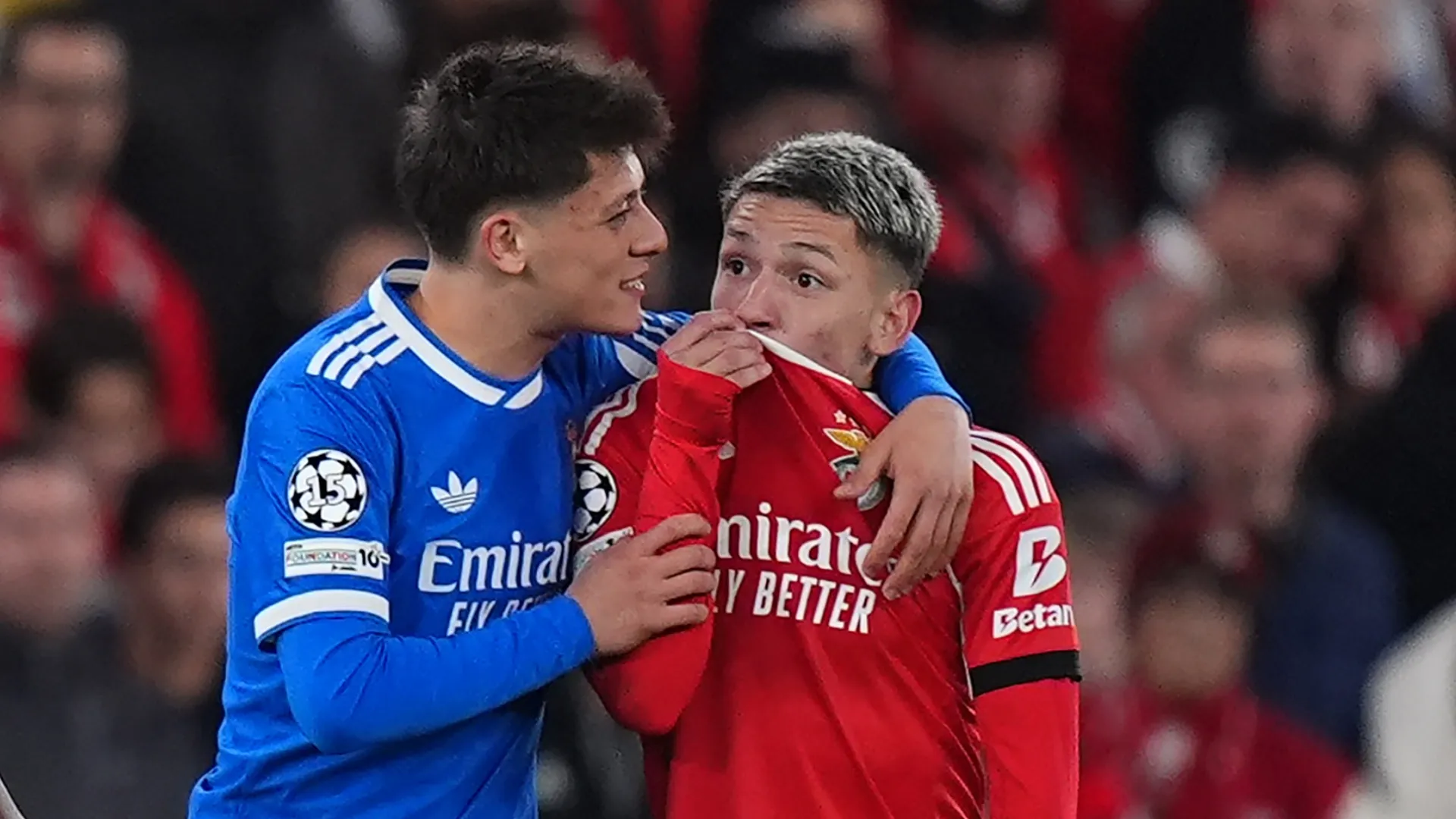
Gianluca Prestianni of Benfica and Arda Guler of Real Madrid.
Less than four months after that incident, the rule is now in place. Players who cover their mouth with a hand, arm or shirt while in a confrontational exchange with an opponent will be shown a red card. “If the conversation is friendly, they can continue to do it without any problem. When the conversation is confrontational, covering the mouth means that you are doing something very wrong, potentially, and the sanction is the red card,” Collina said, drawing a clear distinction between casual and confrontational situations.

see also
Lionel Messi reportedly expected to recover before Argentina’s 2026 World Cup debut against Algeria
New rules to address time-wasting and tactical timeouts
One of the more familiar tactics used to slow the game down or run down the clock is for players to feign injury and force the medical staff onto the field. That loophole has already been formally addressed ahead of the World Cup, with any player who receives on-field treatment from the team physio required to remain off the pitch for at least 60 seconds before returning.
One existing exception to that protocol involves the goalkeeper, who cannot simply leave the field of play. However, while a goalkeeper is being assessed on the ground, it has become common practice for outfield players to drift toward the touchline and receive tactical instructions from the coaching staff.
To close that loophole, Collina made clear that neither team’s players will be permitted to approach the sideline while a goalkeeper is receiving medical attention on the pitch. “The goalkeeper has the right to be injured, but the players do not have the right to leave the field of play to have a sort of timeout with their respective coaches,” the Chairman of the FIFA Referees Committee explained.