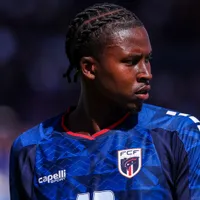




As one of the most fascinating international soccer teams 2026 will showcase, Belgium enters the summer having successfully navigated a massive roster transition.
Currently ranked ninth globally, the Red Devils have moved past their aging core to embrace a faster, more dynamic identity. Following a frustrating group-stage exit at the previous World Cup, the squad has integrated vibrant young attackers alongside established veterans.
Expectations are more grounded now than during the peak years of their previous generation. While an outright title run might be a stretch, this rebuilt roster possesses the firepower to challenge top contenders in the knockout rounds.
This World Cup 2026 team preview breaks down their tactical approach, the coaching shift that sparked their revival, and the roster depth heading into North America.
Team profile
| Coach | Rudi Garcia |
| Captain | Kevin De Bruyne |
| Nickname | The Red Devils |
| FIFA ranking | 9th |
| Confederation | UEFA |
| Group | G |
| Best World Cup result | Third Place (2018) |
| World Cup appearances | 15 |
| Last World Cup appearance | 2022 |
How Belgium play
Our Belgium tactical analysis reveals that under Rudi Garcia, the team utilizes a fluid 4-2-3-1 system designed for high-tempo, attacking soccer.
The preferred Belgium formation prioritizes a high-pressing game while creating space for central playmakers to dictate the tempo. During qualification, the squad averaged 61.6% possession and an 88.5% passing accuracy, reflecting their ability to control the midfield.
Their primary tactical strength lies in direct attacking transitions. With rapid wingers providing width, the team excels at breaking down low defensive blocks. They generated the fourth-most big chances in European qualifying, leaning heavily on rapid ball movement in the final third.
However, their defensive structure remains a notable vulnerability. The backline often struggles against capable attacking units, conceding five times across two matches against Wales during the qualification cycle.
This aggressive tactical approach ensures Belgium will be incredibly dangerous going forward, but their defensive gaps could dictate their ceiling in the 2026 tournament.
Rudi Garcia: The coach behind Belgium
The Belgium coach took charge of the national team in January 2025, tasked with restoring stability after a turbulent period.
Garcia quickly unified a fractured locker room and guided the squad through an unbeaten qualification campaign. He built his reputation in high-pressure European club environments, famously leading Lille to a domestic double in 2011 and guiding Marseille to a continental final.
Despite managing over 900 matches at the club level, the 2026 World Cup will be his first major international competition on the touchline.
Known as a pragmatic leader, Garcia favors high-tempo soccer while successfully blending emerging talent with established veterans. His ability to manage locker-room dynamics and implement a cohesive attacking system will be crucial to their success this summer.
Key player: Kevin De Bruyne
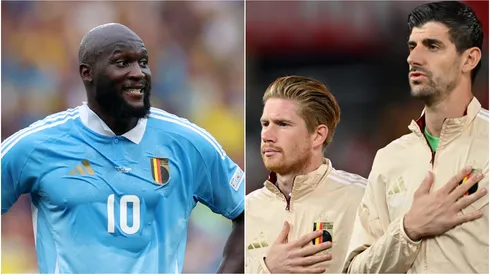
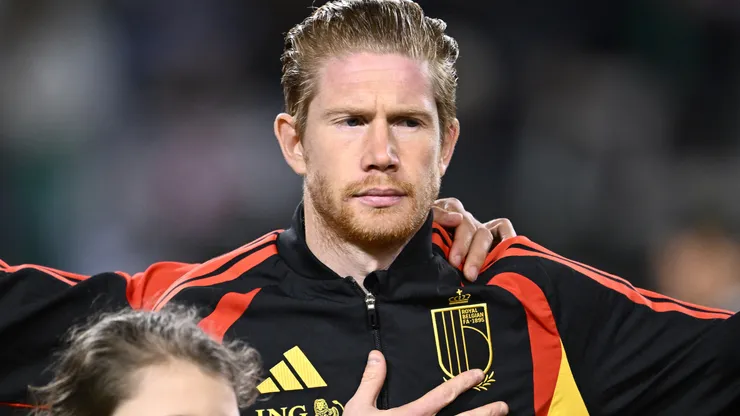
When discussing Belgium key players, Kevin De Bruyne remains the undisputed heartbeat of the national side.
Operating primarily as an advanced playmaker, the Napoli midfielder bridges the gap between the veteran core and the new generation of attackers. With over 117 international appearances, his elite vision and passing range are essential to the team’s tactical setup.
He finished the qualification cycle as the team’s top scorer with six goals, proving he remains highly effective in the final third. His set-piece delivery also provides a reliable scoring avenue in tight international fixtures.
A recent thigh injury sidelined him for months in late 2025, making his physical recovery a major storyline. If De Bruyne enters the tournament fully fit, his world-class distribution will make every forward on the roster significantly more dangerous.
Belgium’s road to the 2026 World Cup
The Red Devils cruised through UEFA Group J, finishing at the top of the table with an unbeaten record of five wins and three draws.
Statistically, they were one of the most dangerous attacking units in Europe. The team netted 29 goals across eight matches, averaging 3.63 goals per game. De Bruyne led the charge with six goals, while rapid winger Jérémy Doku added five.
Their campaign concluded with a dominant 7-0 victory over Liechtenstein on November 18, 2025. This dominant qualification run proved that their rebuilt attacking line is fully prepared to compete on the global stage.
Belgium’s 2026 World Cup group stage outlook
As one of the standout FIFA World Cup 2026 teams, Belgium enters Group G as the heavy favorite to secure a spot in the knockout rounds.
They are projected to face Egypt, Iran, and New Zealand, presenting a highly favorable pathway through the opening stage of the competition. The most challenging matchup will likely come against Egypt, a squad capable of defending deep and striking on the counter.
Conversely, New Zealand represents the most favorable fixture, where the Red Devils’ attacking firepower should easily overwhelm the opposition. Qualification will ultimately depend on their ability to break down compact defensive blocks without leaving themselves exposed in transition.
Readers looking to follow every match involving Belgium can also check our complete Belgium TV schedule for the latest broadcast and streaming information.
Belgium squad for 2026 World Cup
The complete Belgium 2026 World Cup squad features a compelling mix of established stars and emerging domestic talent.
| Player (Position) | Club |
|---|---|
| Thibaut Courtois (GK) | Real Madrid |
| Senne Lammens (GK) | Manchester United |
| Mike Penders (GK) | Strasbourg |
| Zeno Debast (DF) | Sporting CP |
| Arthur Theate (DF) | Frankfurt |
| Brandon Mechele (DF) | Club Brugge |
| Maxim De Cuyper (DF) | Brighton |
| Thomas Meunier (DF) | Lille |
| Timothy Castagne (DF) | Fulham |
| Koni De Winter (DF) | AC Milan |
| Joaquin Seys (DF) | Club Brugge |
| Nathan Ngoy (DF) | Lille |
| Hans Vanaken (MF) | Club Brugge |
| Axel Witsel (MF) | Girona |
| Kevin De Bruyne (MF) | Napoli |
| Youri Tielemans (MF) | Aston Villa |
| Charles De Ketelaere (FW) | Atalanta |
| Nicolas Raskin (MF) | Rangers |
| Amadou Onana (MF) | Aston Villa |
| Alexis Saelemaekers (FW) | AC Milan |
| Dodi Lukébakio (FW) | Benfica |
| Jérémy Doku (FW) | Manchester City |
| Diego Moreira (FW) | Strasbourg |
| Matias Fernandez-Pardo (FW) | Lille |
| Leandro Trossard (FW) | Arsenal |
| Romelu Lukaku (FW) | Napoli |
Final word on Belgium
Belgium heads to North America as a highly dangerous dark horse rather than an overwhelming tournament favorite.
Their primary strength lies in an explosive, youthful attacking line guided by elite veteran playmakers. However, their ultimate success will hinge on a fragile defensive unit that has shown vulnerability against capable opposition.
If the backline can hold up under pressure, the Red Devils possess enough offensive firepower to make a deep run into the latter stages of the competition.