




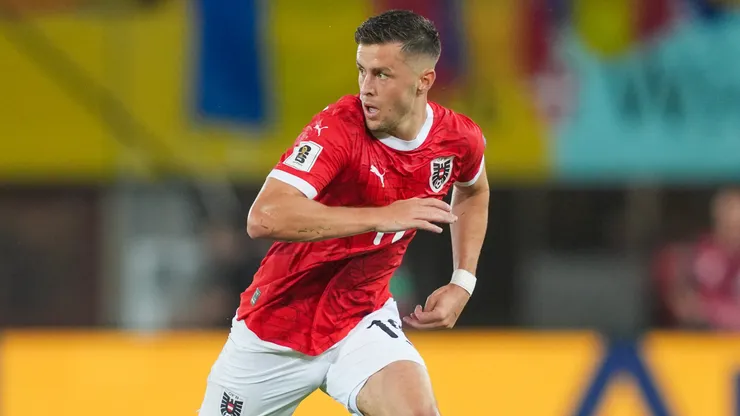
Austria returns to the global stage for the first time since 1998, carrying significant momentum into the tournament. As fans review the FIFA World Cup 2026 teams, the Austrian national squad stands out following a complete transformation under head coach Ralf Rangnick.
His high-intensity system turned the team into a formidable opponent, raising expectations for their North American campaign. Drawn into Group J alongside reigning champion Argentina, Algeria, and Jordan, Austria faces a challenging but manageable path to the knockout rounds.
This World Cup 2026 team preview breaks down the Austria tactical analysis, Austria key players, and group-stage outlook as they prepare to test their aggressive pressing style against the best international soccer teams 2026 has to offer.
Team profile
| Coach | Ralf Rangnick |
| Captain | David Alaba |
| Nickname | Das Team |
| FIFA ranking | 23rd |
| Confederation | UEFA |
| Group | J |
| Best World Cup result | Third place (1954) |
| World Cup appearances | 7 |
| Last World Cup appearance | 1998 |
How Austria play
The Austria formation and tactical identity revolve entirely around aggressive, high-intensity pressing. Coach Rangnick has successfully implemented his trademark system, requiring players to immediately hunt the ball upon losing possession rather than retreating into a defensive block.
This relentless approach allows Austria to dominate the ball and dictate the tempo. During their qualification campaign, the team averaged over 64% possession and registered 18 tackles per match, highlighting their disruptive presence off the ball.
Winning the ball high up the field also serves as Austria’s primary creative outlet. By forcing turnovers in dangerous areas, players like Christoph Baumgartner and Marcel Sabitzer can quickly transition into the final third to generate high-quality scoring chances.
However, this demanding style of play presents specific challenges. Maintaining such a frantic pace requires elite physical conditioning, and the intense North American summer heat could test the roster’s stamina.
If Austria can manage their energy levels effectively, their cohesive pressing system makes them a difficult matchup for any opponent in the tournament.
Ralf Rangnick: The coach behind Austria
Ralf Rangnick took charge of the Austrian national team in May 2022 and quickly revitalized the squad. The veteran German Austria coach arrived following a brief stint as interim boss at Manchester United and a highly successful tenure building the soccer operations at RB Leipzig.
Widely recognized as a pioneer of the modern high-pressing game, Rangnick has successfully translated his club-level philosophy to the international stage. His players have fully embraced this demanding system, resulting in an entertaining and effective brand of soccer.
While this is his first venture into international management, Rangnick has earned widespread praise from supporters for elevating the program’s standards.
His tactical conviction and clear leadership style will be central to Austria’s ability to navigate the challenges of a major global tournament.
Key player: Christoph Baumgartner
Baumgartner is the vital creative link in Austria’s aggressive tactical setup. The attacking midfielder enters the tournament following a stellar club campaign with RB Leipzig, where he consistently delivered crucial goals and assists.
Baumgartner excels at finding pockets of space between the opposition’s midfield and defensive lines. His intelligent movement and precise link-up play frequently create wide isolation opportunities for teammates like Sabitzer and Patrick Wimmer.
Equally important is his work rate without the ball. Having developed within systems modeled on Rangnick’s philosophy throughout his club career, Baumgartner executes the team’s pressing triggers flawlessly.
If Baumgartner suffers an injury, Austria would lose their most dynamic central creator, forcing the team to rely more heavily on wide areas and set pieces to generate offense.
Austria’s road to the 2026 World Cup
Austria secured direct qualification by finishing top of their European qualifying group, edging out Bosnia by two points. The team delivered a dominant campaign, suffering just one defeat across eight matches while accumulating 19 points.
They started brilliantly with five consecutive victories before facing some late pressure. Qualification was ultimately secured in dramatic fashion when Michael Gregoritsch scored a crucial 77th-minute equalizer to earn a 1-1 draw against Bosnia in the final fixture.
The squad showcased remarkable defensive stability, conceding only four goals throughout the entire cycle. This resilient qualification run proved that Austria has the consistency and defensive structure necessary to compete on the global stage.
Austria’s 2026 World Cup group stage outlook
Austria faces a balanced test in Group J, where they will compete alongside Argentina, Algeria, and Jordan. Securing a top-two finish to advance to the knockout rounds is the clear objective for Rangnick’s squad.
The opening match against Jordan presents the most favorable matchup, offering a vital opportunity to secure three points early. However, the true test arrives against reigning champion Argentina, a game that will fully challenge Austria’s defensive organization.
The decisive fixture will likely be their clash with Algeria. While the North African side possesses quality, Austria’s high-intensity system should give them the edge in a tightly contested battle for qualification.
Readers looking to follow every match involving the national team can also check our complete Austria TV schedule for the latest broadcast and streaming information.
Austria 2026 World Cup squad
| Player (Position) | Club |
|---|---|
| Alexander Schlager (GK) | Red Bull Salzburg |
| Patrick Pentz (GK) | Brøndby |
| Florian Wiegele (GK) | Viktoria Plzeň |
| David Alaba (DF) | Real Madrid |
| Kevin Danso (DF) | Tottenham Hotspur |
| Stefan Posch (DF) | Mainz 05 |
| Philipp Lienhart (DF) | SC Freiburg |
| Phillipp Mwene (DF) | Mainz 05 |
| Alexander Prass (DF) | TSG Hoffenheim |
| Michael Svoboda (DF) | Venezia |
| Marco Friedl (DF) | Werder Bremen |
| David Affengruber (DF) | Elche |
| Marcel Sabitzer (MF) | Borussia Dortmund |
| Carney Chukwuemeka (MF) | Borussia Dortmund |
| Konrad Laimer (MF) | Bayern Munich |
| Christoph Baumgartner (MF) | RB Leipzig |
| Nicolas Seiwald (MF) | RB Leipzig |
| Xaver Schlager (MF) | RB Leipzig |
| Romano Schmid (MF) | Werder Bremen |
| Florian Grillitsch (MF) | Braga |
| Patrick Wimmer (MF) | Wolfsburg |
| Paul Wanner (MF) | PSV Eindhoven |
| Alessandro Schöpf (MF) | Wolfsberger AC |
| Marko Arnautović (FW) | Red Star Belgrade |
| Michael Gregoritsch (FW) | Augsburg |
| Saša Kalajdžić (FW) | LASK |
Final word on Austria
Austria enters the tournament as a highly organized and dangerous team capable of challenging elite opponents. Their relentless pressing system provides a distinct tactical advantage that few international squads can easily counter.
The primary concern remains whether the players can sustain such extreme physical demands in the North American summer heat. If they manage their stamina effectively, Austria possesses the quality and coaching structure required to comfortably advance from the group stage and potentially disrupt the knockout rounds.