
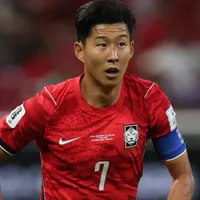

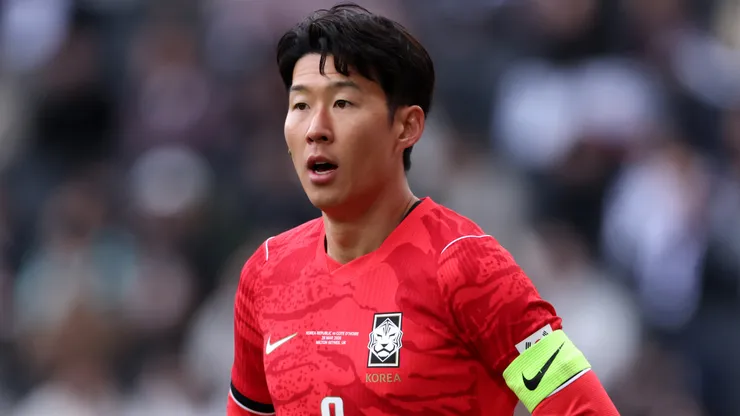
South Korea enters the2026 tournament having secured an impressive 11th consecutive appearance on the global stage. Ranked 25th internationally, the Taegeuk Warriors bring a roster that blends experienced European-based talent with an evolving tactical system.
Among the FIFA World Cup 2026 teams, South Korea stands out for its disciplined approach and top-tier individual quality. Head coach Hong Myung-bo recently shifted the team to a back-three system, sparking discussions about their defensive stability and attacking fluidity.
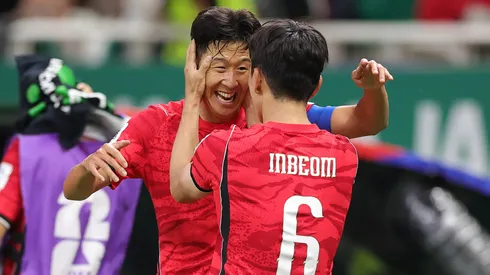
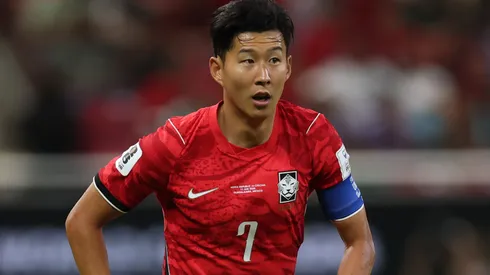
With star forward Son Heung-min preparing for what could be his final international showpiece, expectations remain high. He is joined by standout players like Bayern Munich defender Kim Min-jae and Paris Saint-Germain midfielder Lee Kang-in.
Drawn into Group A alongside co-host Mexico, South Africa, and Czechia, the team aims to advance past the initial phase. This World Cup 2026 team preview explores their tactical approach, personnel, and path to the knockout rounds.
Team profile
| Coach | Hong Myung-bo |
| Captain | Son Heung-min |
| Nickname | Taegeuk Warriors, Tigers of Asia |
| FIFA ranking | 25th |
| Confederation | AFC |
| Group | Group A |
| Best World Cup result | Fourth place (2002) |
| World Cup appearances | 12 |
| Last World Cup appearance | 2022 |
How South Korea play
A thorough South Korea tactical analysis reveals a team built on relentless work rate and quick transitions. Historically, the team does not dominate possession against top-tier opponents. They averaged just 48% possession during the 2022 tournament.
Instead, they rely on a disciplined mid-block that frustrates technical sides and creates counter-attacking opportunities. Under Hong Myung-bo, the South Korea formation has recently shifted toward a three-at-the-back system. This structure aims to maximize the offensive runs of their wing-backs while maintaining defensive solidity.
Kim Min-jae anchors the backline, providing the recovery speed necessary to execute a higher pressing game when required. In midfield, Lee Kang-in offers elite vision and passing range, giving the team a creative outlet beyond relying solely on fast breaks.
However, vulnerabilities exist within this setup. The team faces a perceived lack of depth in the full-back positions. Their defensive resilience will also face stern tests against the elite international soccer teams 2026 has to offer.
If they can balance their defensive shape with efficient counter-attacks, this tactical approach could make them a difficult opponent in the knockout rounds.
Hong Myung-bo: The coach behind South Korea
Hong Myung-bo returned for his second stint as the South Korea coach in July 2024. Widely regarded as one of Asia’s greatest players, he famously captained the national team to a historic fourth-place finish in 2002.
His coaching resume includes leading the under-23 squad to an Olympic bronze medal in 2012. He also found domestic success with Ulsan HD, securing back-to-back league titles in 2022 and 2023.
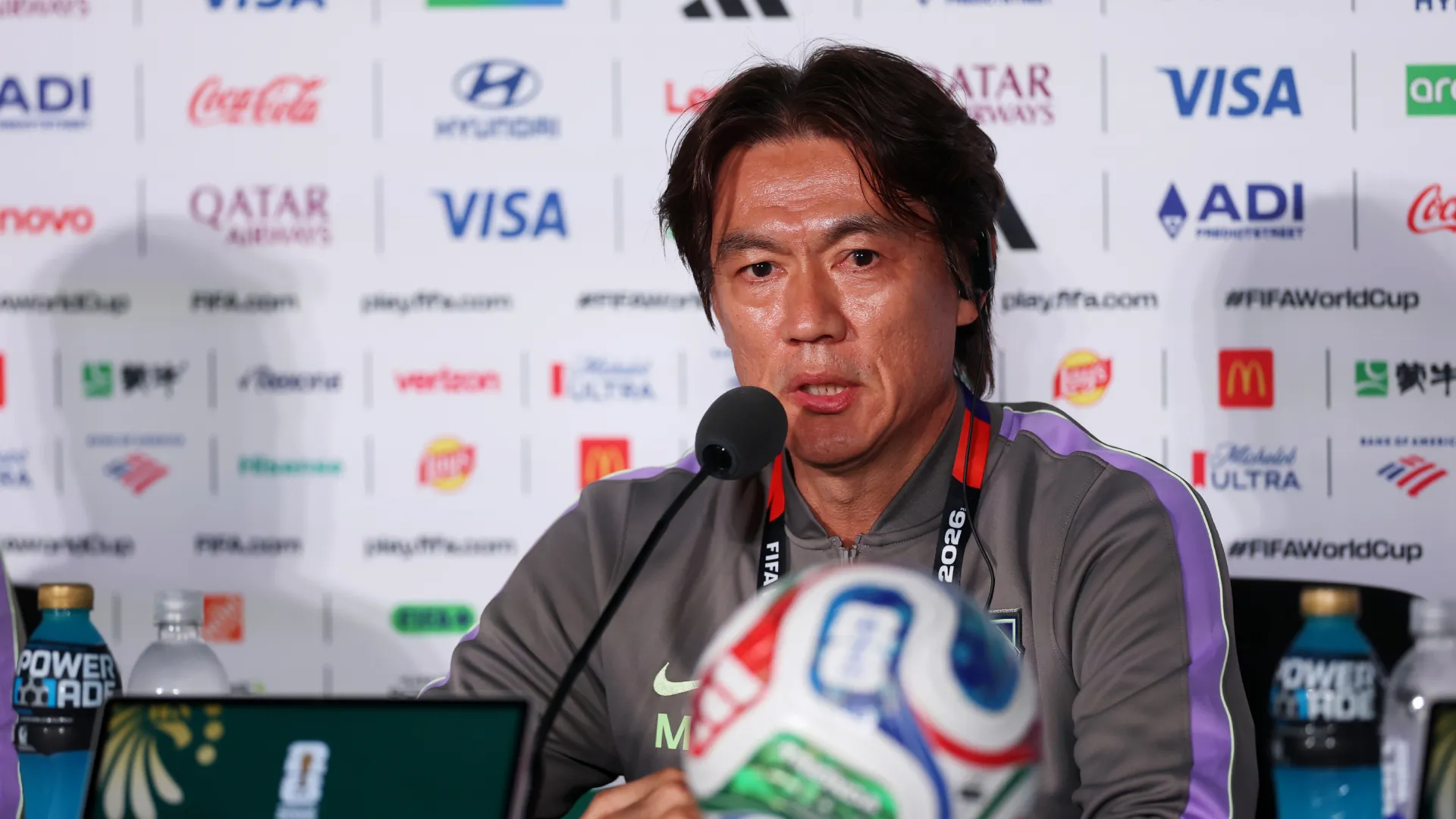
Myung-Bo Hong, Head Coach of South Korea (Lars Baron/Getty Images).
Despite his status as a national icon, his recent appointment faced scrutiny from supporters demanding more transparency. Critics sometimes label him as tactically rigid, especially when his preferred systems fail to produce immediate results.
His leadership and tournament experience will be tested as he attempts to guide this talented roster deep into the competition.
Key player: Son Heung-min
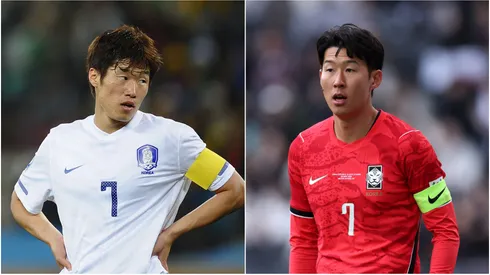
Son Heung-min remains the undisputed focal point among South Korea key players. The 33-year-old forward, who moved to Los Angeles FC in 2025, brings immense experience to the national side.
Having debuted in 2010, Son has accumulated 142 caps and 54 goals. He has evolved from a rapid winger into a versatile attacker capable of dictating the offensive tempo. His two-footed finishing makes him a constant threat inside the penalty area.
As the longtime captain, he provides essential leadership for a squad that carries heavy expectations. The team’s tactical approach relies heavily on his ability to convert transition opportunities into goals.
The success of this campaign depends significantly on his fitness and form. If he is unavailable, the team loses its primary cutting edge in the final third.
South Korea’s road to the 2026 World Cup
The Taegeuk Warriors secured their spot in North America with an efficient and dominant qualification campaign. They finished atop Group B in the decisive third round of the Asian qualifiers.
The team amassed 22 points with six wins and four draws, remaining unbeaten in the final stage. Their offensive output was excellent, led by Son Heung-min, who scored 10 goals across the qualifying cycles.
Defensively, they were equally impressive, conceding just seven goals in the third round. A crucial 2-0 away victory against Iraq effectively sealed their direct qualification, demonstrating their composure in high-pressure environments.
This strong qualifying performance suggests the team is well-prepared for the challenges of the upcoming group stage.
South Korea’s 2026 World Cup group stage outlook
South Korea faces a competitive path in Group A alongside co-host Mexico, South Africa, and Czechia. This draw presents a balanced challenge, offering a realistic opportunity to reach the knockout rounds.
The most demanding matchup will likely be against Mexico, a team that brings significant quality and home-continent advantage. Conversely, their opening fixture against Czechia on June 12, 2026, serves as a crucial opportunity to secure early points.
Goal difference could become the determining factor in such a tightly contested group. The team must capitalize on their scoring chances against lower-seeded opponents while maintaining defensive discipline against Mexico.
Readers looking to follow every match involving the team can also check our complete South Korea TV schedule for the latest broadcast and streaming information.
Advancing past the group stage is the clear expectation for a squad boasting this level of top-tier talent.
South Korea squad for 2026 World Cup
| Players (Position) | Club |
| Kim Seung-gyu (GK) | FC Tokyo |
| Song Bum-keun (GK) | Jeonbuk Hyundai Motors |
| Jo Hyeon-woo (GK) | Ulsan HD |
| Lee Han-beom (DF) | Midtjylland |
| Jens Castrop (DF) | Borussia Mönchengladbach |
| Lee Ki-hyuk (DF) | Gangwon FC |
| Kim Min-jae (DF) | Bayern Munich |
| Lee Tae-seok (DF) | Austria Wien |
| Cho Yu-min (DF) | Sharjah |
| Kim Moon-hwan (DF) | Daejeon Hana Citizen |
| Seol Young-woo (DF) | Red Star Belgrade |
| Kim Tae-hyeon (DF) | Kashima Antlers |
| Hwang In-beom (MF) | Feyenoord |
| Lee Dong-gyeong (MF) | Ulsan HD |
| Paik Seung-ho (MF) | Birmingham City |
| Lee Jae-sung (MF) | Mainz 05 |
| Hwang Hee-chan (MF) | Wolverhampton Wanderers |
| Park Jin-seob (MF) | Zhejiang FC |
| Eom Ji-sung (MF) | Swansea City |
| Lee Kang-in (MF) | Paris Saint-Germain |
| Yang Hyun-jun (MF) | Celtic |
| Kim Jin-gyu (MF) | Jeonbuk Hyundai Motors |
| Bae Jun-ho (MF) | Stoke City |
| Son Heung-min (FW) | Los Angeles FC |
| Cho Gue-sung (FW) | Midtjylland |
| Oh Hyeon-gyu (FW) | Beşiktaş |
Final word on South Korea
The South Korea 2026 World Cup squad arrives in North America with one of their most talented rosters in recent history. Their elite spine, featuring top-level European experience, gives them the ability to compete with formidable opponents.
However, a lack of depth beyond the starting eleven remains a pressing concern. If injuries occur, the drop-off in quality could hinder their progression.
A successful campaign for this group means navigating the initial phase and reaching the knockout rounds. With their current talent level, advancing past the group stage is a highly realistic expectation.