



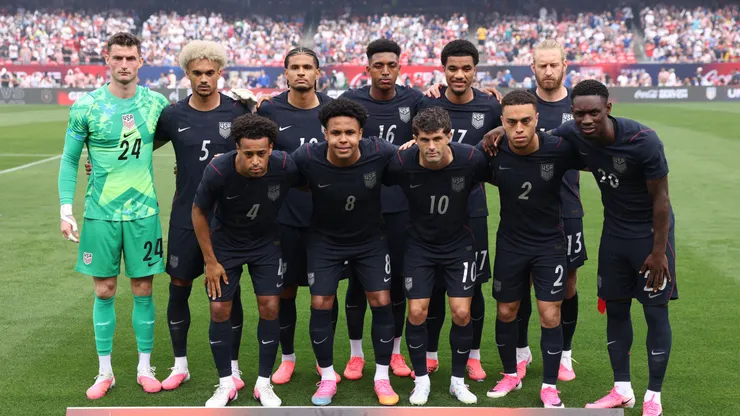
The United States enters the 2026 tournament carrying the massive expectations of a host nation eager for a deep run. Currently ranked 16th globally following a challenging recent international window, the squad features a core group of players entering their prime years.
Competing on home soil provides a distinct advantage, but it also amplifies the pressure on a roster heavily populated by talent from Europe’s top leagues.
This World Cup 2026 team preview explores whether the USMNT can finally bridge the gap to the global elite. We will break down the tactical approach, highlight the United States key players, and analyze their path through the group stage.
Team profile
| Coach | Mauricio Pochettino |
| Captain | Tim Ream |
| Nickname | USMNT, The Stars and Stripes, The Yanks |
| FIFA ranking | 16th |
| Confederation | CONCACAF |
| Group | Group D |
| Best tournament result | Semi-finals (3rd Place, 1930) |
| Tournament appearances | 11 |
| Last appearance | 2022 |
How the United States play
A thorough United States tactical analysis reveals a high-intensity, attack-minded approach under their new leadership. The team typically operates in a fluid 3-4-2-1 shape when in possession, relying heavily on advancing full-backs to provide width and support the lone striker.
Out of possession, the shape shifts into a structured 4-2-3-1. Tyler Adams drops into a deep midfield role to shield the back line, win the ball, and quickly launch counter-attacks.
The United States formation is built on man-oriented pressing and rapid transitions, aiming to force turnovers high up the pitch. This high-octane style proved entertaining during recent international windows but carries inherent risks.
Advanced opponents with strong technical security can exploit the spaces left by overlapping full-backs. Ultimately, the effectiveness of this aggressive pressing system against elite FIFA World Cup 2026 teams will heavily influence the hosts’ tournament lifespan.
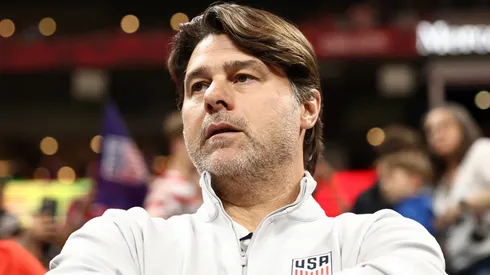
Mauricio Pochettino: The coach behind the United States
Mauricio Pochettino was appointed as the United States coach in September 2024, bringing a wealth of elite European experience to the national team.
Before stepping into international management, the Argentine built a strong reputation during successful stints with Tottenham Hotspur and Paris Saint-Germain, where he secured a Ligue 1 title. He most recently spent a season managing Chelsea in the Premier League.
Known for demanding high physical output and tactical discipline, he has quickly worked to instill a ruthless mentality within the squad. His leadership and experience managing top-tier talent are viewed as crucial assets for a team facing immense home-soil pressure.
Key player: Christian Pulisic
Christian Pulisic remains the undeniable focal point of the United States 2026 World Cup squad. Now thriving with AC Milan in Serie A, the versatile forward has rediscovered his top form, consistently delivering double-digit goal tallies over recent domestic campaigns.
For the national team, his production is elite. Pulisic boasts 32 goals and 21 assists in 84 appearances, operating primarily as an inverted winger. He excels at dropping into pockets of space, receiving the ball from the midfield pivot, and driving past retreating defenders.
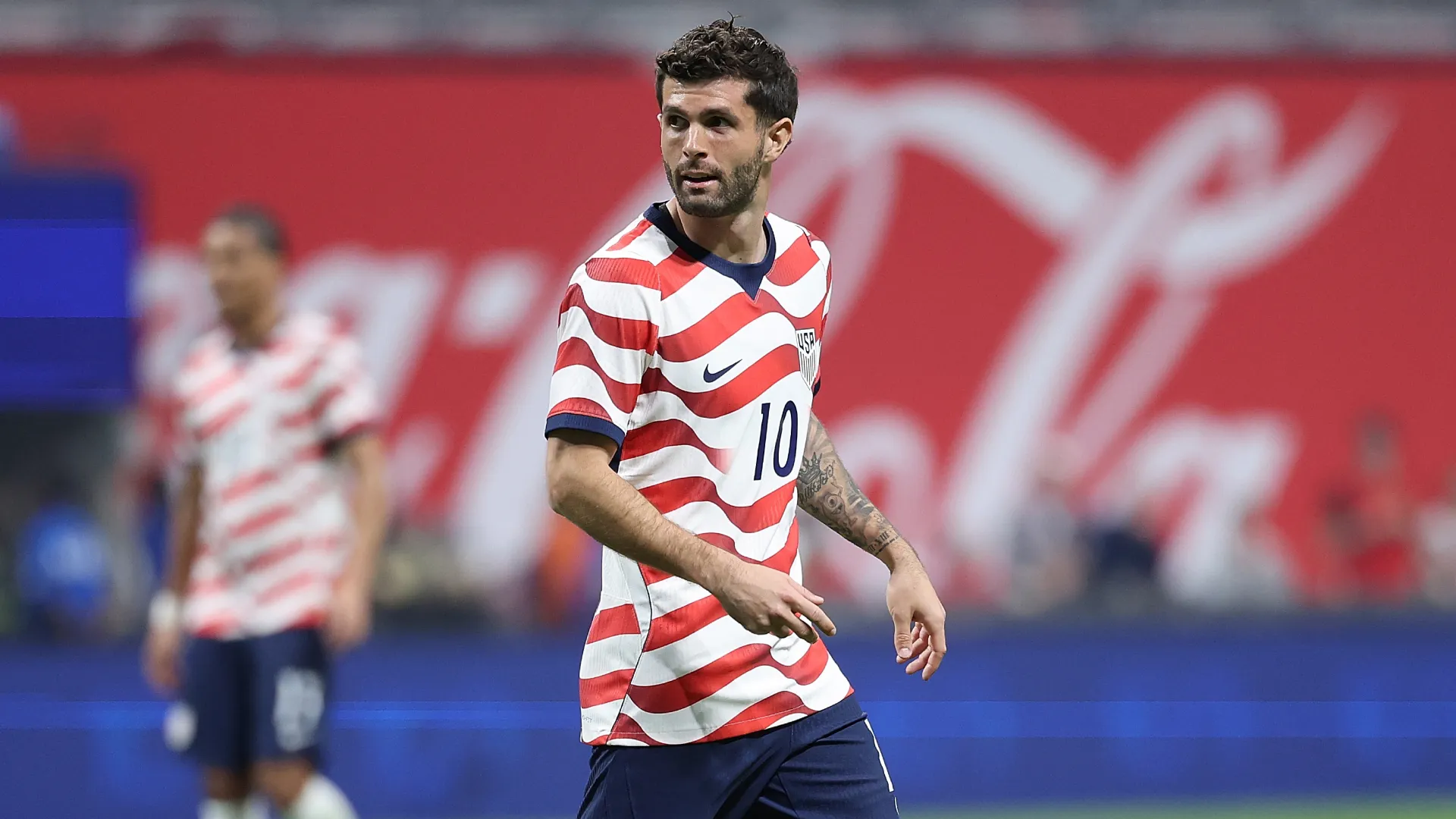
Christian Pulisic of the USMNT (Getty Images).
Beyond open-play creativity, he commands all set-piece and penalty duties. The team relies heavily on his ability to spark transitional attacks and break down compact defenses.
Given the lack of a direct replacement with similar game-changing ability, an injury to Pulisic would severely limit the team’s attacking ceiling.
The United States’s road to the 2026 tournament
As one of the three host nations for the upcoming global tournament alongside Canada and Mexico, the United States earned an automatic berth.
Consequently, the team entirely bypassed the traditional CONCACAF qualification cycle. While this guaranteed their spot on the biggest stage, it also meant the squad missed out on the competitive tension of high-stakes qualifiers.
Instead, their preparation has relied exclusively on international friendlies and regional tournaments. This unique path to the 2026 finals means their true readiness for elite competitive fixtures remains slightly untested, placing extra importance on their group-stage execution.
The United States’s 2026 tournament group stage outlook
The hosts face a highly competitive but manageable path through Group D, where they are drawn alongside Türkiye, Paraguay, and Australia.
Securing a favorable knockout seed hinges entirely on navigating this balanced quartet. Türkiye presents the most challenging matchup among the international soccer teams 2026 in their group, bringing significant European pedigree and technical quality that will test the American defensive shape. Conversely, the fixture against Australia might offer the most favorable stylistic clash for the hosts’ transition-heavy game plan.
Expectations dictate that the team must advance, with early projections positioning them as narrow favorites to top the group. Readers looking to follow every match involving the United States can also check our complete USMNT TV schedule for the latest broadcast and streaming information.
Failure to secure a top-two finish in this specific group would fall well short of the nation’s baseline expectations.
United States squad for the 2026 tournament
| Player (Position) | Club |
|---|---|
| Matt Turner (GGK) | New England Revolution |
| Matt Freese (GK) | New York City FC |
| Chris Brady (GK) | Chicago Fire FC |
| Tim Ream (DF) | Charlotte FC |
| Antonee Robinson (DF) | Fulham |
| Chris Richards (DF) | Crystal Palace |
| Joe Scally (DF) | Borussia Mönchengladbach |
| Alex Freeman (DF) | Villarreal |
| Miles Robinson (DF) | FC Cincinnati |
| Sergino Dest (DF) | PSV Eindhoven |
| Auston Trusty (DF) | Celtic |
| Maximilian Arfsten (DF) | Columbus Crew |
| Mark McKenzie (DF) | Toulouse |
| Sebastian Berhalter (MF) | Vancouver Whitecaps |
| Tyler Adams (MF) | Bournemouth |
| Malik Tillman (MF) | Leverkusen |
| Giovanni Reyna (MF) | Borussia Mönchengladbach |
| Weston McKennie (MF) | Juventus |
| Cristian Roldan (MF) | Seattle Sounders |
| Folarin Balogun (FW) | Monaco |
| Brenden Aaronson (FW) | Leeds United |
| Christian Pulisic (FW) | AC Milan |
| Ricardo Pepi (FW) | PSV Eindhoven |
| Alejandro Zendejas (FW) | América |
| Haji Wright (FW) | Coventry City |
Final word on the United States
The United States enters next summer’s showpiece with undeniable offensive potential and the massive backing of a home crowd. Their high-energy pressing and quick transitions make them a formidable opponent for most group-stage challengers.
However, a glaring lack of elite squad depth remains a significant hurdle. While advancing to the knockout rounds is the baseline expectation, overcoming a battle-tested European or South American heavyweight in the later stages will require a near-perfect tactical execution.