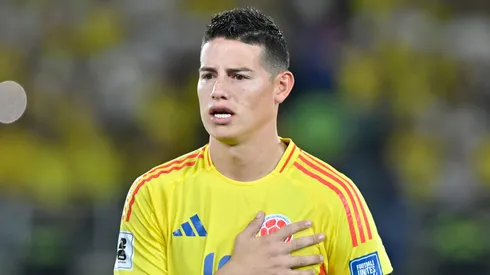



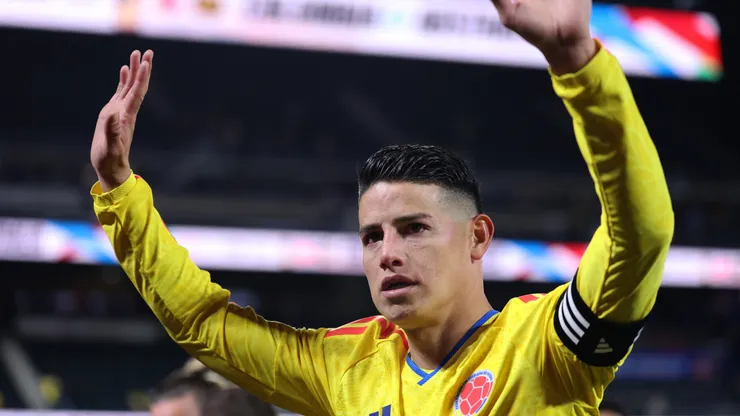
After missing the 2022 tournament, Colombia are back on the global stage with renewed focus and a dangerous roster. Currently ranked 13th by FIFA, Los Cafeteros have transformed from a struggling side into one of the most formidable international soccer teams 2026 has to offer.
A deep squad blends the seasoned leadership of 34-year-old James Rodríguez with the explosive prime of Bayern Munich winger Luis Díaz. Reaching the quarterfinals is the primary objective for this 2026 World Cup. Fans can expect a rhythmic, physical style of play capable of challenging elite opponents.
This preview provides a complete Colombia tactical analysis, breaks down the squad under Néstor Lorenzo, and evaluates the team’s group-stage outlook as they prepare for the tournament.
Team profile
| Coach | Néstor Lorenzo |
| Captain | James Rodríguez |
| Nickname | Los Cafeteros, La Tricolor, La Sele |
| FIFA ranking | 13th |
| Confederation | CONMEBOL |
| Group | Group K |
| Best World Cup result | Quarterfinals (2014) |
| World Cup appearances | 7 |
| Last World Cup appearance | 2018 |
How Colombia play
Under Lorenzo, the Colombia formation typically shifts between a flexible 4-2-3-1 and a 4-3-3 shape. This tactical setup prioritizes high-intensity pressing and rapid vertical transitions.
In possession, the team relies heavily on the creative vision of James Rodríguez, who dictates the tempo from central areas while exploiting the electric pace of wide forwards like Luis Díaz and Luis Javier Suárez.
Defensively, Colombia deploy a physical and aggressive structure designed to disrupt opponents high up the pitch. When regaining the ball, they are exceptionally dangerous on the counterattack, using quick combination play to carve open unsettled defenses.
The midfield pivot, often anchored by Jefferson Lerma and Richard Ríos, provides vital cover to allow the fullbacks to push forward.
While their transition game is an elite tactical strength, occasional defensive vulnerabilities have emerged when facing top-tier European opposition. Ultimately, this high-energy tactical approach ensures Colombia can hurt any opponent, making their transition play a defining factor in their tournament chances.
Néstor Lorenzo: The coach behind Colombia
Néstor Lorenzo took charge of the national team in June 2022, arriving during a turbulent period following the failure to qualify for the previous global tournament. The Argentine Colombia coach has since become the architect of a new era for the country’s soccer program.
Before taking the top job, Lorenzo spent 16 years as the primary assistant to former coach José Pékerman, experiencing the 2014 and 2018 tournaments from the bench. His calm demeanor and tactical intelligence have helped bridge the gap between an aging golden generation and an emerging crop of young talent.
Lorenzo’s tenure is highlighted by a stunning 28-game unbeaten streak that restored national pride and belief. His ability to blend veteran creativity with youthful intensity could be the deciding factor in how far this team advances this summer.
Key player: Luis Díaz
Now 29 years old and at the peak of his career, Luis Díaz is the undisputed focal point of the Colombia 2026 World Cup squad. Following a high-profile transfer to Bayern Munich, the dynamic left winger has enjoyed a spectacular season, registering 26 goals and 19 assists across all competitions.
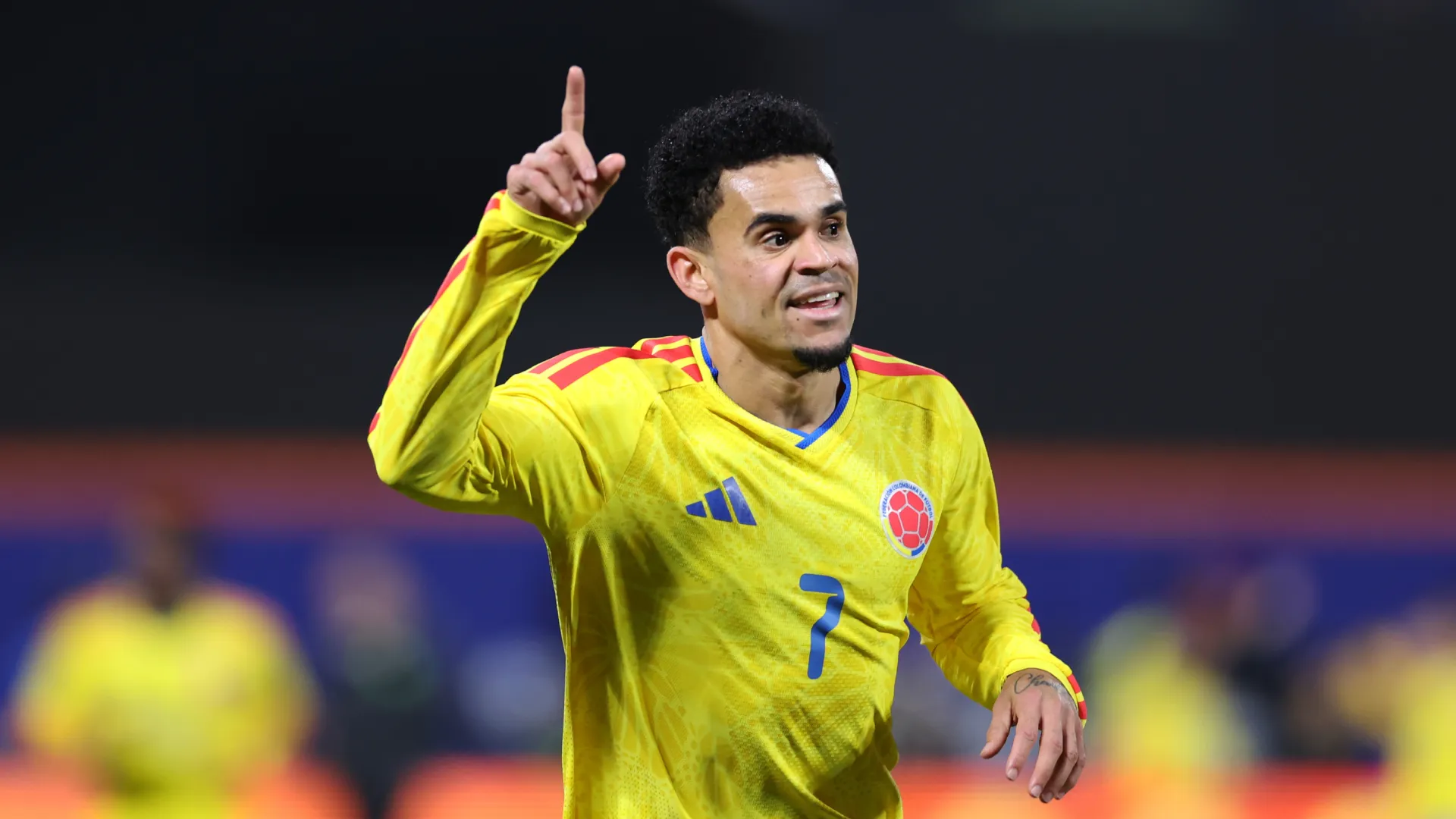
Luis Diaz of Colombia (Getty Images).
Díaz serves as the engine of the national team’s transition play. His elite dribbling, explosive pace, and clinical finishing make him a constant nightmare for opposing fullbacks. By drawing multiple defenders, he naturally creates operating space for teammates to exploit in the final third.
If Díaz were to suffer an injury, the team would lose its primary attacking outlet and transition threat. Colombia’s hopes for a deep knockout run rely heavily on his ability to replicate his dominant club form on the international stage.
Colombia’s road to the 2026 World Cup
Colombia navigated the grueling CONMEBOL qualifiers with a commanding third-place finish, securing 28 points from 18 matches. The campaign served as a major statement of intent, highlighted by historic home victories over continental heavyweights Brazil and Argentina.
The attack fired on all cylinders, finishing as the second-highest scoring team in South America with 28 goals. Luis Díaz led the line with seven goals, while James Rodríguez provided a confederation-best seven assists. One standout moment was a record-breaking 6-3 away victory over Venezuela on September 9, 2025.
While a late-campaign slump featured narrow defeats to Uruguay and Ecuador, the overall qualification run proved this squad possesses the firepower to challenge the best FIFA World Cup 2026 teams.
Colombia’s 2026 World Cup group stage outlook
Drawn into Group K, Colombia face a highly favorable path to the knockout rounds alongside Portugal, DR Congo, and Uzbekistan. While Portugal enter as the clear favorites to win the group, the South Americans are heavily favored to secure the second qualification spot.
The matchup against Portugal will be the most challenging test, likely determining who claims the top seed. Conversely, fixtures against DR Congo and Uzbekistan present highly winnable scenarios for a squad ranked 13th in the world. Dominating possession and breaking down low blocks will be the key factors in those crucial group-stage fixtures.
Readers looking to follow every match involving Los Cafeteros can also check our complete Colombia TV schedule for the latest broadcast and streaming information. Ultimately, securing a top-two finish is the minimum expectation for this talented roster.
Colombia squad for 2026 World Cup
| Player (Position) | Club |
|---|---|
| David Ospina (GK) | Atlético Nacional |
| Camilo Vargas (GK) | Atlas |
| Álvaro Montero (GK) | Vélez Sarsfield |
| Yerry Mina (DF) | Cagliari |
| Daniel Muñoz (DF) | Crystal Palace |
| Jhon Lucumí (DF) | Bologna |
| Santiago Arias (DF) | Independiente |
| Willer Ditta (DF) | Cruz Azul |
| Johan Mojica (DF) | Mallorca |
| Deiver Machado (DF) | Nantes |
| Davinson Sánchez (DF) | Galatasaray |
| Kevin Castaño (MF) | River Plate |
| Richard Ríos (MF) | Benfica |
| Jorge Carrascal (MF) | Flamengo |
| James Rodríguez (MF) | Minnesota United |
| Jhon Arias (MF) | Palmeiras |
| Gustavo Puerta (MF) | Racing de Santander |
| Jefferson Lerma (MF) | Crystal Palace |
| Juan Fernando Quintero (MF) | River Plate |
| Jaminton Campaz (MF) | Rosario Central |
| Juan Portilla (MF) | Athletico Paranaense |
| Luis Díaz (FW) | Bayern Munich |
| Jhon Córdoba (FW) | Krasnodar |
| Cucho Hernández (FW) | Real Betis |
| Luis Suárez (FW) | Sporting CP |
| Andrés Gómez (FW) | Vasco da Gama |
Final word on Colombia
Colombia enter the 2026 tournament as a dangerous, battle-tested squad capable of lighting up North America. Their primary strength lies in a lethal, high-paced attacking transition led by world-class Colombia key players.
However, recent defensive struggles against elite European competition remain a lingering concern that Néstor Lorenzo must address. Escaping Group K is a highly realistic expectation, but navigating the knockout stages will require peak performances across the board. If their star players find their rhythm, a run to the quarterfinals is well within reach.