



FIFA has pushed back against the IFAB’s own admission that Breel Embolo’s red card against Argentina in the 2026 World Cup quarterfinals was the result of a misapplied VAR protocol.
Hours after the IFAB’s circular acknowledged an error in how the “mistaken identity” clause was used, a FIFA spokesperson issued a statement defending the decision and disputing the framing that anything went wrong.
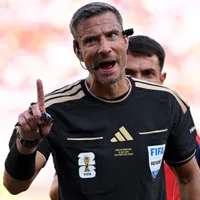
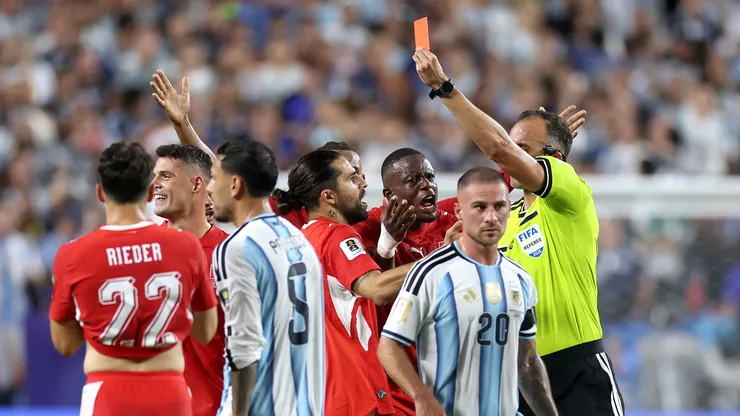
The controversy took place when the referee booked Leandro Paredes for committing a foul, before VAR intervened under the mistaken identity clause and corrected the call, determining Embolo had dived. This resulted in the caution being switched to the Swiss player, which was his second yellow card, resulting in a sending-off.
The IFAB’s circular stated that this specific escalation fell outside how the clause is meant to function, since it’s designed only to correct which player receives a card, not to reclassify or add consequences to the underlying offense.
Full statement from the FIFA spokesperson
“FIFA’s interpretation of Mistaken Identity was consistently applied during the FIFA World Cup. There were two instances in which a player was mistakenly identified as having committed a yellow card offence and the VAR advised the referee to correct the factual error caused by the opponent’s simulation.

see also
FIFA president Gianni Infantino delivers blunt message amid huge criticism: ‘They missed out on everything’
The simulation itself cannot be disputed and it should not result in a disciplinary sanction against an opponent that may then lead to further consequences, such as a sending off for a second yellow card or a match suspension for accumulated cautions.
We do not consider this to have been a referee or VAR error and the decision restored justice. We note IFAB’s comments in its Circular, we have been in contact with them throughout and they confirmed that this interpretation is valid, that it was well received and that it will form part of the discussion on revisions to the VAR Protocol, as discussed at the last AGM,” the statement read.
The other case referenced in FIFA’s statement is the near-identical situation from the group stage between the United States and Paraguay, where Tim Ream was originally booked for a foul on Miguel Almiron, before VAR corrected the identity and Almiron was booked for simulation instead.
FIFA’s framing suggests it views both instances as properly handled applications of the rule, rather than as procedural errors, setting up a disagreement with the governing body that actually writes the Laws of the Game.