




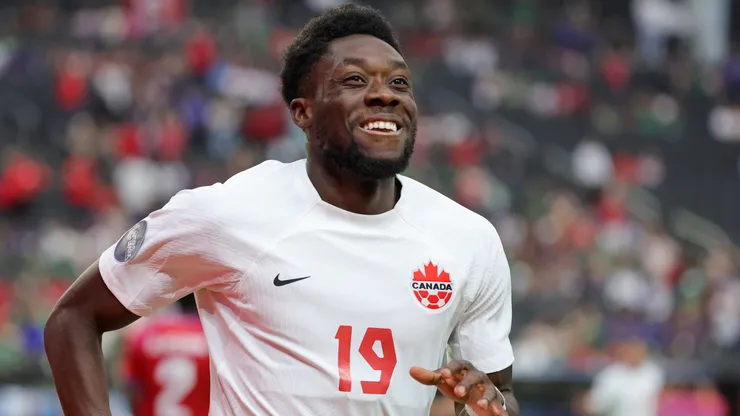
As co-hosts of the 2026 tournament, Canada enters the competition with elevated expectations and a genuine opportunity to make history. Following a 36-year absence that ended in 2022, the national team returns to the global stage looking to secure its first-ever victory in the competition.
As one of the automatically qualified FIFA World Cup 2026 teams, the roster boasts a talented generation led by elite European-based stars.
This Canada 2026 World Cup squad features a high-pressing identity designed to frustrate opponents and strike quickly in transition. With an experienced manager at the helm and a favorable group-stage draw, the team is primed to compete for a spot in the knockout rounds.
Team profile
| Coach | Jesse Marsch |
| Captain | Alphonso Davies |
| Nickname | Les Rouges |
| FIFA Ranking | 30th |
| Confederation | CONCACAF |
| Group | Group B |
| Best Tournament Result | Group stage (1986, 2022) |
| Tournament Appearances | 2 |
| Last Appearance | 2022 |
How Canada play
For a complete Canada tactical analysis, it is clear that the national team has developed a distinct identity built on high-intensity pressing and rapid transitions.
The preferred Canada formation is typically a flexible 4-4-2 designed to force turnovers high up the field. This ball-oriented pressing system aims to disrupt the opponent’s build-up play and create immediate attacking opportunities.
In possession, the roster relies heavily on the elite pace of their wide players to launch devastating counter-attacks. Alphonso Davies and Tajon Buchanan provide significant width and dribbling ability, allowing the team to bypass defensive blocks quickly. The squad has proven defensively resolute in recent international fixtures, maintaining a compact shape that limits high-quality chances for the opposition.
While their transition game is a major strength, a potential tactical vulnerability lies in breaking down deep defensive blocks when forced to hold possession.
Opponents may look to exploit spaces left behind the advancing fullbacks during aggressive pressing sequences. Ultimately, this high-energy tactical approach makes the co-hosts a dangerous opponent capable of securing crucial results in the group stage.
Jesse Marsch: The coach behind Canada
Appointed in May 2024, the current Canada coach has quickly transformed the national team into a highly disciplined and aggressive unit. The American coach brings a wealth of top-flight experience, having previously won domestic titles with RB Salzburg before managing RB Leipzig and Leeds United in Europe.

Jesse Marsch, head coach of Canada (Getty Images).
His coaching philosophy is heavily influenced by the high-intensity, vertical style of play he honed throughout his career. Marsch is widely respected for his ability to instill tactical clarity and a relentless work ethic within his squads. During his playing days, he was a hard-tackling midfielder in Major League Soccer, a grit that now reflects in his managerial approach.
His leadership and tournament experience will be critical as he guides the co-hosts through the intense pressure of a home competition.
Key player: Alphonso Davies
Alphonso Davies remains the undisputed face of Canadian soccer and the central figure in their tactical system. The 25-year-old Bayern Munich star brings invaluable elite-level experience to the roster, having won multiple domestic titles and a Champions League trophy in Europe.
While he operates primarily as a left-back for his club, Davies assumes a much more expansive role for the national team. Often deployed further forward on the wing or as a central playmaker, he serves as the primary engine for the attack. His unrivaled pace and exceptional one-on-one dribbling ability allow him to break defensive lines effortlessly.
The team’s transition-heavy style relies heavily on his capacity to carry the ball out of pressure. If Davies were to miss time due to injury, the squad would lose their most dynamic attacking outlet and primary source of on-field composure.
Canada’s road to the 2026 World Cup
As one of the three host nations for the 2026 tournament, Canada secured automatic qualification. This guaranteed entry allowed the team to completely bypass the rigorous CONCACAF qualifying cycle.
Without the pressure of competitive qualifiers, the squad focused heavily on challenging international friendlies to test their tactical readiness. The team has performed exceptionally well in these preparation matches, losing just once in a recent 20-game stretch while maintaining a solid defensive record. This extended preparation period has given the coaching staff ample time to refine their system and integrate new talent.
Their impressive form in these exhibition matches suggests they are fully prepared for the intensity of the upcoming global competition.
Canada’s 2026 World Cup group stage outlook
Drawn into Group B as a Pot 1 seed, Canada faces a highly favorable path toward the knockout rounds. The co-hosts will compete against Switzerland, Bosnia, and Qatar, avoiding the traditional heavyweights of international soccer.
Switzerland represents the most challenging matchup, bringing significant tournament experience and tactical discipline to the group. Conversely, the fixtures against Qatar and Bosnia offer realistic opportunities to secure vital points, standing out among international soccer teams 2026 as less experienced opponents. Securing a strong result in the opening matches will be the key factor in determining their qualification chances.
Readers looking to follow every match involving the national team can also check our complete Canada TV schedule for the latest broadcast and streaming information. With home-field advantage driving them forward, expectations are firmly set on a top-two finish in the group.
Canada squad for 2026 World Cup
| Player (Position) | Club |
| Dayne St. Clair (GK) | Inter Miami |
| Maxime Crépeau (GK) | Orlando City |
| Owen Goodman (GK) | Barnsley |
| Alistair Johnston (DF) | Celtic |
| Alfie Jones (DF) | Middlesbrough |
| Moïse Bombito (DF) | Nice |
| Richie Laryea (DF) | Toronto FC |
| Niko Sigur (DF) | Hajduk Split |
| Joel Waterman (DF) | Chicago Fire |
| Derek Cornelius (DF) | Rangers |
| Luc de Fougerolles (DF) | Dender |
| Alphonso Davies (DF) | Bayern Munich |
| Stephen Eustáquio (MF) | Los Angeles FC |
| Nathan Saliba (MF) | Anderlecht |
| Ismaël Koné (MF) | Sassuolo |
| Liam Millar (MF) | Hull City |
| Tajon Buchanan (MF) | Villarreal |
| Ali Ahmed (MF) | Norwich City |
| Jonathan Osorio (MF) | Toronto FC |
| Jacob Shaffelburg (MF) | Los Angeles FC |
| Mathieu Choinière (MF) | Los Angeles FC |
| Jonathan David (FW) | Juventus |
| Cyle Larin (FW) | Southampton |
| Tani Oluwaseyi (FW) | Villarreal |
| Promise David (FW) | Union Saint-Gilloise |
| Jayden Nelson (FW) | Austin FC |
Final word on Canada
Canada enters the tournament in a remarkably strong position, bolstered by home support and a highly favorable group draw. Their devastating pace in transition and organized pressing system stand out as the primary strengths that could propel them to unprecedented success.
However, their historical lack of experience on this global stage remains a lingering challenge when facing seasoned European opposition. Ultimately, a realistic expectation for this talented squad is advancing out of the group stage and securing the nation’s first-ever knockout round appearance.