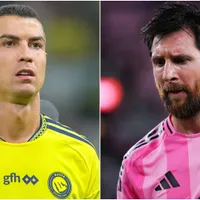



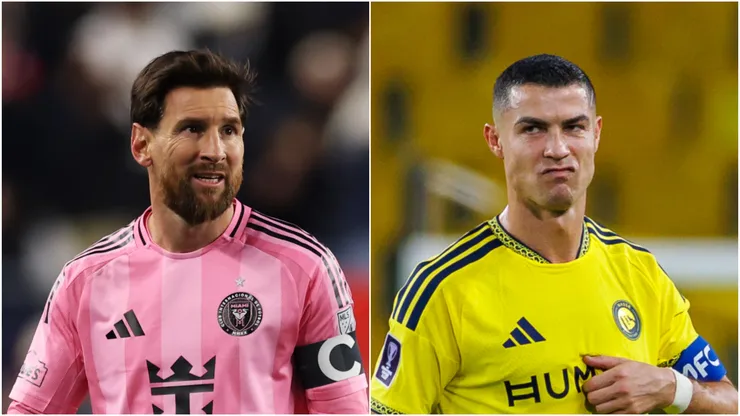
Lionel Messi and Cristiano Ronaldo have both experienced moments when their on-field reactions sparked debate over how referees handle confrontations involving soccer’s biggest stars. Messi’s latest controversy has brought fresh scrutiny to Inter Miami’s MLS Cup playoff campaign, with a rival coach questioning a major decision that could have consequences for the Argentine’s team.
The incident occurred during a difficult evening for the defending champions, who suffered a damaging defeat against Columbus Crew. While the result put Miami on the brink of elimination, the confrontation involving Messi quickly became one of the biggest talking points after the final whistle.
Miami entered its first-round meeting with Columbus on Saturday hoping to begin its title defence with a victory. Messi had received the MLS Golden Boot before kick-off, becoming the first player to win the award in consecutive seasons, but the celebrations soon gave way to frustration.
The Crew took the lead in the ninth minute after goalkeeper Dayne St. Clair brought down Gonzalo Tapia inside the penalty area. The Chilean forward converted the resulting spot-kick, while goalkeeper Patrick Schulte produced several important saves to keep Messi and Miami at bay.
The hosts’ situation deteriorated further in the 36th minute when Gonzalo Lujan received his second yellow card for a late challenge on Steven Moreira. Miami was left with 10 players for the remainder of the contest, giving Columbus a significant advantage.
Messi clashes with Tapia as tensions boil over
The most controversial moment arrived during first-half stoppage time, when Messi and Tapia became involved in an argument near the touchline. As the Argentine attempted to take a quick throw-in, the Columbus forward stood close to him and appeared to obstruct the restart.
Messi reacted by pushing the ball into Tapia’s face before throwing it towards his opponent’s head from close range. The Chilean went to ground, prompting protests from Columbus players and a heated exchange between members of both teams.
Referee Allen Chapman showed both players a yellow card, allowing Messi to remain on the pitch. The decision immediately divided opinion, particularly because Miami was already trailing and playing with 10 men.
Columbus coach questions referee’s decision
Columbus head coach Laurent Courtois was particularly unhappy that Messi avoided a sending-off. The Crew manager believed the Argentine should have received a red card for his actions against Tapia.
“Everybody knows that he deserved more than a yellow card,” Courtois said after the match. “It’s just really sad.” Chapman subsequently defended his decision when questioned by a pool reporter. “The force used was negligible, and the offense did not reach the level of violent conduct,” the referee explained.
The distinction was central to the disciplinary debate, with Major League Soccer’s competition guidelines defining violent conduct as the use of excessive force or brutality when a player is not challenging for the ball. The Athletic refereeing expert Graham Scott reportedly argued that a red card would have been the more defensible decision, believing the contact was deliberate and excessive.
Why Messi’s incident recalls Ronaldo’s 2024 red card
The confrontation brought back memories of Cristiano Ronaldo’s straight red card against Al-Hilal in the Saudi Super Cup semi-final on April 8, 2024. The Al-Nassr forward became involved in a physical altercation with defender Saud Abdulhamid during a dispute over a throw-in, responding with aggressive physical contact that sent his opponent to the ground.
The referee dismissed the Portuguese for violent conduct, and Al-Nassr eventually lost 2-1. The incident resurfaced online alongside footage of Messi’s confrontation with Tapia, with fans debating whether the two superstars had been treated consistently. There were clear similarities in the circumstances, as the trigger was almost identical.
In both cases, an opponent stood close and actively impeded a quick throw-in, a common tactic to waste time or disrupt momentum. Players are required to retreat a reasonable distance, yet enforcement is often inconsistent. What’s more, both Messi and Ronaldo, known more for brilliance than volatility, lost composure in the heat of a competitive fixture when their team was struggling.
These are not random acts of aggression but responses to perceived gamesmanship. The opponent went down in each case, leading to questions of whether the contact was violent enough for a red card. The Argentine used the ball; the Portuguese used his body.
While the situations rhyme, they are not identical. Messi directed a ball at an opponent’s face from very short range; Ronaldo made direct physical contact with his body. Laws of the Game treat excessive force or violent conduct more severely when it involves striking or headbutting than when the object is a ball, though intent and force still matter.