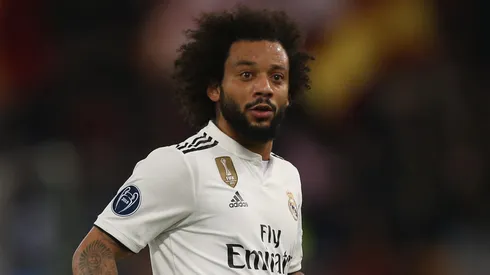




For the first time in years, familiar assumptions no longer apply. Lionel Messi continues to redefine excellence, Son Heung-Min remains a commercial and sporting force, and Thomas Muller has authored yet another unexpected chapter late in his career. Yet as Major League Soccer closes the book on its most star-studded season to date, the numbers behind the legends tell a more sobering story.
The latest market value update has sent ripples across the league. One icon has reached the lowest valuation of his professional life, another has slipped to a level not seen in a decade, and a third—despite silverware and leadership—has not been immune to time. The question is not whether their impact has faded, but how value is now being measured in a league reshaped by age, visibility, and legacy.
Lionel Messi’s 2025 season with the club was, by any soccer metric, extraordinary. He led the club to its first-ever MLS Cup, claimed the Golden Boot, and became the first player in league history to win consecutive MVP awards. Across all competitions, Messi produced 74 goal contributions in 49 appearances, numbers that would inflate almost any valuation model. And yet, the latest assessment delivered a historic moment.
According to Transfermarkt, Messi’s market value now stands at €15 million ($16.3m)—the lowest valuation of his entire professional career, down from €18m ($19.6m) in the previous update. Dominic Becker, Transfermarkt’s North America data administrator, explained the reasoning clearly: “Messi once again played a fantastic season. He remains the focal point of Miami’s game and was crucial in winning the club’s first MLS Cup. But he is also getting older, and despite the downgrade, he remains the most valuable player in his age category.”
The context is essential. At his peak in 2018, Messi’s value reached €180m ($196m). Today’s number reflects not performance decline, but age-based market logic. At 38, Messi is evaluated not as a resale asset, but as a soccer institution. Importantly, the Argentine has never generated a transfer fee in his career, moving from Barcelona to Paris and then to MLS as a free agent. His economic value has never been transactional—it has been transformational.
Son Heung-Min: Decade-low valuation, undiminished Influence
Son Heung-Min’s arrival in MLS with LAFC instantly altered the league’s commercial and cultural footprint. On the pitch, he delivered 12 goals and four assists in his debut campaign. Off it, he shattered jersey-sales records and expanded the league’s reach across Asia and the global market. Despite this, Son’s valuation followed a similar trajectory to Messi’s.
Transfermarkt reduced Son’s market value from €20m ($21.8m) to €17m ($18.5m)—his lowest valuation since June 2015, when he was still playing in Germany. Becker acknowledged the inevitability of the decision: “Son Heung-Min is 33 years old. A decline in market value due to age is inevitable. That said, he adapted instantly and formed one of the most dangerous attacking duos in the league.”
Crucially, Son remains the second-most valuable player in MLS, underscoring how age-adjusted downgrades do not equate to reduced relevance. His influence spans performance, leadership, and global branding—elements that traditional valuation models struggle to quantify. This update marks a symbolic moment rather than a decline. The 33-year-old’s career has entered a phase where legacy outweighs liquidity.
Thomas Muller: Leadership, silverware, and a gentle adjustment
Thomas Muller’s MLS journey has been brief but significant. He played a central role in leading his club to a first-ever MLS Cup final, added another trophy to his already historic résumé, and became the most decorated German player of all time. Even so, market logic prevailed. The Vancouver Whitecaps star’s value dipped slightly from €6m ($6.5m) to €5m ($5.4m)—a modest adjustment that reflects age rather than influence.
Muller’s impact could be felt from the first day, Becker noted. “His football ability and character lifted the team on and off the field. Despite the downgrade, he remains one of the most valuable players in his age category.” At 36, Muller’s role is not defined by resale potential, but by tactical intelligence, leadership, and winning culture—qualities that MLS clubs increasingly value as the league matures.