




Lamine Yamal, Kylian Mbappe, and Erling Haaland are among the leading figures of soccer’s next generation, with their extraordinary talent and early achievements raising expectations about what they could accomplish. However, Robert Lewandowski has offered a sobering assessment of the challenges awaiting these superstars, questioning whether they can sustain their dominance for as long as the legends who came before them.
Yamal has emerged as one of Barcelona’s most exciting young players, achieving milestones at an age when many players are still developing in academy systems. His rapid rise has naturally prompted comparisons with Lionel Messi, who spent years establishing himself before becoming one of the most dominant players in soccer history.
Mbappe and Haaland have followed similarly remarkable paths, becoming prolific goalscorers and central figures for their respective clubs while still relatively young. Their achievements suggest they have the talent to define the next era, but it raises a different question: how long can they maintain their current standards?
The modern soccer calendar places enormous demands on elite players through domestic leagues, continental competitions, international fixtures, and expanded tournaments. Reaching the top early can mean facing years of physical and mental pressure before many previous generations had even reached their peak.

Kylian Mbappe, Lamine Yamal and Erling Haaland.
Lewandowski questions the longevity of soccer’s next generation
Lewandowski shared his perspective in an interview with The Athletic’s Paul Tenorio, reflecting on the differences between his generation and the teenagers already competing at the highest level. The Polish striker believes modern players reach elite status much earlier, creating challenges that may become more apparent as their careers progress. “For the future it will be impossible to stay on the top for the long term, as we did or we are doing,” Lewandowski said.
He explained that young players now have access to opportunities and rewards much earlier than previous generations, leaving them with less time to develop gradually. “Our generation, to get something, we needed more time, we need to be more patient,” he added. “Now it’s too fast for the young player… they’re starting much earlier.”
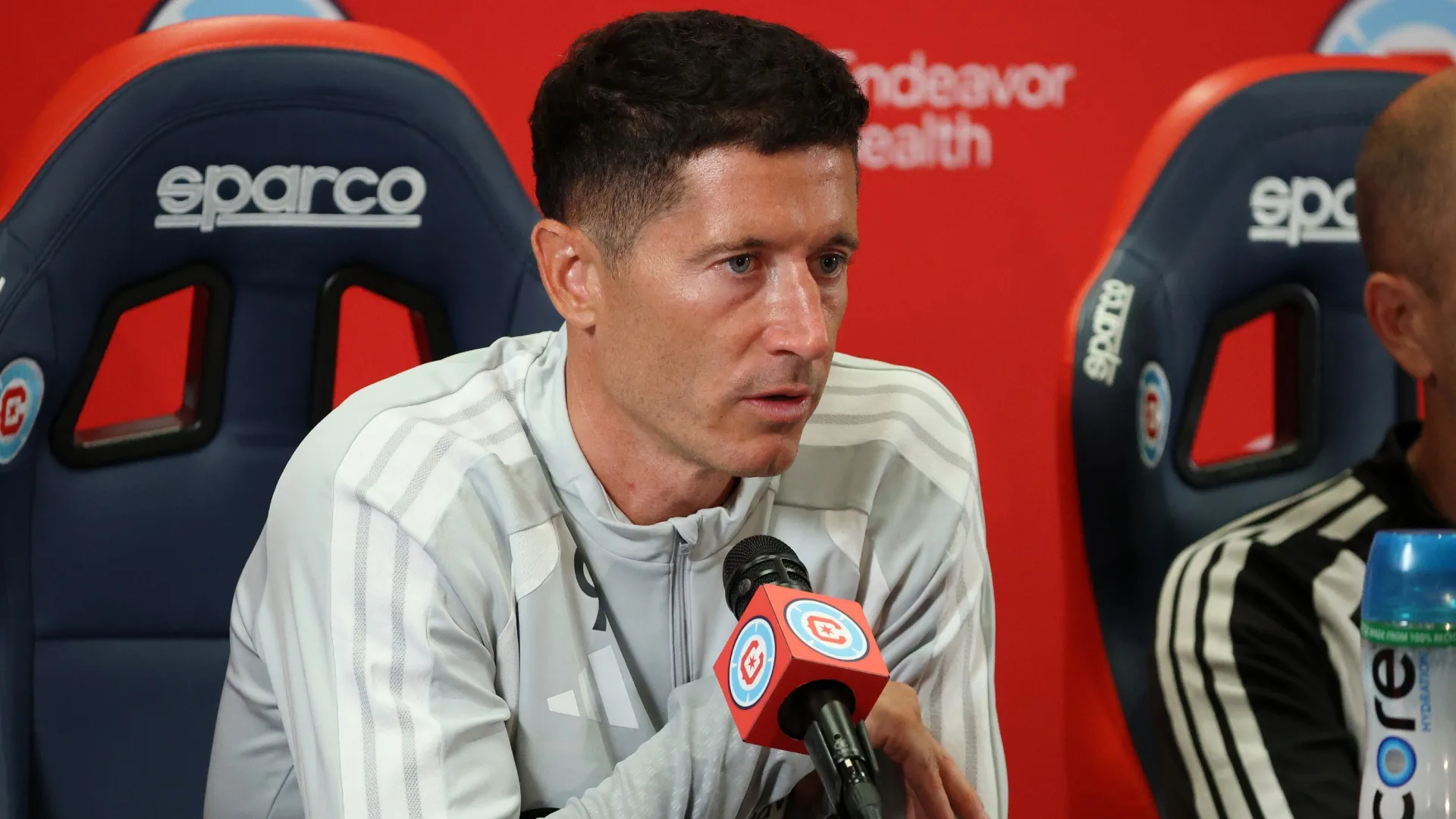
Robert Lewandowski #9 speaks to the media during a press conference.
The stark prediction behind Lewandowski’s warning
The Chicago Fire forward believes the rapid rise of young talents could eventually affect their motivation to remain at the summit of the sport. His prediction is that players who achieve success too easily and too early may eventually lose the hunger required to stay at the top.
“Even though they are amazing players, they reach faster the highest level than our generation did, but probably because of this also it will be more tough for them staying on the top level,” the 38-year-old striker explained.
He also stressed that the challenge extends beyond mentality, pointing to the physical demands of a long career at the highest level. “It’s not easy to play on the top level so many years,” he said, suggesting that the combination of early success and accumulated fatigue could make sustained excellence increasingly difficult.