



As the countdown to the 2026 World Cup accelerates, soccer’s lawmakers have delivered another setback to FIFA’s reform agenda. At the center of the debate stands Arsene Wenger, a figure synonymous with innovation, whose latest vision promised to reshape one of the sport’s most controversial rules. Instead, the proposal has collided with resistance at the highest level, underlining the deep divisions that still exist over how far soccer should evolve in the VAR era.
The issue is bigger than a single rule tweak. It cuts across philosophy, power, and preparation, touching every club and competition that must eventually adapt to decisions made far from the pitch. And with global attention fixed on 2026, the timing could hardly be more sensitive. The annual meeting of the International Football Association Board (IFAB) in London was always expected to be significant. For months, discussion around a proposed offside reinterpretation — informally labeled the “Wenger Law” — had dominated conversations across Europe and beyond.
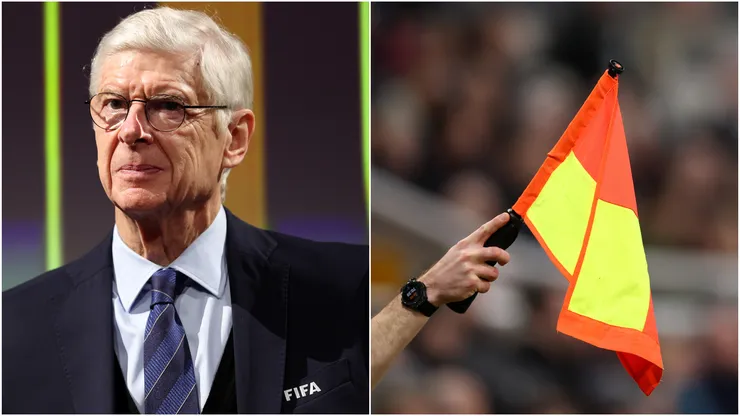
Wenger, now FIFA’s Chief of Global Football Development, has argued that modern offside decisions have drifted away from the spirit of the game. Marginal calls decided by a knee, shoulder, or toe have become routine with VAR, frustrating players, coaches, and fans alike. His solution was simple in theory: restore the advantage to the attacker and encourage attacking soccer. But simplicity does not guarantee consensus.
Under the Frenchman’s idea, an attacker would only be penalized if their entire body was clearly ahead of the penultimate defender. If any part of the body remained level, the player would be considered onside.
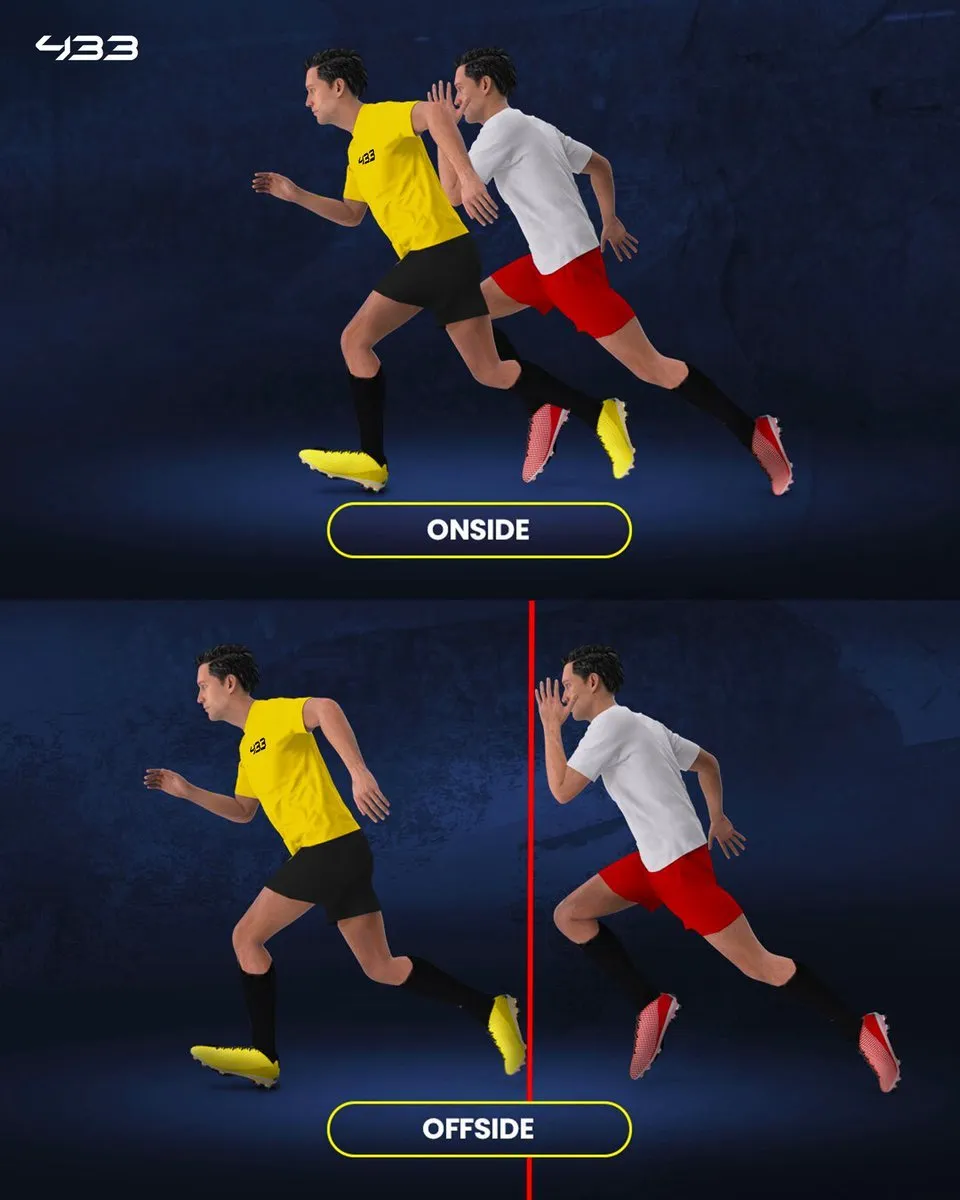
Arsene Wenger’s offside rule explained
The motivation was historical. After the 1990 World Cup produced a record-low goals-per-game average, lawmakers changed the interpretation of “level” to favor attackers. Goals increased, and the game became more fluid. Wenger believes VAR has reversed that progress. “In case of doubt, the doubt benefits the striker,” the ex-manager previously explained, arguing that technology has removed that margin. FIFA saw the proposal as a way to align technology with soccer’s attacking DNA.
What does IFAB think?
Midway through the London meeting, clarity finally arrived. As per BBC Sport, IFAB rejected Arsene Wenger’s offside rule change and decided not to include it in the Laws of the Game for next season.
The decision represents a major blow to FIFA, which had openly supported further implementation of the idea. While FIFA controls four votes within IFAB, it was outnumbered by opposition from UEFA and the four British associations — England, Scotland, Wales, and Northern Ireland.
Those stakeholders described the proposal as “too radical” and warned it could “create chaos” in a defensive organization, particularly at the elite level. As a result, no major competition will adopt the rule in the near future.
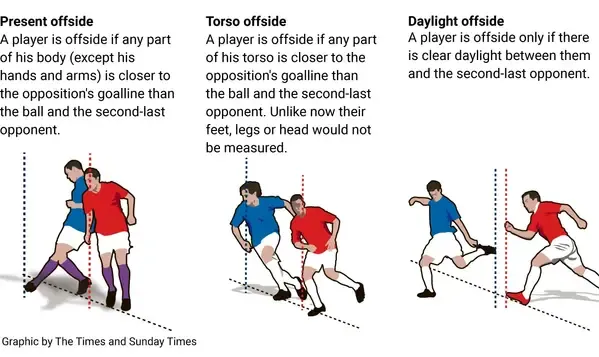
Arsene Wenger’s offside rule
Testing continues — but far from the spotlight
Despite rejecting immediate implementation, IFAB stopped short of completely shelving the idea. The offside proposal will continue to be tested in lower-level competitions, including the Canadian Premier League, allowing lawmakers to gather more data without disrupting top-tier tournaments.
FIFA remains supportive, but convincing skeptical European stakeholders will now require evidence rather than ideology. Crucially, all parties agreed that introducing such a change before the 2026 World Cup would be unfair, forcing national teams and clubs to overhaul tactical systems months before the tournament.