




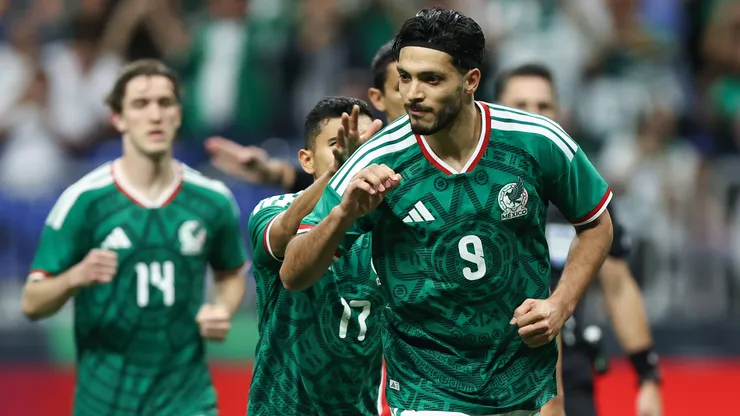
As the most prominent of the three co-hosts for the 2026 global tournament, Mexico faces immense pressure to outperform the United States and Canada.
Currently ranked 15th globally, El Tri aims to erase the disappointment of their early exit in 2022 and reestablish themselves as the dominant force in North America.
Following a successful 2025 Gold Cup campaign, the team has found renewed stability. This World Cup 2026 team preview explores the squad’s realistic chances on home soil.
As one of the most closely watched international soccer teams 2026 has to offer, we will break down their defensive tactical setup, the leadership of their veteran coach, the depth of their roster, and their outlook in the group stage.
Team profile
| Coach | Javier Aguirre |
| Captain | Edson Alvarez |
| Nickname | El Tri, El Tricolor |
| FIFA Ranking | 15th |
| Confederation | CONCACAF |
| Group | Group A |
| Best Tournament Result | Quarter-finals (1970, 1986) |
| Tournament Appearances | 18 |
| Last Appearance | 2022 (Group Stage) |
How Mexico play
Under their current leadership, Mexico has transitioned away from a purely expansive attacking style toward a more pragmatic 4-3-3 Mexico formation.
This system is specifically designed to handle the grueling physical demands of international tournament soccer. In possession, the team relies heavily on their central striker dropping deep to hold up play and distribute the ball to direct, pacey wingers.
Defensively, El Tri prioritizes a solid structure over high-risk pressing. They showcased this defensive organization during the 2025 Gold Cup, allowing just 2.1 expected goals against (xGA) throughout the competition and keeping four clean sheets.
The team often struggles to generate central creativity from the midfield, placing a heavy burden on wide players like Roberto Alvarado to cut inside and create scoring opportunities.
Without a reliable link between the defense and the forward line, the attack can look disjointed against opponents utilizing a low defensive block. This pragmatic approach could make them tough to break down but might limit their scoring potential in tight knockout matches.
Javier Aguirre: The coach behind Mexico
Javier Aguirre is currently in his third stint managing the national team. Hired in mid-2024 to stabilize a struggling program, the Mexico coach immediately injected defensive discipline and a clear identity into the squad.
The veteran manager brings extensive international experience, having previously guided El Tri through two successful qualification cycles. As a player, he earned 59 caps and represented his country during the 1986 tournament on home soil.
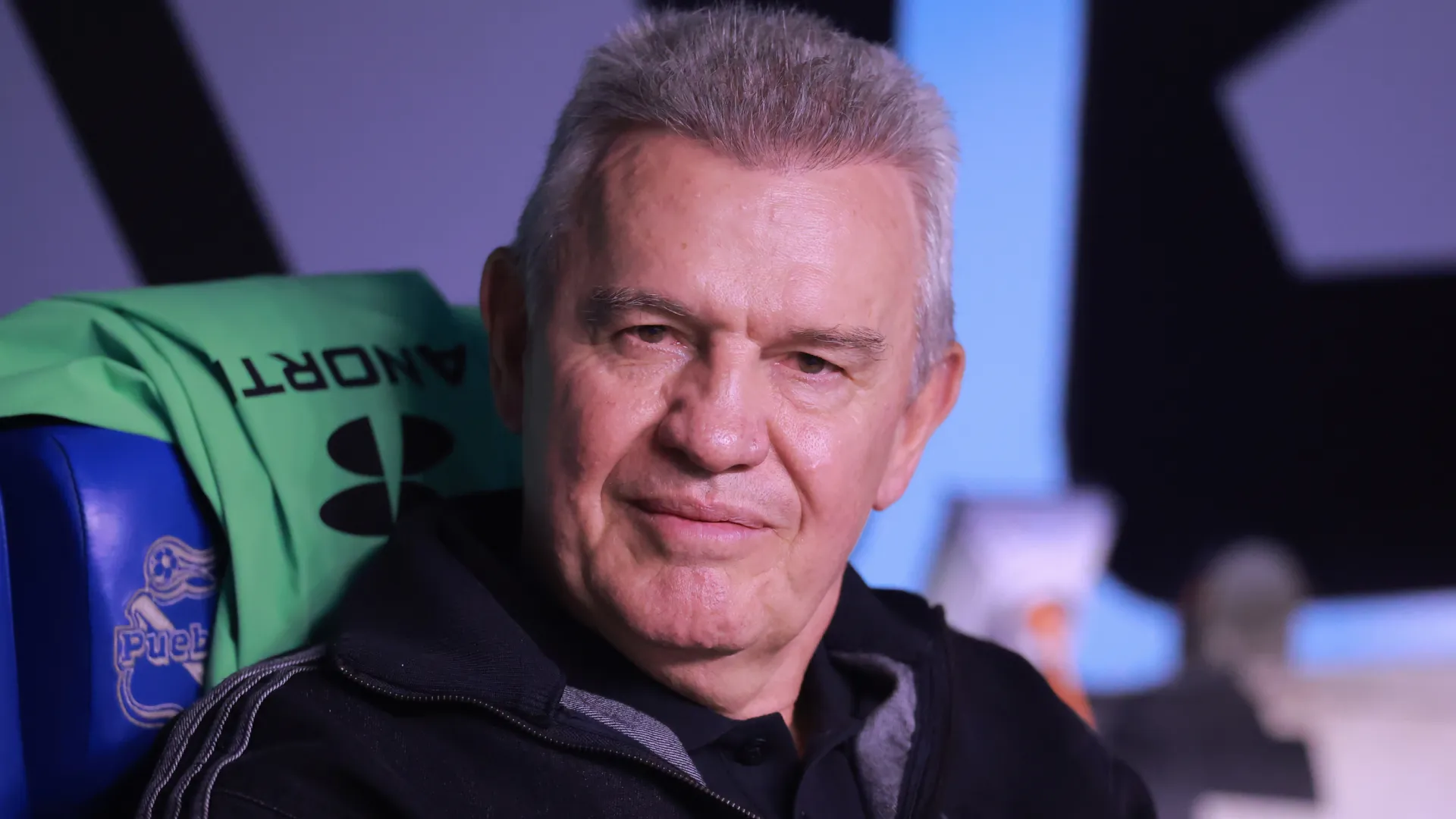
Javier Aguirre, coach of Mexico (Hector Vivas/Getty Images)
Aguirre is widely respected for his pragmatic approach and ability to organize teams quickly. Under his direction, Mexico reclaimed regional dominance by winning the 2025 Nations League and Gold Cup.
His leadership will be crucial in helping the team navigate the immense pressure of playing in front of expectant home crowds.
Key player: Raul Jimenez
Raul Jimenez remains the most critical component of the Mexican attack. When discussing Mexico key players, the 34-year-old striker stands out, having earned 123 caps and scored 44 goals for his country, placing him third on their all-time scoring list.
Entering the summer tournament, Jimenez is in excellent form. He netted 24 goals across all competitions over his last two club seasons and scored seven times in seven competitive international matches in 2025.
His aerial ability, clinical finishing, and defensive work rate make him an ideal fit for the national team’s system.
Tactically, Jimenez is the focal point. His ability to pull opposing center-backs out of position creates crucial space for wide attackers. If he were to suffer an injury, the team lacks another proven goalscorer with the same physical presence, which would severely hinder their attacking output.
Mexico’s road to the 2026 tournament
As one of the three host nations for the 2026 tournament, Mexico received an automatic berth and bypassed the standard CONCACAF qualification cycle.
Without competitive qualifiers, the team utilized regional tournaments to test their readiness. They successfully proved their regional superiority by winning the 2025 Gold Cup, culminating in a satisfying 2-1 victory over the United States in the final.
Mexico’s 2026 tournament group stage outlook
El Tri faces a highly favorable draw in Group A, matching up against South Africa, South Korea, and Czechia. This balanced group provides a realistic path to the knockout rounds.
South Korea likely presents the most challenging matchup due to their pace in transition, while South Africa offers a more favorable opportunity to secure three points early.
Key to their progression will be breaking down organized defenses and capitalizing on home-field advantage in front of hostile crowds in Mexico City and Guadalajara.
Readers looking to follow every match involving Mexico can also check our complete Mexico TV schedule for the latest broadcast and streaming information.
Securing the top spot in the group is the minimum expectation for the 15th-ranked team in the world. Winning the group would also ensure a more favorable draw in the knockout rounds.
SurveyHow far will Mexico go in the 2026 World Cup?
How far will Mexico go in the 2026 World Cup?
already voted 0 people
Mexico 2026 World Cup squad
| Player (Position) | Club |
| Raúl Rangel (GK) | Guadalajara |
| Carlos Acevedo (GK) | Santos Laguna |
| Guillermo Ochoa (GK) | AEL Limassol |
| Jorge Sánchez (DF) | PAOK |
| César Montes (DF) | Lokomotiv Moscow |
| Johan Vásquez (DF) | Genoa |
| Israel Reyes (DF) | América |
| Mateo Chávez (DF) | AZ |
| Jesús Gallardo (DF) | Toluca |
| Érik Lira (MF) | Cruz Azul |
| Orbelín Pineda (MF) | AEK Athens |
| Obed Vargas (MF) | Atlético Madrid |
| Álvaro Fidalgo (MF) | Betis |
| Edson Álvarez (MF) | Fenerbahçe |
| Luis Chávez (MF) | Dynamo Moscow |
| Gilberto Mora (MF) | Tijuana |
| Brian Gutiérrez (MF) | Guadalajara |
| Luis Romo (MF) | Guadalajara |
| Raúl Jiménez (FW) | Fulham |
| Alexis Vega (FW) | Toluca |
| César Huerta (FW) | Anderlecht |
| Guillermo Martínez (FW) | UNAM |
| Julián Quiñones (FW) | Al-Qadsiah |
| Roberto Alvarado (FW) | Guadalajara |
| Santiago Giménez (FW) | Milan |
| Armando González (FW) | Guadalajara |
Final word on Mexico
Mexico enters the summer competition with the distinct advantage of playing on home soil, backed by passionate supporters.
Their primary strength lies in a rigid defensive structure organized by a pragmatic, experienced coach.
However, an over-reliance on aging stars and a lack of depth in the midfield due to recent injuries present significant challenges for one of the premier FIFA World Cup 2026 teams.
Advancing past the group stage is a highly realistic expectation. Reaching the quarter-finals, however, will require secondary goalscorers to emerge and alleviate the attacking burden on their veteran forwards.