





As soccer inches closer to the 2026 World Cup, one of the most radical ideas in modern lawmaking refuses to disappear. Despite strong resistance from Europe’s power brokers, Arsene Wenger remains at the heart of a proposal that could fundamentally reshape how offside is judged. What initially looked like a decisive rejection has quietly evolved into something far more intriguing: a fresh testing ground has emerged, offering the controversial idea a possible second life.
For FIFA, the timing is delicate. For clubs and countries across the world, the implications could be enormous. And for Wenger, the long-running battle to restore attacking freedom may not be over just yet. Midway through the annual meeting of the International Football Association Board (IFAB) in London, clarity finally arrived — at least on the surface. In fact, IFAB rejected Arsene Wenger’s offside rule proposal and confirmed it will not be added to the Laws of the Game for next season.
The decision was widely seen as a major setback for FIFA, which had openly supported the idea. While FIFA controls four votes within IFAB, it was outnumbered by opposition from UEFA and the four British associations — England, Scotland, Wales, and Northern Ireland. Those stakeholders described the proposal as “too radical” and warned it could “create chaos” in defensive organization, particularly at elite level. As a result, no major competition will adopt the rule in the immediate future. Yet the story does not end there.
Wenger’s proposal, often referred to as the “daylight” offside rule, is deceptively simple. An attacker would only be penalized if there is a clear gap — daylight — between them and the second-to-last defender. Any overlap, no matter how small, would favor the attacker. The aim is to eliminate the fine-margin decisions that have become common in the VAR era, where goals are ruled out by millimetres — a knee, a shoulder, or the tip of a boot.
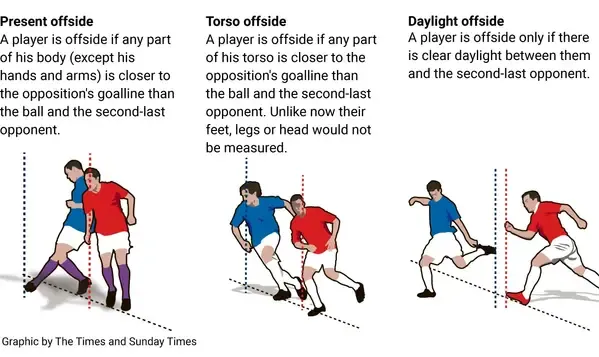
Arsene Wenger’s offside rule explained
Wenger, now FIFA’s Head of Global Football Development, has long argued that VAR has stripped the game of its attacking spirit. Speaking after the London meeting, he acknowledged the controversy but stood firm. “We have to try the radical solution first and see if we need to come back from that,” Wenger said.
New new testing ground emerges
While Europe slammed the brakes on immediate adoption, IFAB quietly agreed that the idea should continue to be tested — and not just at youth level. Thus, a top CONCACAF league has been lined up as a potential test competition for Wenger’s offside rule ahead of the 2026 World Cup.
That mystery league is the Canadian Premier League, which could become the first fully professional senior competition to trial the “daylight” offside system, as per BBC Sport. If formally approved at IFAB’s annual general meeting in Cardiff on February 28, the trial would begin at the start of the 2026 season in April. This represents a significant escalation from previous experiments, which had been limited to youth soccer and lower-tier environments.
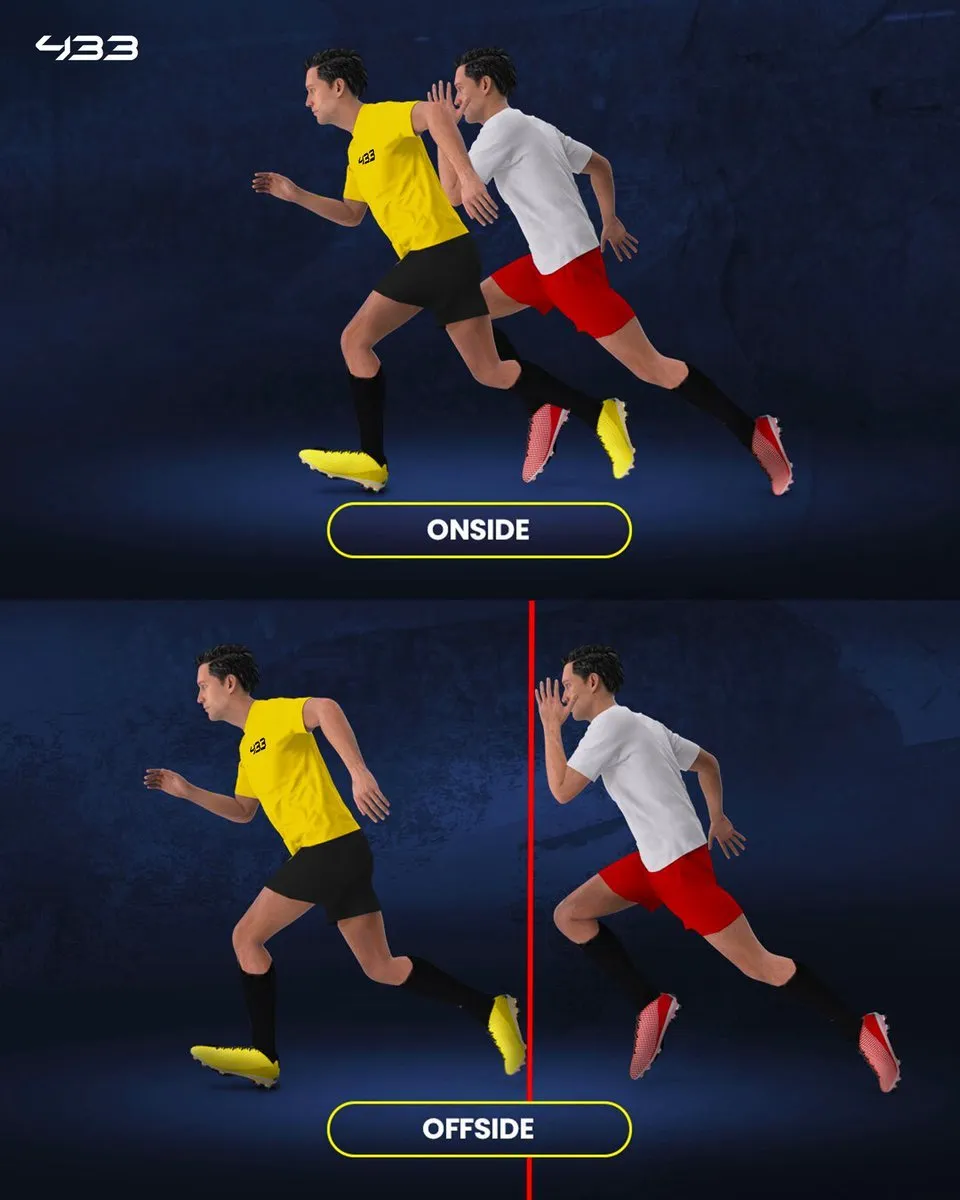
Arsene Wenger’s offside rule
Why this league matters
One of the most intriguing aspects of the trial is the context in which it would take place. The league does not use VAR, meaning all decisions would rely solely on on-field officiating. For IFAB, this offers a valuable contrast to the hyper-precision of elite European competitions. By testing the rule without VAR, lawmakers can assess how defenders adapt, how attackers exploit space, and whether the game genuinely becomes more fluid — or simply more chaotic.
IFAB is also expected to encourage other leagues to join the trial, building a broader data set across different countries and playing styles. The findings would be reviewed at the end of the year. If the results are positive, a global law change could still be considered as early as the 2027-28 European season.