

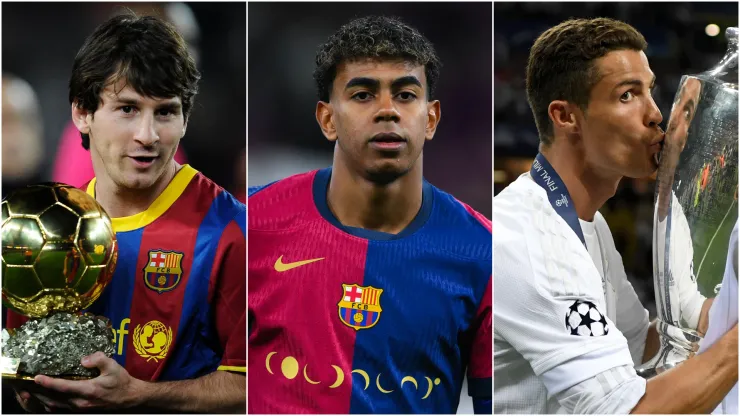
The soccer world has grown accustomed to a familiar hierarchy for nearly two decades. Lionel Messi and Cristiano Ronaldo defined not only success on the pitch, but also global influence off it—shirts, posters, billboards, and endless replicas worn by fans across continents. Now, however, a new name is rewriting that order. Lamine Yamal has done something no one expected so soon, signaling that the generational shift is no longer theoretical—it is measurable. And it is happening in the most symbolic arena of all: global jersey sales.
The rise of Lamine Yamal has coincided with a broader transformation in soccer’s power structure. While Messi continues to shine in MLS and Ronaldo remains a commercial titan in Saudi Arabia, the epicenter of global fascination is clearly shifting toward youth, authenticity, and a new kind of star power.
At club level, Barcelona has quietly reclaimed its role as trendsetter. At the same time, Real Madrid continues to project commercial reach through multiple stars rather than one dominant figure. But above all, one teenager has emerged as the focal point of soccer’s new era. According to data published by Score90, the most popular soccer shirt on the planet in 2025 does not belong to Messi or Ronaldo. It belongs to Yamal.
When the full figures were released—later confirmed by Mundo Deportivo—the scale of the achievement was staggering. Lamine Yamal has officially surpassed both Lionel Messi and Cristiano Ronaldo in global jersey sales in 2025, setting a benchmark that no player of his age had previously reached.
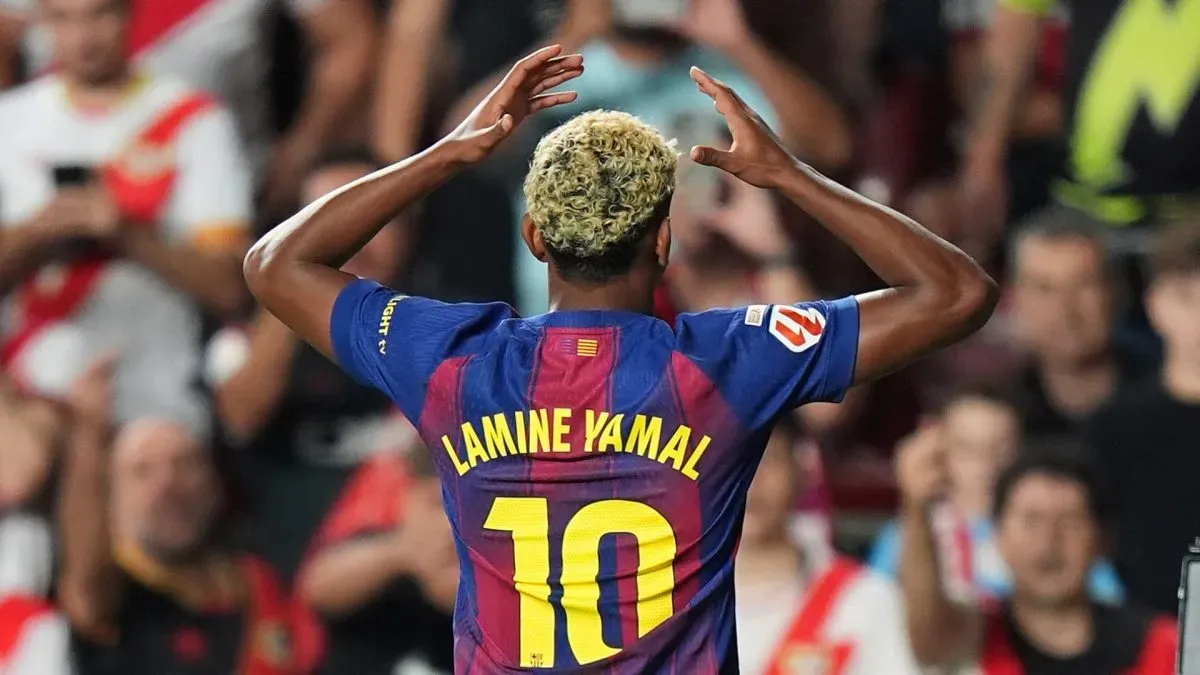
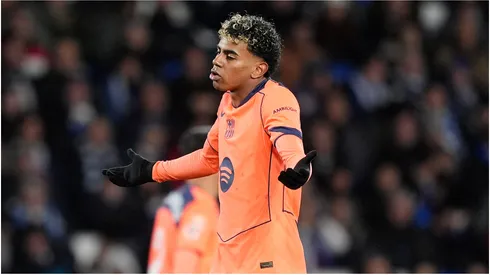
Lamine Yamal playing for Barcelona.
Messi finishes second, narrowly behind the Barcelona prodigy, while Robert Lewandowski completes an extraordinary podium dominated by the Catalan club. For the first time in modern soccer history, the Messi–Ronaldo duopoly has been broken not by trophies or goals—but by global fan demand. This isn’t a marginal victory; it’s a symbolic one.
How the top 10 stack up
The wider ranking offered further insight into soccer’s evolving commercial ecosystem:
| Rank | Player | Club |
|---|---|---|
| 1. | Lamine Yamal | Barcelona |
| 2. | Lionel Messi | Inter Miami |
| 3. | Robert Lewandowski | Barcelona |
| 4. | Kylian Mbappe | Real Madrid |
| 5. | Vinicius Junior | Real Madrid |
| 6. | Giorgian de Arrascaeta | Flamengo |
| 6. | Cristiano Ronaldo | Al-Nassr |
| 7. | Bruno Fernandes | Manchester United |
| 8. | Harry Kane | Bayern Munich |
| 9. | Rodrygo | Real Madrid |
What stands out is not just Yamal’s position at the top, but Ronaldo’s relative drop to seventh, a reflection of how younger audiences are reshaping soccer consumption. Meanwhile, Barcelona’s presence near the summit underlines the enduring pull of the club’s identity and youth philosophy.
Commercial phenomenon beyond the pitch
Beyond prestige, the financial implications are enormous. A standard Barcelona shirt bearing Yamal’s name retails for roughly $133.5 in the club’s official store. When combined with the scale of demand, the numbers suggest that Yamal has generated well over $117 million in gross merchandise revenue in a single year.
For a player who is still a teenager, that level of commercial impact is unprecedented. He is not just a player—he is already a global brand. This also reinforces Barcelona’s long-standing model: developing icons internally rather than buying them at peak value.