



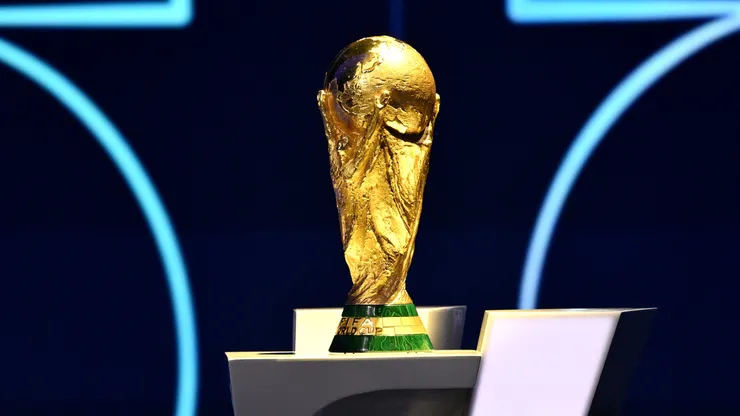
The 2026 World Cup, featuring an expanded field and three host nations, is widely expected to be the most ambitious edition in the tournament’s nearly 100-year history. Still, with less than six months remaining before kickoff, the North America–hosted competition could be impacted by significant rule changes following a recent IFAB meeting, including a potential expansion of VAR’s decision-making authority during matches.
The International Football Association Board (IFAB), the body responsible for overseeing the Laws of the Game, held a meeting last Tuesday in London with an eye toward the 2026 World Cup. One of the main discussion points was the offside proposal introduced by former Arsenal manager Arsène Wenger, which was ultimately dismissed by IFAB members.
Now, the Canadian Premier League has emerged as one of the competitions being considered to trial the so-called “Wenger Law” as part of a field experiment to evaluate its effectiveness. However, with IFAB’s annual general meeting scheduled for February 28 in Cardiff, Wales, several other rule changes could be approved in the short term without the need for on-field testing.
Which rules could be changed at the 2026 World Cup?
Increased VAR decision-making
According to Spanish outlet Diario AS, one of the key discussion points in London involved scenarios in which VAR could assume authority previously reserved for on-field officials. Among the proposals is allowing VAR to intervene on second yellow cards that lead to dismissals, potentially overturning decisions deemed clearly incorrect.
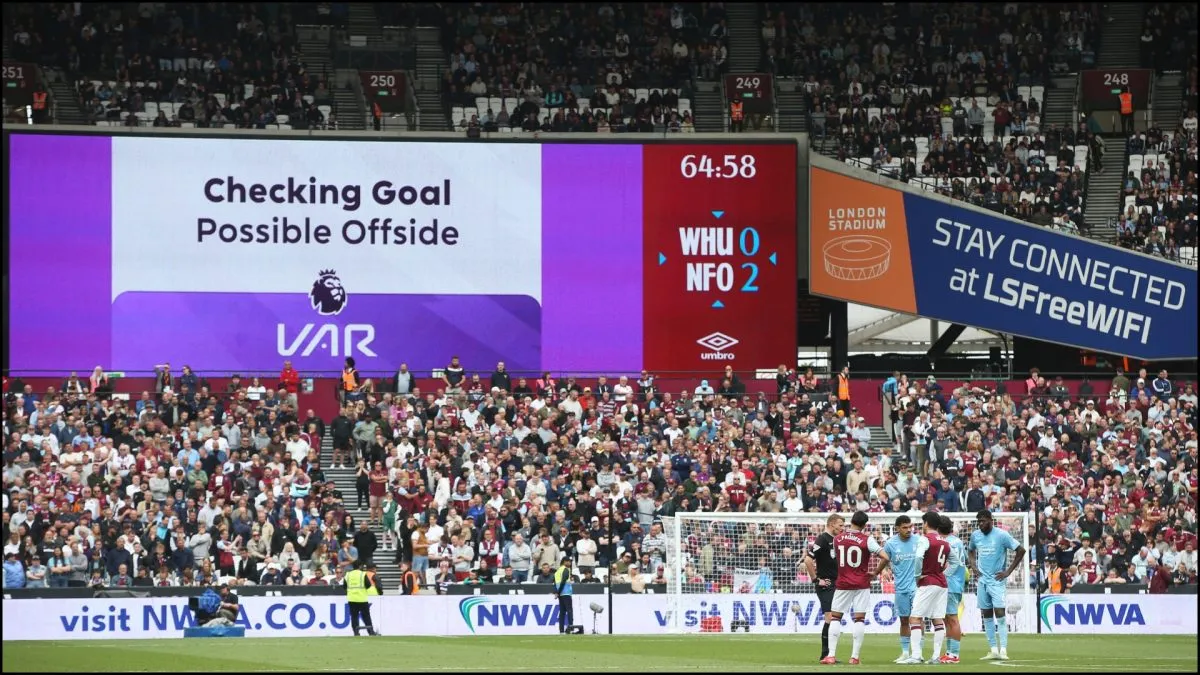
A big screen displays details of a VAR review during a Premier League match.
Another key discussion involved whether VAR should be allowed to review corner-kick decisions. Pierluigi Collina, chairman of the FIFA Referees Committee, has advocated for the change, arguing that there is sufficient time between when a corner is awarded and when it is taken to verify the decision’s accuracy.
see also
Lionel Messi’s World Cup-winning star Argentina teammate reportedly targeted by Inter for next season
IFAB analysts have attached a key condition to Collina’s proposal: VAR intervention on incorrectly awarded corners would need to be immediate and must not delay the restart of play. If those criteria are met, the initiative backed by the former Italian referee could receive approval, potentially in time for implementation at the 2026 World Cup.
More penalties for time-wasting
One of the most recent measures aimed at time-wasting is the eight-second rule for goalkeepers, with a corner awarded to the opposing team if the limit is exceeded. Further proposals would extend time limits to goal kicks and throw-ins, with possession switched if play is not restarted promptly.
Another change would penalize players who leave the field for medical assessment, requiring them to remain off the pitch for a set period, with goalkeepers as the lone exception. This rule has already been tested in MLS and the 2025 Arab Cup, though the length of the mandatory absence remains a point of debate. While a two-minute wait has been viewed as excessive, IFAB officials are reportedly considering 30 seconds as a minimum.
Lastly, substitutions have also been used to slow the pace and waste time, prompting a proposed rule requiring players to leave the field from the nearest point rather than walking to midfield. In addition, a 10-second limit is under consideration for substituted players to exit the pitch.
Ref cams set to remain in the game
First introduced in select international friendlies, referee body cameras were officially showcased at the 2025 FIFA Club World Cup. Since then, several top European leagues have begun adopting the technology, including its use in the MLS Cup final. During Tuesday’s meeting, IFAB expressed support for allowing ref cams as an optional feature within the official Laws of the Game.
Rule changes still awaiting approval
While some proposals gained momentum and others were dismissed, Tuesday’s IFAB meeting marked an important initial step toward potential changes. All proposals must still be approved at the general meeting on February 28, with any adopted rules set to take effect on July 1 and possibly debut at the 2026 World Cup in the United States, Canada, and Mexico.