




The 2026 World Cup is less than a week away, and a growing concern is already casting a shadow over the tournament. Cristiano Ronaldo is preparing for what could be a historic final World Cup appearance with Portugal, while Lionel Messi hopes to lead Argentina in another title defense. At the same time, rising stars such as Lamine Yamal and Vinicius are expected to play central roles for Spain and Brazil, respectively, yet all four could find themselves battling more than just their opponents.
A new analysis suggests that weather conditions across several host cities in North America could become one of the tournament’s biggest talking points. Experts warn that dangerous heat and humidity levels may affect players, referees, fans, and stadium workers throughout the competition.
According to the United States’ NPR (National Public Radio)‘s analysis based on 20 years of weather data, more than one-third of the tournament’s 104 matches are projected to face high-risk heat conditions. Meanwhile, many others fall into a moderate-risk category.
Researchers used Wet Bulb Globe Temperature (WBGT), a measurement that combines air temperature, humidity, sunlight exposure, and wind conditions. Unlike standard temperature readings, WBGT provides a more accurate indication of how stressful environmental conditions can be on the human body.
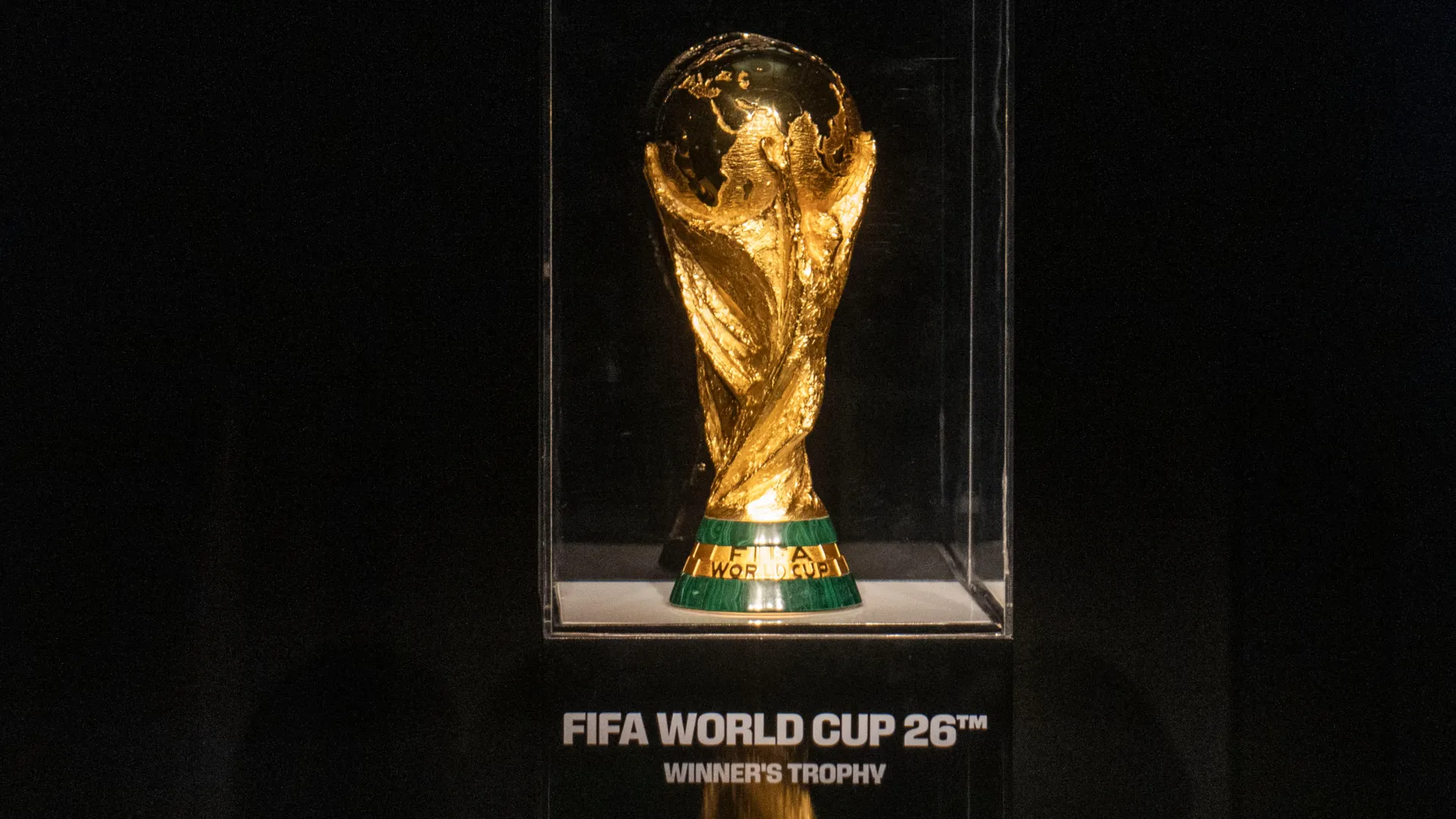
Detailed view of the 2026 World Cup trophy
The findings suggest that several host cities may experience weather severe enough to create significant health concerns. Experts believe these conditions could affect performance levels while also increasing the likelihood of heat-related illnesses.
Why has heat become major concern?
Medical specialists have long warned about the dangers of extreme heat during elite sporting events. High temperatures combined with humidity can make it difficult for the body to cool itself effectively, particularly during high-intensity exercise.
The report notes that players could face increased risks of dehydration, heat exhaustion, heat stroke, muscle fatigue, and dizziness. Referees, stadium staff, and supporters spending hours outdoors may also be vulnerable. To make matters worse, previous tournaments have already offered warning signs.
During the 2024 Copa America, assistant referee Humberto Panjoj collapsed during a match in Kansas City after being affected by the heat. The incident became a reminder that extreme weather conditions can impact everyone involved in a major sporting event. Please be advised that the video contains sensitive content and may not be suitable for faint-hearted viewers.
The most threatened matches revealed
While FIFA has attempted to reduce risks through scheduling decisions, the analysis identifies several matches and venues that could still face particularly challenging conditions. Dallas and Houston emerged as the most concerning host cities overall, with projected WBGT readings regularly exceeding the high-risk threshold.
| Host City | Highest Projected WBGT | (°C) | Most Notable High-Risk Matches |
|---|---|---|---|
| Dallas–Fort Worth | 84.2°F | 29.0°C | Japan vs. Netherlands (June 14), England vs. Croatia (June 17), Argentina vs. Austria (June 22), Semifinal (July 14) |
| Houston | 84.2°F | 29.0°C | Germany vs. Curacao (June 14), Portugal vs. DR Congo (June 17), Netherlands vs. Sweden (June 20), Portugal vs Uzbekistan (June 23), Round of 16 (July 4) |
| Miami | 82.4°F | 28.0°C | Uruguay vs. Saudi Arabia (June 15), Brazil vs. Scotland (June 24), Quarterfinal (July 11), Third-place match (July 18) |
| Atlanta | 82.4°F | 28.0°C | Spain vs. Cape Verde (June 15), Spain vs. Saudi Arabia (June 21), Round of 16 (July 7), Semifinal (July 15) |
The projected WBGT readings for some of these matches exceed 84°F (29.0°C), placing them firmly within the dangerous category according to heat-risk standards. For Ronaldo and Portugal, the concern is especially notable because both of their first two group-stage matches in Houston have been identified among the tournament’s highest-risk fixtures.
However, the heat challenge is not limited to Portugal. Argentina, led by Messi, could encounter dangerous conditions during its group-stage meeting with Austria in Dallas.
Brazil, featuring Vinicius as one of its key attacking stars, is scheduled to play Scotland in Miami, another venue highlighted for severe humidity concerns. Meanwhile, Spain‘s campaign may also be affected. Matches involving Yamal‘s national team in Atlanta are among those projected to face elevated heat stress levels.

FIFA World Cup 2026 groups.
Miami, Houston, Dallas, and Atlanta under the spotlight
The report identifies four cities as particularly vulnerable. Miami stands out because it combines heat and humidity. While temperatures may not always be the highest, the moisture in the air significantly increases physical stress on athletes.
| Match | Venue | Date | WBGT (°F) | (°C) |
|---|---|---|---|---|
| Semifinal | Dallas–Fort Worth | July 14 | 84.2°F | 29.0°C |
| Semifinal | Atlanta | July 15 | 82.4°F | 28.0°C |
| Quarterfinal | Miami | July 11 | 82.4°F | 28.0°C |
| Round of 16 | Houston | July 4 | 84.2°F | 29.0°C |
| World Cup Final | New Jersey / New York | July 19 | 78.8°F | 26.0°C |
Houston consistently ranks among the hottest venues in the tournament projections. Multiple group-stage and knockout-round fixtures there are expected to exceed dangerous thresholds. Dallas produces some of the highest projected WBGT readings overall, making it arguably the most concerning host city in the analysis.
Atlanta also features several high-risk knockout matches, including one of the tournament’s semifinals. Meanwhile, venues such as Vancouver, Seattle, the San Francisco Bay Area, and Mexico City are viewed as significantly safer due to cooler conditions.
| Venue | Risk Level | WBGT (°F) | (°C) |
|---|---|---|---|
| Vancouver | Minimal Risk | Below 70°F | Below 21°C |
| Seattle | Minimal Risk | Below 70°F | Below 21°C |
| San Francisco Bay Area | Minimal Risk | Below 70°F | Below 21°C |
| Mexico City | Minimal Risk | Below 70°F | Below 21°C |