

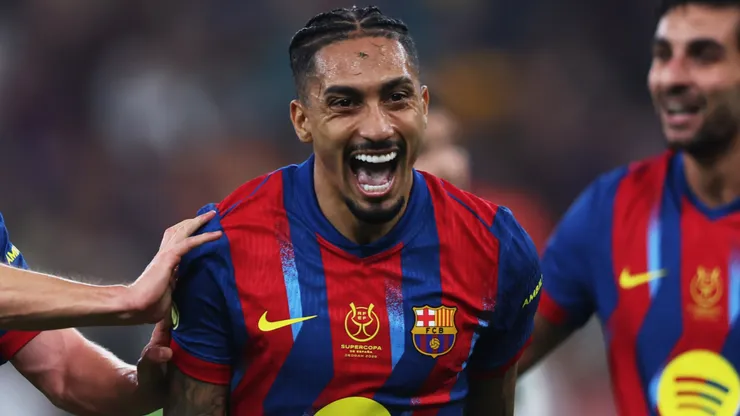
Raphinha did not raise his voice, nor did he need to. On a night when silverware was decided, and narratives were rewritten, the Brazilian winger let his soccer do most of the talking. As Barcelona lifted another Spanish Super Cup, Raphinha stood at the center of the celebration, calm, decisive, and unmistakably influential. Yet beneath the smiles and medals, there was a sharper edge to the moment—one aimed not at a rival on the pitch, but at soccer’s highest judges.
For a player who has spent the past year redefining his role at Barcelona, the timing felt deliberate. Overlooked, underestimated, yet once again decisive when it mattered most, the Brazilian star left Jeddah with a trophy in his hands and a message that would soon echo far beyond the stadium.
The Spanish Super Cup final against Real Madrid delivered everything expected of a Clasico on neutral ground. Goals, momentum swings, late drama, and moments of individual brilliance defined a breathless contest that ended 3-2 in the Blaugrana’s favor.
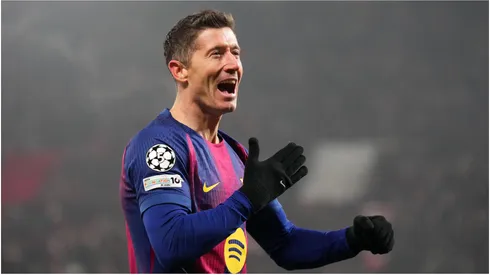
Raphinha was everywhere. He opened the scoring with a composed left-footed finish, struck again in the second half with a decisive effort that ultimately proved to be the winner, and never stopped driving his team forward. Even after a late red card reduced Barcelona to ten men and Madrid threw everything into a desperate final push, the Blaugrana held firm.
This was not just another trophy. It was Barca’s second consecutive Super Cup and the first silverware of the season, a psychological boost as much as a tangible prize. And once again, Raphinha’s fingerprints were all over it.
Season-defining return after injury
What made the moment even more striking was the context. The 29-year-old’s influence has been impossible to ignore since his return from a hamstring injury. Barcelona has won all 10 matches he has started since coming back, a statistic that underlines just how central he has become to the team’s structure.
Last season already placed him among Europe’s elite performers. He was the joint-top scorer in the Champions League, one of the most productive attackers in Spain, and a driving force behind Barcelona’s domestic treble. Across all competitions, only Mohamed Salah recorded more direct goal involvements. Yet despite those numbers, recognition on the global awards stage never fully followed.
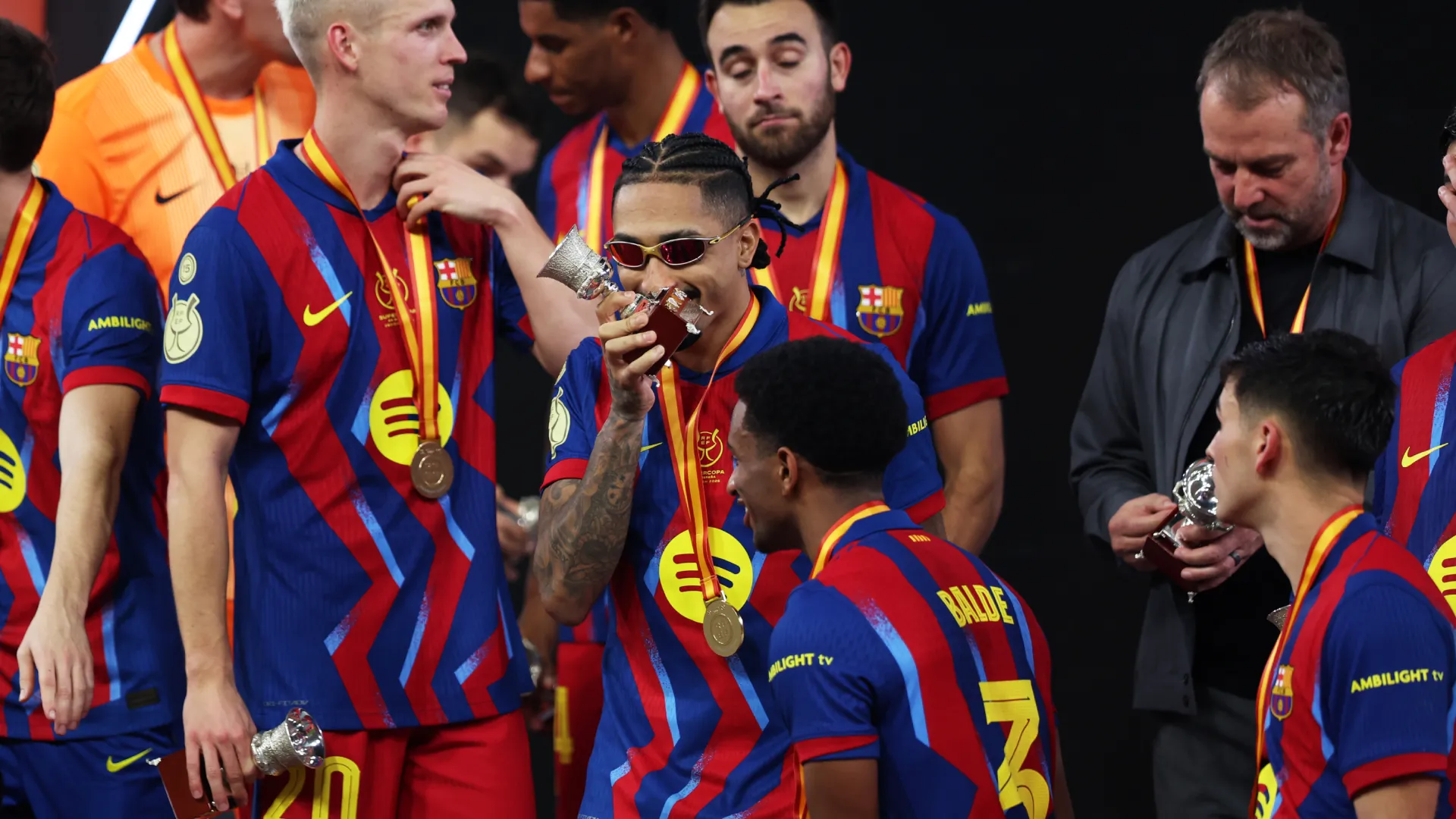
aphinha of FC Barcelona kisses a small Spanish super cup following the Spanish Super Cup Final
What did Raphinha say?
After the Super Cup final, amid celebrations and interviews, Raphinha was asked directly what message he would send to FIFA and Ballon d’Or jurors after being overlooked once again. That was the moment the mystery dissolved. “Nothing. They just need to watch more football.” Seven words, delivered calmly. No embellishment, no bitterness, just certainty.
Given that Raphinha finished fifth in the Ballon d’Or voting, with 61 goal contributions in 64 games, the remark felt less like arrogance and more like an unavoidable conclusion. If awards are meant to motivate, then overlooking the former Leeds man may have had unintended consequences. While others have struggled to recover from Ballon d’Or disappointment, he appears sharper, more focused, and more driven than ever.