



FIFA is expected to roll out several significant rule changes for the 2026 World Cup, an edition that will mark the largest tournament in history in terms of teams, players, and host nations. Among the proposed updates to the regulatory framework is a reported plan to add a second yellow card amnesty period.
As reported by Dan Sheldon of The Athletic, a player’s disciplinary record would be wiped clean not only after the quarterfinals but also following the conclusion of the group stage. This shift is being considered primarily to account for the tournament’s expansion and the introduction of the new Round of 32.
Under current FIFA regulations, accumulating two yellow cards in separate matches results in an automatic one-game suspension. In previous World Cups, this accumulation remained active from the opening match through the round of 16, a system designed to maintain discipline during the shorter tournament format.
However, for the upcoming edition in the U.S., Canada, and Mexico, there will likely be two distinct reset stages. Players who advance to the knockout rounds would see their counts reset to zero; a second reset would then occur after the quarterfinals to ensure no one misses the final due to a minor booking in the earlier knockout rounds.
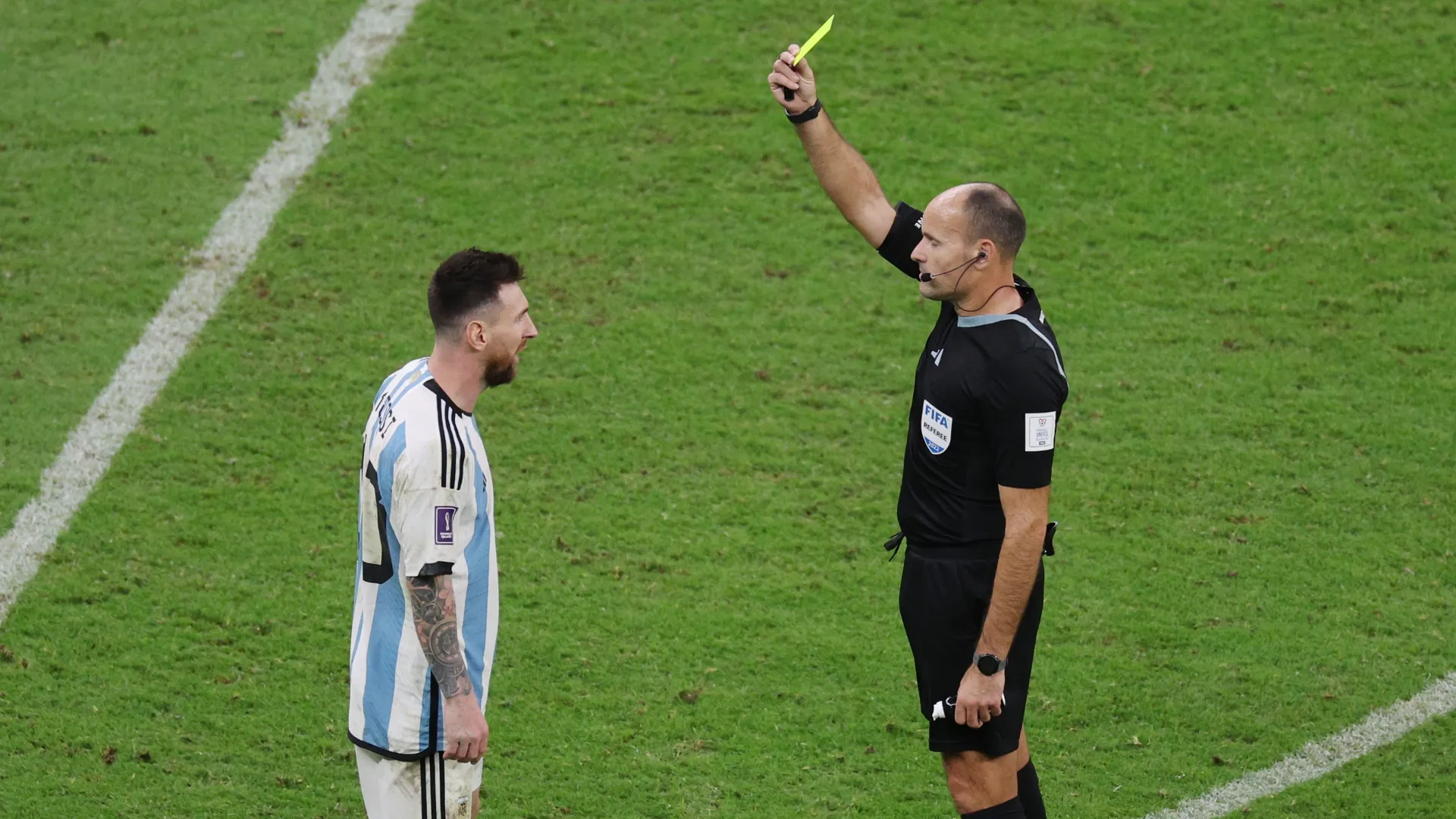
Referee Antonio Mateu shows a yellow card to Lionel Messi of Argentina.
The move is intended to provide players with a fairer chance to participate in the expanded tournament, which now requires one additional game to reach the final. While not yet official, the change is set to be discussed and finalized during the FIFA Council meeting in Vancouver this Tuesday.

see also
2026 World Cup: Netherlands deal major blow as Xavi Simons suffers ACL injury at Tottenham Hotspur
The evolution of the yellow card amnesty
Booking rules at the World Cup have long been strict, as a single mistimed tackle can often sideline a star player for a high-stakes matchup. It was during the 2010 World Cup in South Africa that the FIFA Executive Committee first agreed to implement an amnesty phase following the quarterfinals to protect the integrity of the final.
The 2026 tournament will feature a record 48 teams and rosters of 26 players, similar to the expanded squads seen at the 2022 World Cup in Qatar. By reportedly introducing this second amnesty phase, FIFA appears eager to modernize its disciplinary code to better fit the demands of its new, larger format.