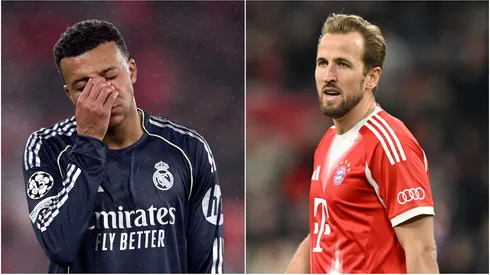




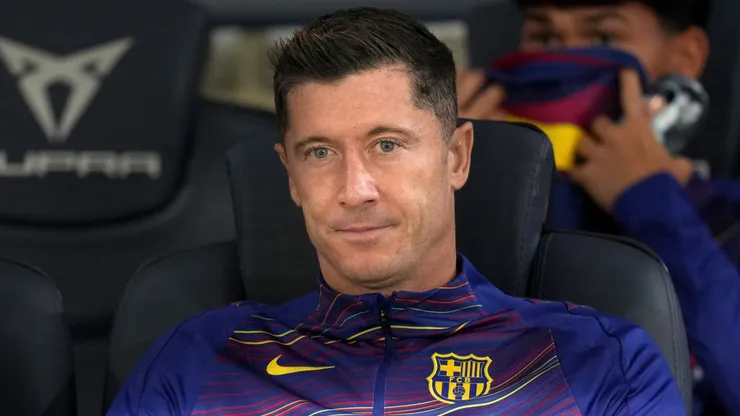
The story sounds almost unbelievable in modern elite soccer: a world-class striker, signed to score goals, allegedly being asked to think twice about finding the net. Yet for Robert Lewandowski, the question has lingered ever since whispers emerged about a mysterious clause tied to his move from Bavaria to Catalonia. Was there really a moment when goals became a financial problem rather than a solution?
In recent weeks, that rumor has resurfaced with renewed intensity, fueled by comments from Lewandowski himself. Without confirming every detail outright, the Barcelona forward has offered rare insight into the delicate balance between sporting ambition and financial survival at one of soccer’s biggest institutions. What he said — and how he said it — has reopened a conversation that goes far beyond one player or one clause.
When Lewandowski arrived at Barcelona from Bayern Munich in the summer of 2022, he was meant to symbolize a return to dominance. The Polish striker delivered exactly that on the pitch, firing Barcelona to domestic success and re-establishing himself as one of Europe’s most reliable finishers.
But behind the scenes, the club’s fragile finances meant that every detail of the transfer mattered. Reports later suggested that part of the agreement with Bayern included performance-based bonuses, one of which would be triggered if Lewandowski scored a specific number of goals in La Liga. In an era when Barca was scrutinizing every expense, even goals carried a price tag.

Robert Lewandowski of FC Barcelona celebrates scoring.
Those claims initially appeared in an unauthorized biography, sparking debate across Spain and beyond. The most shocking allegation was simple and startling: that the Blaugrana had, at one stage, asked their own striker to stop scoring.

see also
Robert Lewandowski makes candid admission about his Barcelona future amid exit rumors: ‘I don’t know’
What did Lewandowski say?
Speaking to Polish journalist Bogdan Rymanowski, Lewandowski finally addressed the subject. His tone was cautious, respectful, and revealing in equal measure. As reported by Mundo Deportivo and Marca, the striker chose not to deny the story outright. “There are things I don’t want to talk about. I have a lot of respect for Barcelona and the people who work there. I was aware of the club’s situation,” Lewandowski said.
That sentence alone was enough to confirm that something unusual had occurred. He acknowledged the financial context without accusing anyone directly, making it clear that the situation reflected the broader reality Barcelona was living through at the time.
It was later in the interview that Lewandowski revealed the line that stunned supporters and pundits alike — the moment when the abstract rumor became deeply personal. “For me, nothing changed. I have no problem with that, although it stuck in my mind and at some point, I wondered whether to score a goal or not,” he admitted.
Those nine words transformed speculation into lived experience. The idea that one of the most ruthless finishers of his generation could hesitate, even momentarily, because of a financial clause speaks volumes about the pressures inside modern soccer’s biggest clubs.

see also
Sad post-Lionel Messi reality: Robert Lewandowski’s biography uncovers Barcelona’s bizarre cost-cutting measures due to financial woes
Why the clause mattered so much
According to reports relayed by Marca, the clause in question would have required Barcelona to pay Bayern $3 million if Lewandowski had reached 25 league goals during the 2022-23 season. He eventually finished on 23.
At that stage, the Catalans had already secured the league title. There was no sporting urgency left — only financial calculation. The club was still outside La Liga’s 1:1 spending rule and operating under strict constraints. Saving $3 million, while seemingly modest at the elite level, was significant in a period when the club was, as Lewandowski put it, “looking at every single euro.”
Despite the mental weight of the situation, the veteran striker was keen to stress that his professionalism never wavered. “For me, nothing changed. I had no problem with that,” he repeated, underlining that he never downed tools or acted against the team’s interests.