



Over the last several years, Major League Soccer has experienced enormous growth, establishing itself among the world’s most important leagues. However, it still features certain distinctive elements compared to the top soccer competitions in Europe and South America, something that could become even more pronounced with a potential rule change that MLS actually experimented with decades ago.
“Major League Soccer has had discussions with the International Football Association Board, global football’s rule making body, about trialing the use of a stopped clock in matches,” British outlet The Guardian reported Wednesday.
If this initiative moves forward, it would represent a major change for soccer. For more than a century, the sport has been defined by a timekeeping system in which the clock never stops regardless of what happens on the field, unlike virtually every other major sport.
In addition, soccer’s clock runs upward from 0 to 45 minutes to mark the beginning and end of each half, rather than counting down to zero as happens in other sports — not only in the United States, but globally — such as basketball and field hockey.
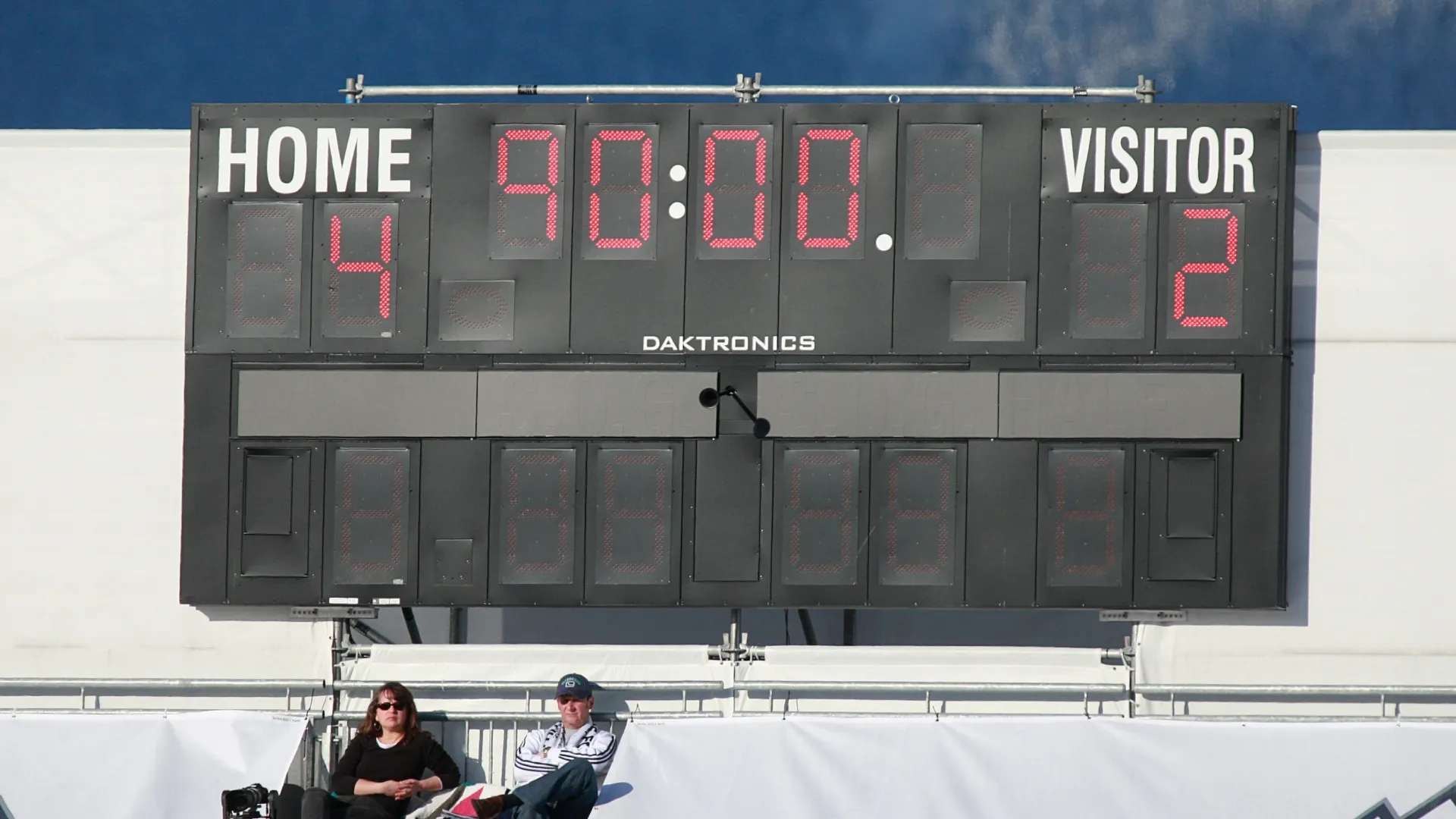
A scoreboard is displayed at the end of an MLS match between Toronto FC and Vancouver Whitecaps FC.
The main criticism of this system is that actual playing time varies depending on the number and length of interruptions. At the same time, although referees add stoppage time as a remedy, that method often rewards teams that intentionally waste time in order to gain an advantage.

see also
UEFA reportedly distances itself from FIFA over mouth-covering and walk-off rule changes
MLS’ stance on the stopped clock
The conversations surrounding the possible implementation of a stopped clock in MLS are not merely rumors, as league officials have publicly acknowledged the idea. “We’re open to trials around the world, and working with IFAB,” MLS vice president of competition Paul Grafer told The Guardian.
“When are we going to move away from all of these stopgap procedures and see if we can address gamesmanship and match manipulation by having the referee have a [stopped] clock?” Grafer added, making his position on the issue clear.
MLS has used a stopped clock before
If the proposal to introduce a stopped clock moves forward, it would not be entirely new for MLS. When the league launched in 1996, the original system resembled those used in other American sports, with the clock stopping after every interruption to ensure full net playing time. However, that rule did not last long, as MLS adopted the globally used system in 1999.