



For more than a generation, the United States has waited for a leader capable of turning ambition into history. Christian Pulisic will enter the 2026 World Cup on home soil as the figure carrying that possibility, standing at the crossroads of legacy and opportunity. The singular USA side, loaded with the strongest talent pool it has ever assembled, looks to him not just for creativity or goals, but for belief. And Pulisic arrives with a mission defined by time itself: to break a record that has stood untouched for nearly 100 years—the nation’s best-ever World Cup finish from 1930.
The journey toward this moment begins with a fact known to statisticians, historians, and hardcore supporters: the United States reached the semifinals in the very first World Cup in 1930, finishing third in a tournament that barely resembles the behemoth it is today. For decades, that achievement stood as both a badge of honor and a haunting reminder of what had never been replicated.
But 2026 represents a rupture in the timeline. A World Cup at home. A generation of European-based talent. A star in Pulisic whose path has mirrored the rise of American soccer itself. This is the USA’s greatest chance in nearly a century to surpass that mythical finish, and the forward knows the weight of the moment better than anyone.
As he enters his third World Cup, Pulisic no longer plays the role of savior; he plays the role of commander. His evolution from prodigious winger to complete attacking leader has reshaped the team’s identity. His influence during qualifiers, Nations League triumphs, and major tournaments has solidified a truth: the USA is at its best when Pulisic sets the tempo.
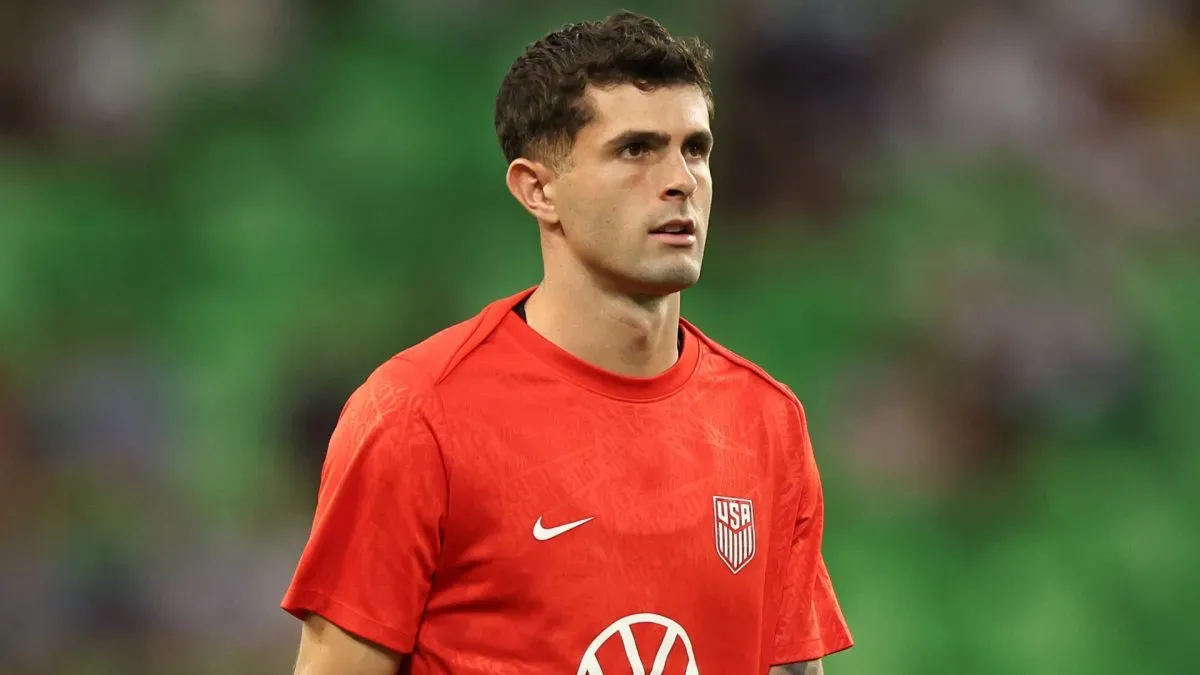
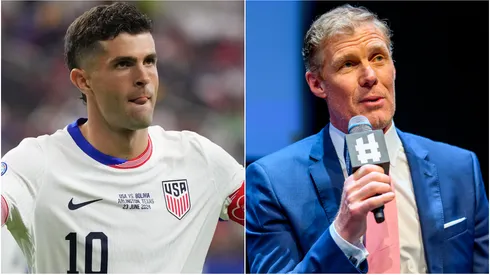
Christian Pulisic #10 of United States warms up before the Ecuador game.
The team’s structure—dynamic, physical, technically polished—revolves around a core group that has matured together across Europe’s toughest leagues. Yet even within this collective rise, Pulisic remains the engine. His calmness in crucial moments, his ability to turn a half-chance into a defining goal, and his understanding of global expectations make him indispensable.
USA’s rivals and possible knockout path at the 2026 FIFA World Cup
The expanded 48-team format of the 2026 World Cup creates a deeper, more unpredictable battlefield. Some nations tremble at the thought of more games, more travel, and more variables. Pulisic sees only openings. More opponents are vulnerable to high pressing. More chances to exploit mismatches. More moments to stamp his authority.
North American stadiums will be packed with supporters wearing red, white, and blue. The noise will be unlike anything the U.S. men have ever experienced. For a player whose performances rise with emotional stakes, Pulisic may find his most powerful version here.
| Group D |
| USMNT |
| Paraguay |
| Australia |
| Winner Play-off G |
USMNT path to the knockout stages
As the United States prepares to host the World Cup for the second time after 1994, the expectations are unmistakably higher. This tournament unfolds under pressure unlike anything the program has faced before, and Mauricio Pochettino—tasked with guiding the most talented generation in U.S. history—stands at the center of that challenge. Hosting the event has given the USA automatic entry, allowing them to bypass the usual qualification grind, but it has also removed the rhythm and familiarity that competitive qualifiers bring. The true test begins with the draw.
Being placed in Pot 1 gives the USA a theoretical advantage, but it guarantees nothing. Heavyweights and dangerous dark horses lurk in the remaining pots—teams such as Croatia, Egypt, Norway, or Italy could shape a treacherous group or an unforgiving knockout bracket
And the stakes grow steeper under the tournament’s expanded design. For the first time, the World Cup features a round of 32, stretching the knockout gauntlet longer than ever before. The math is brutal: to match the USA’s quarterfinal run from 2002, the team must now win two knockout matches instead of one. To surpass it—and chase the semifinal standard set in 1930—they must win three.
This is where Pulisic’s leadership will matter most. The margin for error shrinks, the emotional swings intensify, and the path is shaped by both quality and nerve. The United States knows an opportunity of historic scale is before it. The nation waits. The world watches, and the 27-year-old steps forward seeking the achievement that has eluded nearly a century of American soccer dreams.