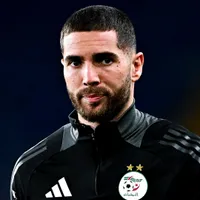

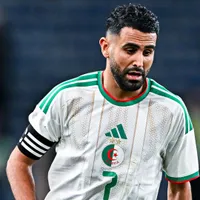


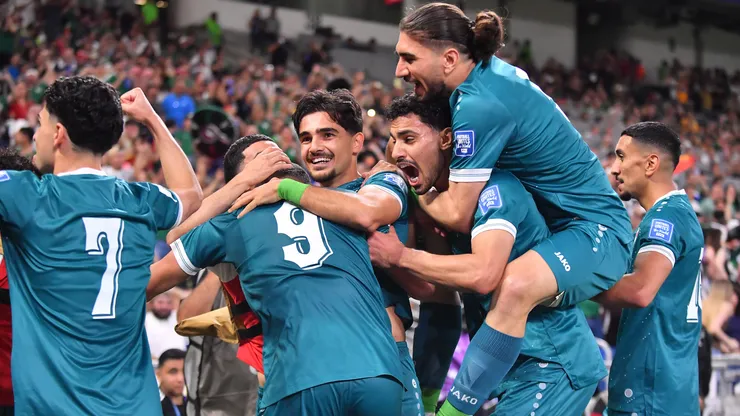
Iraq returns to the global stage for the first time since 1986. They secured their spot after a dramatic intercontinental playoff victory over Bolivia in Mexico.
Ranked 57th globally, the Lions of Mesopotamia face a challenging group stage but bring immense resilience and national pride to the global tournament.
As one of the final FIFA World Cup 2026 teams to qualify, they represent the ultimate underdog story. This World Cup 2026 team preview breaks down the Iraq 2026 World Cup squad, examines head coach Graham Arnold’s impact, highlights Iraq key players, and explores the tactical setup that makes them a difficult opponent to break down.
Team profile
| Category | Detail |
|---|---|
| Coach | Graham Arnold |
| Nickname | Usood al-Rafidayn (Lions of Mesopotamia) |
| FIFA ranking | 57th |
| Confederation | AFC |
| Group | Group I |
| Best tournament result | Group stage |
| Tournament appearances | 2 |
| Last appearance | 1986 |
How Iraq play
The Iraq tactical analysis reveals a team built on defensive solidity and disciplined structure. The Iraq formation is primarily organized around a resilient defensive shape that aims to frustrate superior opponents. During their grueling 21-game qualification journey, they lost only three matches, showcasing a deep commitment to collective defending and absorbing pressure.
In possession, the Lions of Mesopotamia do not rely on dominating the ball. Against Bolivia, they managed just 32% possession but proved highly clinical in transition. They look to absorb opponent attacks and launch rapid counter-attacks, utilizing the pace and directness of their forwards to create scoring opportunities.
Aymen Hussein serves as a traditional target man, holding up play to relieve defensive pressure and bringing dynamic midfielders like Zidane Iqbal into the attack.
Opponents will likely target their lack of top-level European experience, forcing them to defend deep in their own half for long stretches. However, this pragmatic approach makes them a frustrating side to play against. This disciplined tactical foundation will be essential if they hope to secure a positive result against elite competition this summer.
Graham Arnold: The coach behind Iraq
Graham Arnold took charge of the national team in May 2025 during the third round of qualification. The veteran Australian Iraq coach brings significant international experience to the role, having previously guided his native Australia to the knockout rounds of the 2022 tournament in Qatar.
Arnold has implemented a pragmatic, results-driven philosophy that emphasizes defensive organization and mental toughness. Under his leadership, the squad has been highly effective, losing just three of his first 13 competitive matches while conceding only 0.77 goals per game.
He is widely respected by his players for fostering a strong team spirit and navigating a demanding qualification path. His proven ability to organize underdog sides in major tournaments could be a crucial factor for the team as they face world-class opposition in North America.
Key player: Ali Al-Hamadi
While the roster lacks extensive top-flight European experience, Ali Al-Hamadi stands out as a vital attacking asset. The Luton Town forward provides the pace and clinical finishing required to execute the team’s counter-attacking strategy effectively.
Al-Hamadi enters the showcase of international soccer teams 2026 with a proven track record of delivering in crucial moments. He scored the decisive goals against Bolivia to secure tournament qualification on April 1, 2026, and has netted five times in his first 17 international appearances.
His dynamic movement complements the physical presence of Aymen Hussein, giving the attack a much-needed outlet when defending deep. If Al-Hamadi were to miss time with an injury, the squad would lose its primary transitional threat, severely limiting their ability to relieve pressure against dominant opponents.
Iraq’s road to the 2026 tournament
The journey to North America was a grueling 21-match marathon that tested the squad’s resilience. They dominated the second round of AFC qualifying, winning all six matches to top Group F with a +15 goal differential.
The path grew more challenging in the subsequent rounds, resulting in third- and second-place finishes in their respective groups. Forced into the AFC playoffs, they edged the United Arab Emirates 3-2 on aggregate to keep their tournament hopes alive.
The defining moment arrived on April 1, 2026, when they defeated Bolivia 2-1 in a high-stakes intercontinental playoff in Monterrey, Mexico. Despite holding just 32% possession, their clinical finishing ended a four-decade tournament absence, proving they can execute under immense pressure.
Iraq’s 2026 group stage outlook
The Lions of Mesopotamia face a formidable challenge in Group I, drawn alongside France, Senegal, and Norway. This represents one of the most difficult groups in the tournament, requiring near-perfect defensive performances to avoid early elimination.
France presents the most challenging matchup, boasting world-class talent and heavy expectations to win the entire competition. Norway offers another severe test with an elite attacking frontline, while Senegal brings physical dominance and recent deep tournament experience.
The most favorable matchup likely comes against Senegal on June 26, 2026, a match the squad views as their best opportunity to secure a historic point.
Readers looking to follow every match involving Iraq can also check our complete Iraq TV schedule for the latest broadcast and streaming information. Success in the group stage would simply mean remaining competitive and frustrating superior opponents.
Iraq squad for 2026 tournament
| Player (Position) | Club |
|---|---|
| Fahad Talib (GK) | Al-Talaba |
| Jalal Hassan (GK) | Al-Zawraa |
| Ahmed Basil (GK) | Al-Shorta |
| Rebin Sulaka (DF) | Port |
| Hussein Ali (DF) | Pogoń Szczecin |
| Zaid Tahseen (DF) | Pakhtakor |
| Ahmed Yahya (DF) | Al-Shorta |
| Mustafa Saadoon (DF) | Al-Shorta |
| Akam Hashim (DF) | Al-Zawraa |
| Frans Putros (DF) | Persib |
| Merchas Doski (DF) | Viktoria Plzeň |
| Manaf Younis (DF) | Al-Shorta |
| Youssef Amyn (MF) | AEK Larnaca |
| Ibrahim Bayesh (MF) | Al-Dhafra |
| Zidane Iqbal (MF) | Utrecht |
| Zaid Ismail (MF) | Al-Talaba |
| Amir Al-Ammari (MF) | Cracovia |
| Ali Jasim (MF) | Al-Najma |
| Kevin Yakob (MF) | AGF |
| Aimar Sher (MF) | Sarpsborg |
| Marko Farji (MF) | Venezia |
| Ahmed Qasem (MF) | Nashville SC |
| Ali Al-Hamadi (FW) | Luton Town |
| Mohanad Ali (FW) | Dibba |
| Ali Yousif (FW) | Al-Talaba |
| Aymen Hussein (FW) | Al-Karma |
Final word on Iraq
Entering the 2026 tournament as a massive underdog, the team’s mere presence in North America is a monumental achievement. Their organized defensive block and clinical counter-attacking ability will be their primary weapons against elite global competition.
The biggest challenge will be overcoming a severe talent gap when facing powerhouses like France and Senegal. A realistic expectation is an early exit from a brutal Group I, but securing a single point or scoring a goal would represent a massive success for a nation returning to the global stage after 40 years.