
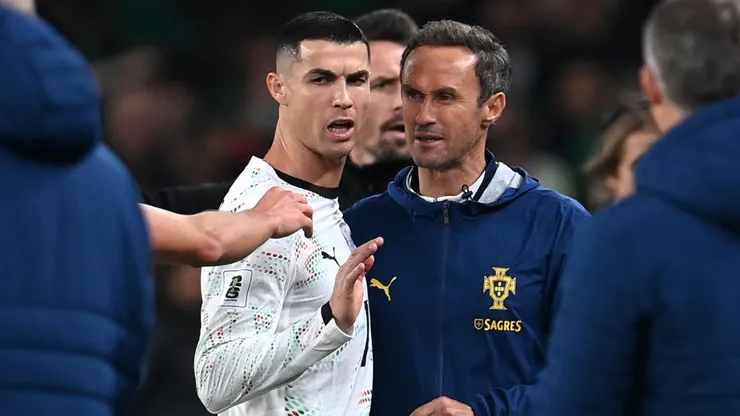
Cristiano Ronaldo has found himself at the center of a fresh debate over fairness in international soccer, with former England manager Gareth Southgate questioning FIFA’s handling of a disciplinary decision involving Portugal’s captain. The controversy concerns Ronaldo’s suspension ahead of the 2026 World Cup, raising questions about whether soccer’s biggest stars are held to the same standards as everyone else.
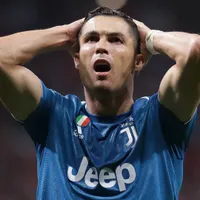
The controversy began in November 2025, when Ronaldo was sent off during Portugal’s World Cup qualifier against the Republic of Ireland for violent conduct after elbowing defender Dara O’Shea. The incident initially left the Al-Nassr forward facing a three-match suspension, potentially affecting his availability for the tournament.
FIFA’s Disciplinary Committee subsequently confirmed a sanction under which Ronaldo served one match, while the remaining two were suspended for a one-year probationary period. The decision ultimately allowed the Selecao captain to be available for his country’s opening matches at the World Cup.
The 41-year-old was ultimately cleared to represent Portugal at the 2026 World Cup, extending his remarkable international career. The decision also left FIFA facing scrutiny over how it balances the flexibility provided by its disciplinary regulations with the need to demonstrate consistent treatment across the game.
Southgate questions FIFA’s disciplinary process
Speaking on The Amol Rajan Connection, Southgate argued that disciplinary decisions should remain within the established framework of referees and independent panels, without interference from wider soccer governance. His concern centered on whether the process was being applied consistently, particularly when a globally recognized player was involved.
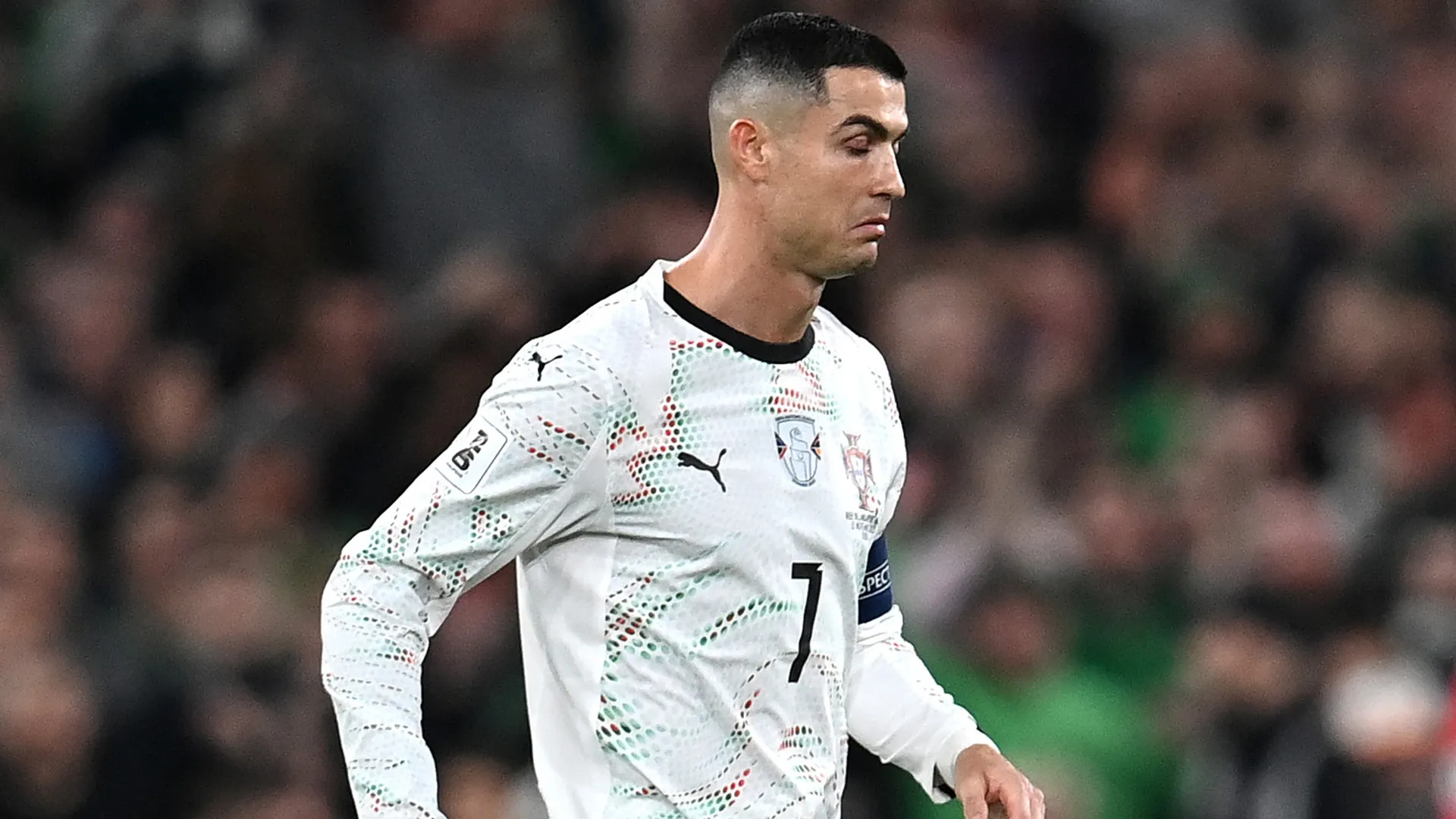
Cristiano Ronaldo of Portugal reacts as he leaves the pitch after being shown a red card
“Well, you’re interfering with the refereeing of the game. So, you know, there is a referee, then there is a disciplinary panel, and that should be it,” Southgate said. He then referred directly to Ronaldo’s situation, highlighting the timing of the decision and the Portuguese forward’s appearance at an event associated with FIFA.
“Even before the World Cup, Cristiano Ronaldo, he had a suspension that was overhanging. He did an appearance at an event that looked to be linked to FIFA and lo and behold, you know, he was allowed to play in the first game of the World Cup,” the former England manager explained.
Did Ronaldo receive preferential treatment?
Southgate’s strongest criticism came when he questioned whether the outcome would have been the same for a less famous player. Although he made a point of praising Ronaldo’s ability, he suggested the forward’s status could have influenced how the situation was perceived and handled. “Had he not been Cristiano Ronaldo — and I think he’s a wonderful player, by the way — I don’t think that would have happened,” Southgate said.
He warned that such decisions risk blurring the boundaries between legitimate disciplinary procedures and outside influence. “Already we’re greying the areas of what we’re interfering with and what we’re allowing the game to decide, the natural order of the game,” he added.
What do FIFA’s rules say about suspended bans?
FIFA’s disciplinary regulations do permit sanctions to be suspended, either fully or partially, subject to a probationary period. Article 27 of FIFA’s Disciplinary Code provides a legal mechanism for suspending certain sanctions, meaning the decision involving Ronaldo was not automatically outside the rules simply because the remaining matches were deferred.
Reports surrounding the case indicated that Ronaldo’s disciplinary history, including his record across more than 200 previous international appearances, was considered in the decision. The central distinction, therefore, is between whether FIFA had the authority to suspend part of the punishment and whether its decision was appropriate and consistent with how comparable cases are handled.