
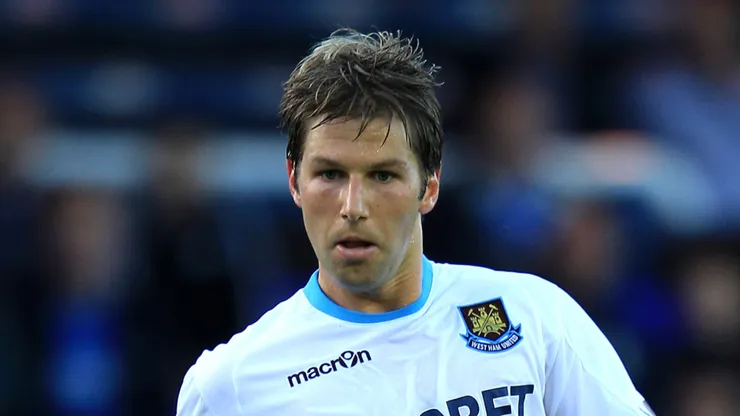
At 44 years old, Thomas Hitzlsperger has held a number of different functions from player to CEO to sporting director to pundit to journalist to commentator to restauranteur. However, perhaps the most important role that he has occupied is a trailblazer for LGBT athletes.
Born in Munich, West Germany, Hitzlsperger started off with VfB Forstinning before spending a decade at Bayern Munich’s academy. He left in 2000 and joined Aston Villa, and following a brief loan spell at second-tier Chesterfield, he started to make his presence felt in the Premier League.
Hitzlsperger racked up 12 goals and 14 assists in 114 appearances for Villa, earning the nickname ‘Der Hammer’ for his powerful, left-footed strikes from long distance, the highlight of which was a last-minute, 30-yard strike to secure a victory over rivals West Bromwich Albion.
The evolution of soccer through Hitzlsperger’s eyes
“I always had this talent when I was a kid: I had the ability to shoot very hard. When you have this ability, and it stands out so early on in your life, you keep using it, because you know it separates you from everybody else,” stated Hitzlsperger in an exclusive World Soccer Talk interview. “I kept practicing, and it kind of became my signature shot. That was good: I was very happy to have that. On the other hand, I was quite slow, so having that gift means you’re missing out on something else.”
“Anyway, I think the introduction of data, and nowadays, all the top clubs use a lot of data. Expected Goals have become so prominent, and I like xG. It kind of gives you a really good guidance of how the game is overall. It’s not everything, but I think it’s a good indicator. When you come to the conclusion that most goals are being scored in a certain area in the box, it makes sense. I guess in basketball, Steph Curry was kind of one of the first I can remember taking shots from a great distance, and if you practice this and you’re very good at it, then make this your weapon.
“It forces other teams to come up with new ideas, because if you defend deep, but then on the other team there’s somebody who can shoot from 30 yards out, then you have to change your tactics. I think that soccer is changing; the new added space is a big challenge, because not going in a straight line, and the game keeps evolving. This is the trend right now: xG, long-distance shooting, and that’s the fun part. That’s the part that I really enjoy. Those are the details where I think this is how soccer can evolve, but not some crazy stuff, like selling rights for World Cups, or overturning red cards, and those other things.”
The struggle to stay at a peak level
After joining Stuttgart in 2005, Hitzlsperger enjoyed the peak of his soccer career, scoring the equalizer on the final day of the 2006/07 season vs. Energie Cottbus. Had Stuttgart lost, Schalke would’ve won the title. Instead, Sami Khedira scored to complete the comeback and secure Stuttgart’s first Bundesliga title in 15 years.
He didn’t just make his legacy at the club level, but at the international level, making 52 caps for Germany and winning the silver medal at the 2008 Euros, as well as the bronze at the 2005 Confederations Cup and 2006 World Cup. Hitzlsperger left for Lazio in 2010, bouncing around from West Ham to Wolfsburg to Everton before deciding to hang up his boots in 2013.
“There are various factors why I retired early, but having played at the Bayern Academy for 11 years, and then Aston Villa for 5 years, Stuttgart for 4.5 years, I wanted to be in a place for a longer time, and suddenly I kept moving clubs every 6 to 12 months,” he added. “This was difficult because my life had changed, my perspective on life had changed, and I wasn’t the sought-after player anymore, and suddenly you are just a number 20 on the roster.
“You think, ‘Okay, whether I’m here or not, it doesn’t make a big difference, and that was difficult for me to handle and to deal with.’ I trained even harder, I tried more, and yet the outcome was worse, and that was very difficult. And then, when you move every 12 months, you have to make new friends, you have to let go of older friends, and I struggled. I really struggled, and then injuries came on top of it, and I thought, ‘Maybe I have to call it a day and do something different.”
Life after soccer
Four months after retiring, he became the first high-profile soccer player to come out as gay. It would take Jakub Jankto a decade to become the first active soccer player to come out. Since then, Hitzlsperger has kept busy with various different jobs, managing the London-based restaurant L’Escargot and expanding his media career with leading outlets like ESPN, Fox Sports, and Sky Germany.
He also returned to Stuttgart from 2019 to 2022, rising from Sporting Director to CEO, and he’s currently working with three clubs as a board member or co-owner: Aalborg, VVV-Venlo, and Hellas Verona. Above all, though, Hitzlsperger has used his platform to promote inclusiveness for gay athletes, demonstrating that homosexuality isn’t something to be ashamed of – it’s something to be proud of.