

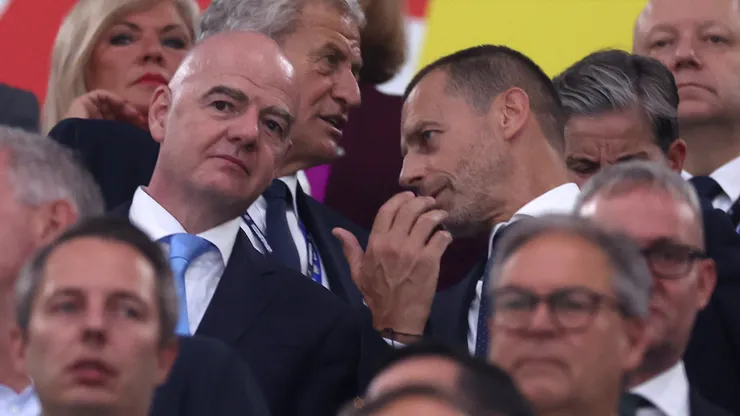
Gianni Infantino has once again found himself at the center of a major controversy after FIFA revealed its final stance on a plan that has provoked strong resistance, while UEFA openly declared it had lost confidence in the organization’s leadership. At the same time, the entire soccer landscape watched closely as tensions escalated between FIFA and several continental confederations over the future direction of the sport.
The dispute quickly became one of the biggest governance crises of Infantino’s presidency. Opposition spread far beyond Europe, with multiple confederations, soccer associations, and senior officials questioning both the proposal itself and the way it was introduced.
In fact, UEFA‘s 55 member associations had voted to boycott future FIFA competitions if the investment project continued. That warning represented one of the strongest challenges to FIFA’s authority in decades.
The backlash did not stop there, as CONCACAF also rejected the proposal, while the Asian Football Confederation (AFC) issued its own criticism and demanded greater consultation on major initiatives affecting global soccer. The AFC warned that soccer’s future must always be shaped collectively rather than through decisions that appear to have already been finalized before discussions take place.
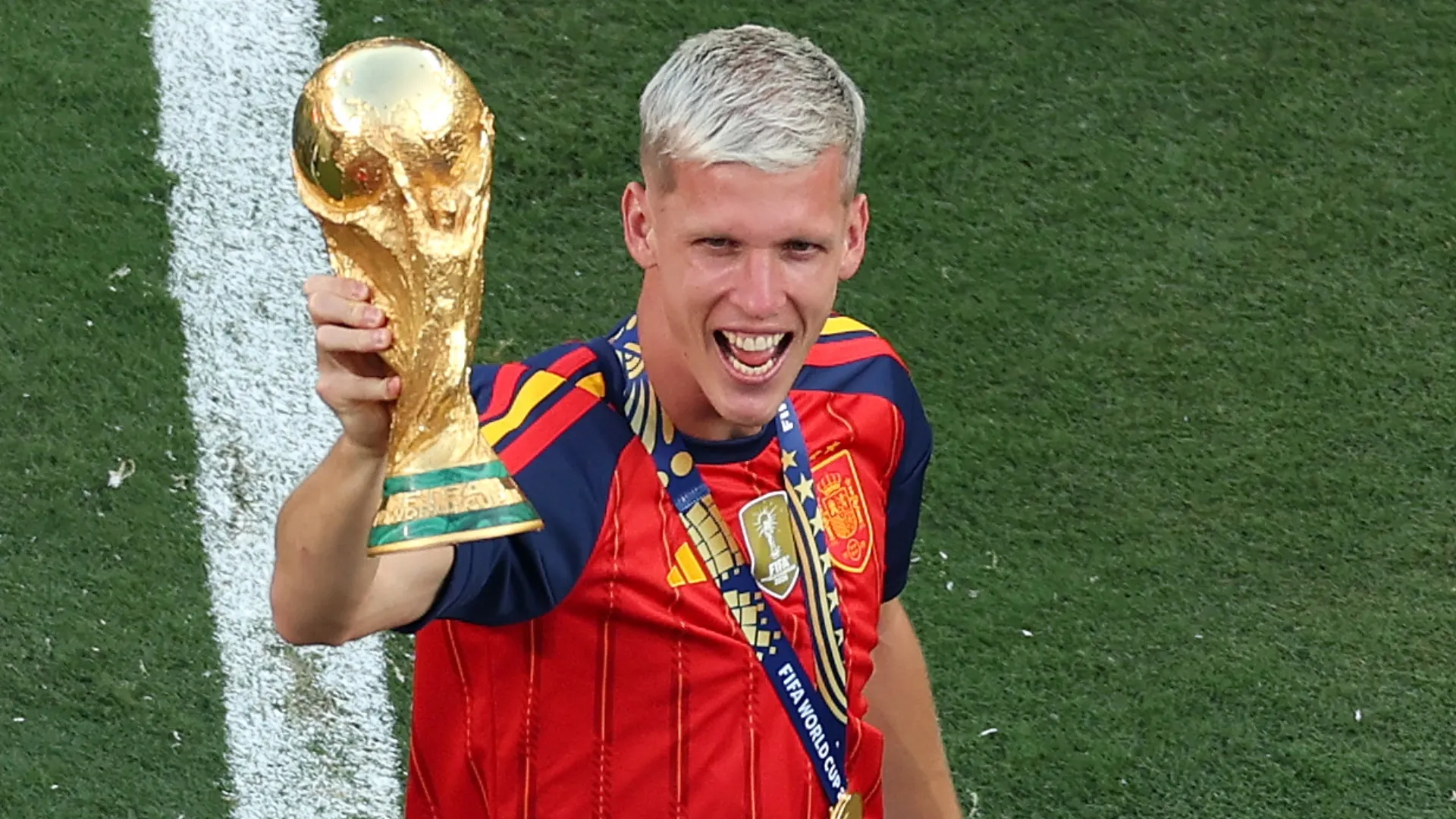
Dani Olmo #10 of Spain celebrates with the FIFA World Cup Winner’s Trophy.
The uncertainty ended when FIFA confirmed it would abandon its proposal to sell minority stakes in its flagship competitions, including the World Cup, to private investors. The project, known as FIFA Forward Enterprise (FFE), had been designed to place FIFA’s commercial and event operations into a new subsidiary reportedly valued at $20 billion.
Infantino explains FIFA’s decision
According to FIFA President Gianni Infantino: “Having listened carefully to all the views, it has become clear that the project has created divisions of a nature that, regardless of the level of support, are no longer in the interest of the objective set out in the first place.”
The governing body acknowledged that the proposal had become too divisive despite its original intention of generating additional resources for soccer development worldwide. Infantino insisted the proposal had never been intended to divide the sport and defended the project’s original purpose.
He stressed that FIFA believed the initiative could strengthen member associations, particularly those requiring greater financial support. Infantino added: “Our purpose has always been — and will always be — to unite and improve. As a result, this proposal will not proceed.”
He also promised renewed discussions with soccer stakeholders in the coming weeks: “Moving forward, my intent is to bring all interested parties back together in the coming days and weeks in the spirit of shared interest in our game, and with the objective to continue growing football everywhere, particularly in those countries that mostly need our support.”
UEFA launches blistering attack on FIFA leadership
While UEFA welcomed FIFA’s decision to withdraw the proposal, the European governing body made it clear that the controversy had caused lasting damage. UEFA stated: “The current FIFA leadership has not only lost UEFA’s confidence but also that of many other members of the football family.”
The organization accused FIFA of pursuing major structural changes without meaningful consultation and criticized the process behind the proposal. UEFA continued: “We cannot keep going on like this with secret schemes on fast track timescales, cooked up by faceless individuals and of dubious benefit to the game.” Its statement described the abandoned plan as lacking transparency and called for those responsible to be held accountable.