



Argentina’s first match since Lionel Messi’s retirement came with an unusual image off the pitch. For the friendly against Uruguay on Friday, La Bombonera, Boca Juniors’ stadium in Buenos Aires, did not have the atmosphere that is usually seen at national team games, in a night that ended with a 2-1 loss for the home side.
The reason was low demand for tickets, which led to the closure of several sections. Of the eight sections put on sale, some did not even open and the fans who had bought tickets were relocated, which made the lack of fans in the stadium evident.
The stands below the Uruguay supporters were not enabled, since the tickets for that area could not be sold, and part of the seats above the press area also remained closed.
As a result, the panoramic view of the stadium showed several gaps, something that had not been seen in Argentina matches for years. The contrast with Messi’s farewell is striking: on Oct. 6, more than 85,000 fans filled the Monumental to say goodbye to him against Benin, in a night that felt like a national celebration.
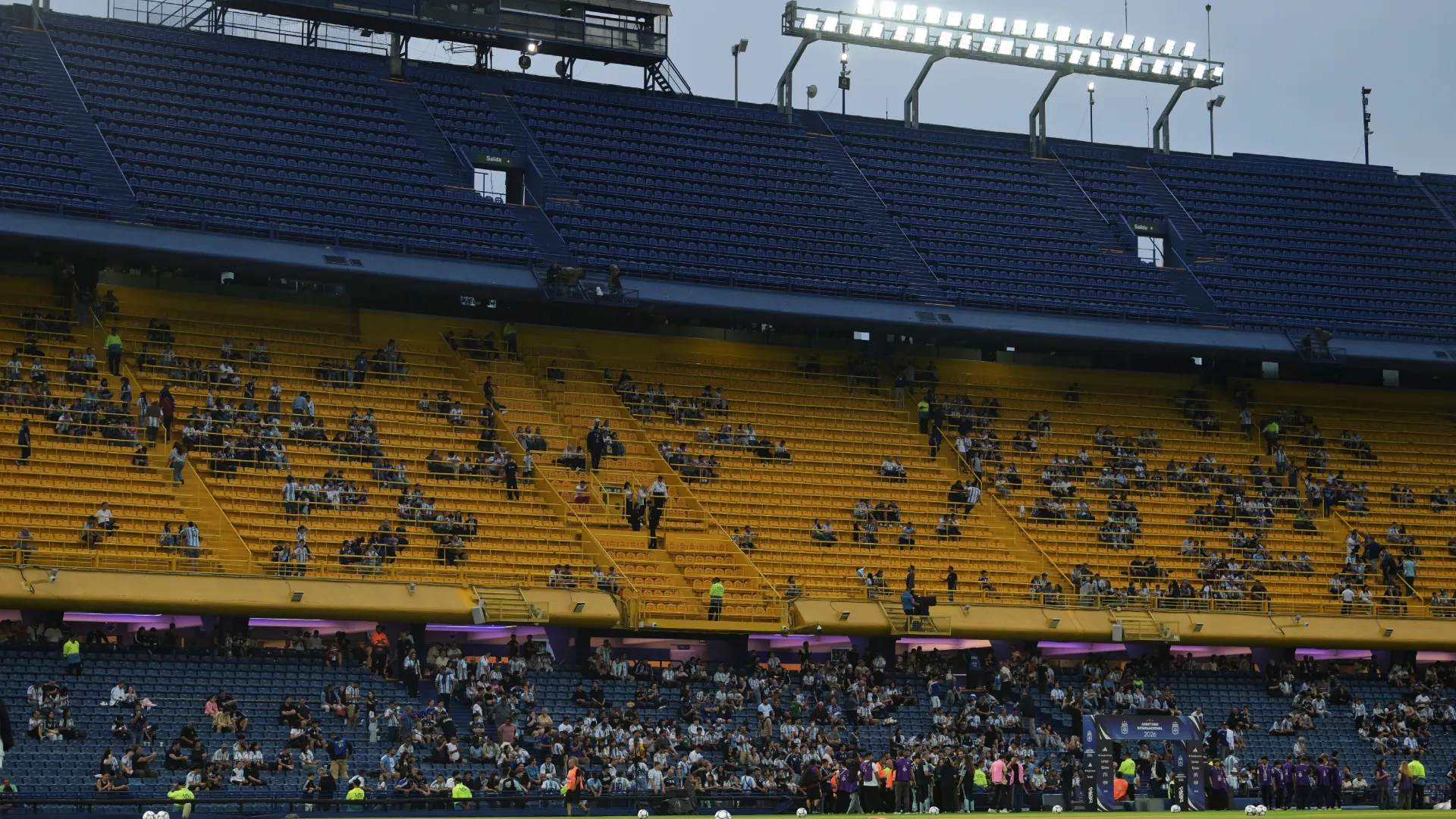
General view inside the stadium prior to the friendly between Argentina and Uruguay. (Getty Images)
The empty sections have nothing to do with the sanction that FIFA imposed on Argentina for discriminatory chants at the World Cup, which suggests that the lack of fans could be due to Messi’s absence from the pitch.
The punishment consisted of two home matches with 50% capacity, but only the first was served, against Bolivia on Sept. 30, while the second was suspended for a one-year probation period.

see also
Lionel Scaloni reveals decision on Lionel Messi’s No. 10 after renewing with Argentina
Mac Allister reacts to the lack of fans
Alexis Mac Allister was asked about the atmosphere in the mixed zone after the match, and the Liverpool midfielder first pointed to what the team can control. “We focus on what we can handle: that this team keeps growing, that we play good soccer, and that this attracts people to keep coming to the stadium,” he said.
Then he acknowledged the effect of Messi’s absence. “It’s normal for these things to happen when Leo is no longer here, because in the end he’s the best in the world and there were people who came to see him,” he added. Even so, he put the responsibility on the squad: “But, as I said, as a team we now have to take charge and play well and win so that people feel good and want to come see us”.
Argentina’s new era is only beginning, and the first result of it was a defeat on the pitch and a half-empty stadium. The challenge for Scaloni’s team is now to turn the post-Messi curiosity into new reasons for fans to return, something that will depend as much on results as on the identity this group manages to build.