
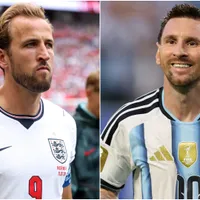



Lionel Messi, Lamine Yamal, and Kylian Mbappe are among the biggest names in contention for the 2026 Ballon d’Or, but the race will ultimately be decided by a framework that could have a major impact on each candidate’s hopes. With the ceremony approaching, the battle for the most prestigious individual prize in soccer is already taking shape.
The 70th Ballon d’Or ceremony will take place on October 26, 2026, at London’s Palladium Theatre, marking the first time the event has been held outside Paris since 2019. The judging period covers August 3, 2025, to July 19, 2026, meaning both the 2025-26 club season and the 2026 World Cup are part of the assessment.
The official 30-man shortlist was announced on September 8, with several players able to make a strong case for the award. Harry Kane enters the conversation after scoring 73 goals for club and country, while Yamal, Mbappe, Rodri, Ousmane Dembele and Messi all arrive with different achievements behind them.
Yamal is among the youngest candidates after another spectacular campaign with Barcelona and Spain, while Mbappe has established himself as one of the central figures of the race with Real Madrid and France. Messi, meanwhile, remains on the shortlist after another productive period with Inter Miami and an impressive run with Argentina at the World Cup.
The variety of candidates is what makes this year’s contest particularly intriguing. Some have outstanding individual numbers, others have collected major trophies, while several can point to both.
Ballon d’Or reveals what voters must consider
The mystery surrounding how those different cases will be compared becomes clearer when looking at the three official criteria used to determine the winner. As per France Football’s Ballon d’Or regulations, they are individual performance, collective achievements and titles, and class and fair play.
The first criterion focuses on what the player actually produced individually throughout the evaluation period. That includes consistency and decisive moments, with goals, assists, and other influential performances forming part of the broader assessment.

The Ballon D’Or trophy is seen
The second looks at team success, including trophies won with the club and national team. However, the player’s importance to those achievements also matters, meaning simply being part of a successful squad does not automatically settle the argument. The final criterion concerns fair play and behavior, taking into account a player’s attitude and conduct both on and off the pitch.
What the criteria mean for Messi, Yamal and Mbappe
Those rules create different paths for the leading candidates. Yamal can point to individual performances and major success with Spain and Barcelona, while Mbappe has his own case built around his production and international achievements with France.
Messi’s candidacy is similarly shaped by both his individual contribution and Argentina’s World Cup campaign. His presence on the shortlist at 39 years old also gives the 2026 race another historic dimension, although the award is decided on the defined judging period rather than career reputation.
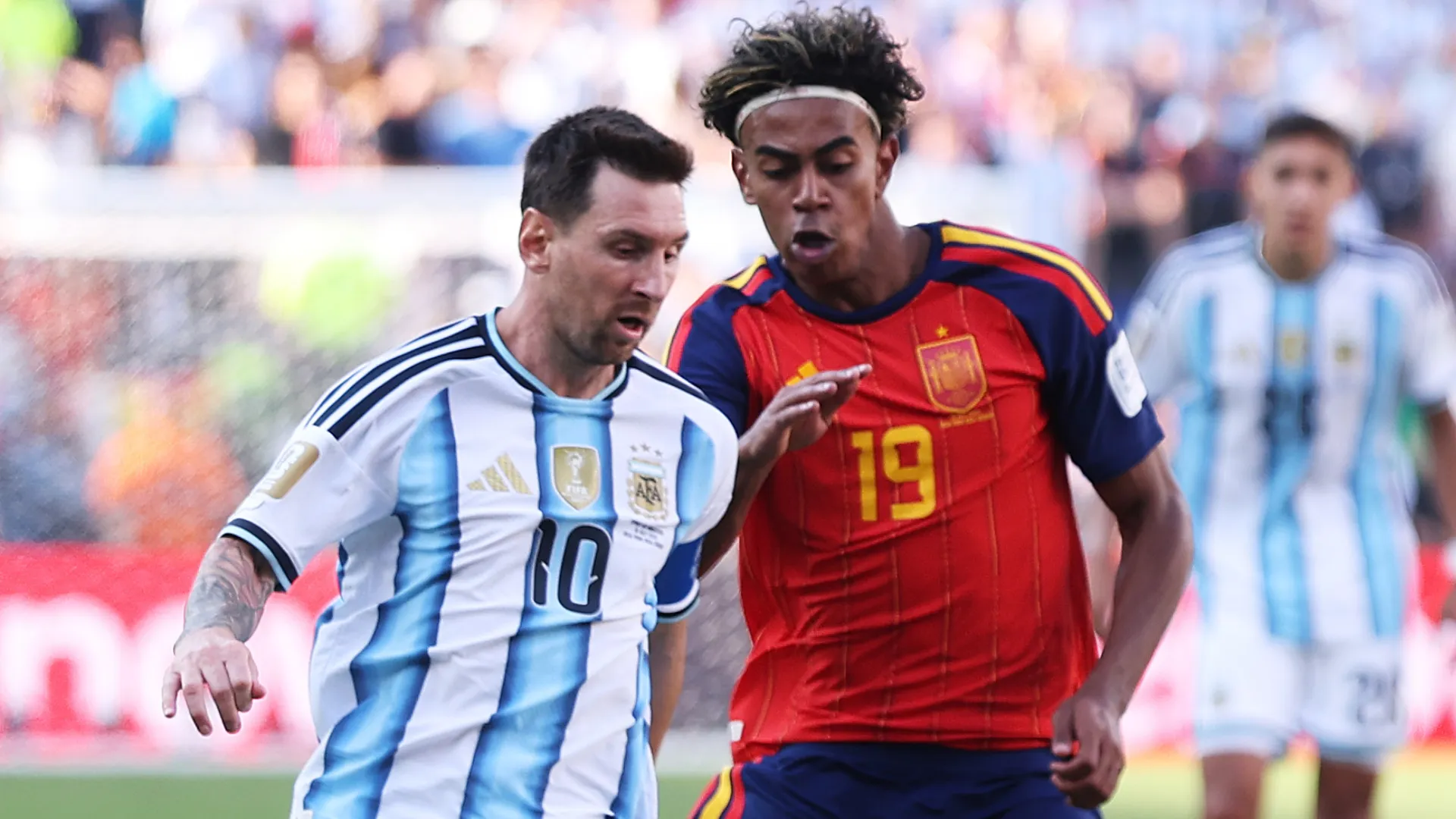
Lionel Messi #10 of Argentina controls the ball against Lamine Yamal #19 of Spain
Other contenders have their own combinations of strengths. Kane’s extraordinary goalscoring figures, Rodri’s midfield influence and World Cup Golden Ball, and Dembele’s achievements with Paris Saint-Germain demonstrate why the shortlist contains such varied profiles.
How the winner will actually be decided
The winner is chosen by 100 journalists representing the top 100 FIFA-ranked nations, with each voter selecting their top 10 players from the 30 nominees. The points system awards 15 points for first place, 12 for second, 10 for third, and continues down to one point for 10th place. Those points are then added together, with the player collecting the highest total crowned the winner.

A general view of the Ballon D’Or trophy
If two candidates finish level, the number of first-place votes is used as the initial tiebreaker, followed by second-place votes and so on if necessary. The voting deadline is September 28, leaving the final weeks for voters to assess the candidates against the established criteria. The result will finally be announced in London on October 26.