
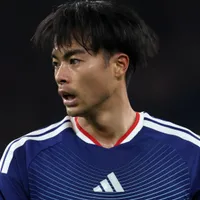



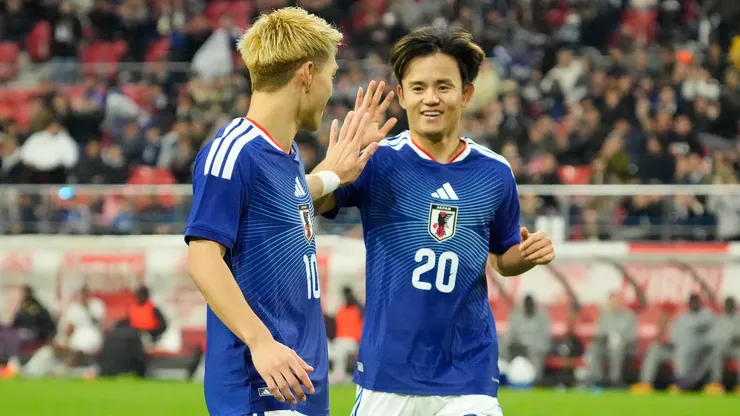
Japan enters the 2026 tournament as Asia’s premier soccer nation, carrying significant momentum and soaring expectations. Currently ranked 18th globally, the Samurai Blue are no longer viewed as a plucky underdog looking for an upset.
Following dominant performances in qualifying and recent statement victories over top-tier opponents like Brazil and England, this seasoned roster expects to dictate play against elite competition. Fans and analysts alike are eager to see if this iteration of the national team can finally break through to the quarterfinals.
This comprehensive World Cup 2026 team preview explores the squad’s tactical evolution under their veteran coach, the depth of their European-based roster, and their outlook for the upcoming group stage.
Team profile
| Coach | Hajime Moriyasu |
| Captain | Wataru Endo |
| Nickname | Samurai Blue |
| FIFA ranking | 18th |
| Confederation | AFC |
| Group | F |
| Best tournament result | Round of 16 (2002, 2010, 2018, 2022) |
| Tournament appearances | 7 |
| Last appearance | 2022 |
How Japan play
Japan’s tactical identity has evolved significantly, shifting away from slow possession spells toward a highly organized, intense pressing system. The Japan formation typically lines up as a 4-2-3-1, though the coaching staff frequently transitions to a fluid 3-4-3 mid-game to neutralize elite opponents.
This pragmatic approach relies heavily on fast transitions and disciplined low blocks when out of possession. The relentless work rates of forwards like Daizen Maeda allow the team to win the ball high up the pitch and launch immediate counter-attacks.
In possession, they utilize technical superiority to break down organized defenses, leaning on inverted wingers to cut inside and create scoring opportunities.
Defensively, the Samurai Blue are incredibly difficult to break down, evidenced by conceding just three times in 16 qualifying matches. While their technical ability helps them control games, a lack of aerial dominance remains a minor vulnerability against physical opponents. Ultimately, this intense, counter-attacking tactical approach makes them a formidable threat capable of making a deep run in the knockout rounds.
Hajime Moriyasu: The coach behind Japan
Hajime Moriyasu took charge in July 2018, establishing himself as the longest-serving Japan coach in the history of the national team. A former defensive midfielder who experienced the heartbreak of missing the 1994 tournament as a player, he has since built a remarkable resume on the touchline. Before leading the national side, he guided Sanfrecce Hiroshima to three domestic league titles.
Known for his calm, stoic demeanor and meticulous note-taking during matches, Moriyasu is a decisive leader willing to make bold tactical adjustments under pressure. His leadership was instrumental during the 2022 cycle, earning him the distinction of being the first manager to guide the Samurai Blue through consecutive tournament cycles.
His pragmatic philosophy and deep understanding of his roster will be crucial as he attempts to navigate the team into uncharted territory.
Key player: Ritsu Dōan
Eintracht Frankfurt’s Ritsu Dōan heads into the tournament as the creative focal point for the Samurai Blue. Now in his prime, the 27-year-old attacking midfielder has seamlessly transitioned into a leadership role following his breakout performances four years ago.
Operating primarily as an inverted right-winger, his elite dribbling, low center of gravity, and clinical finishing make him a constant threat in the final third.
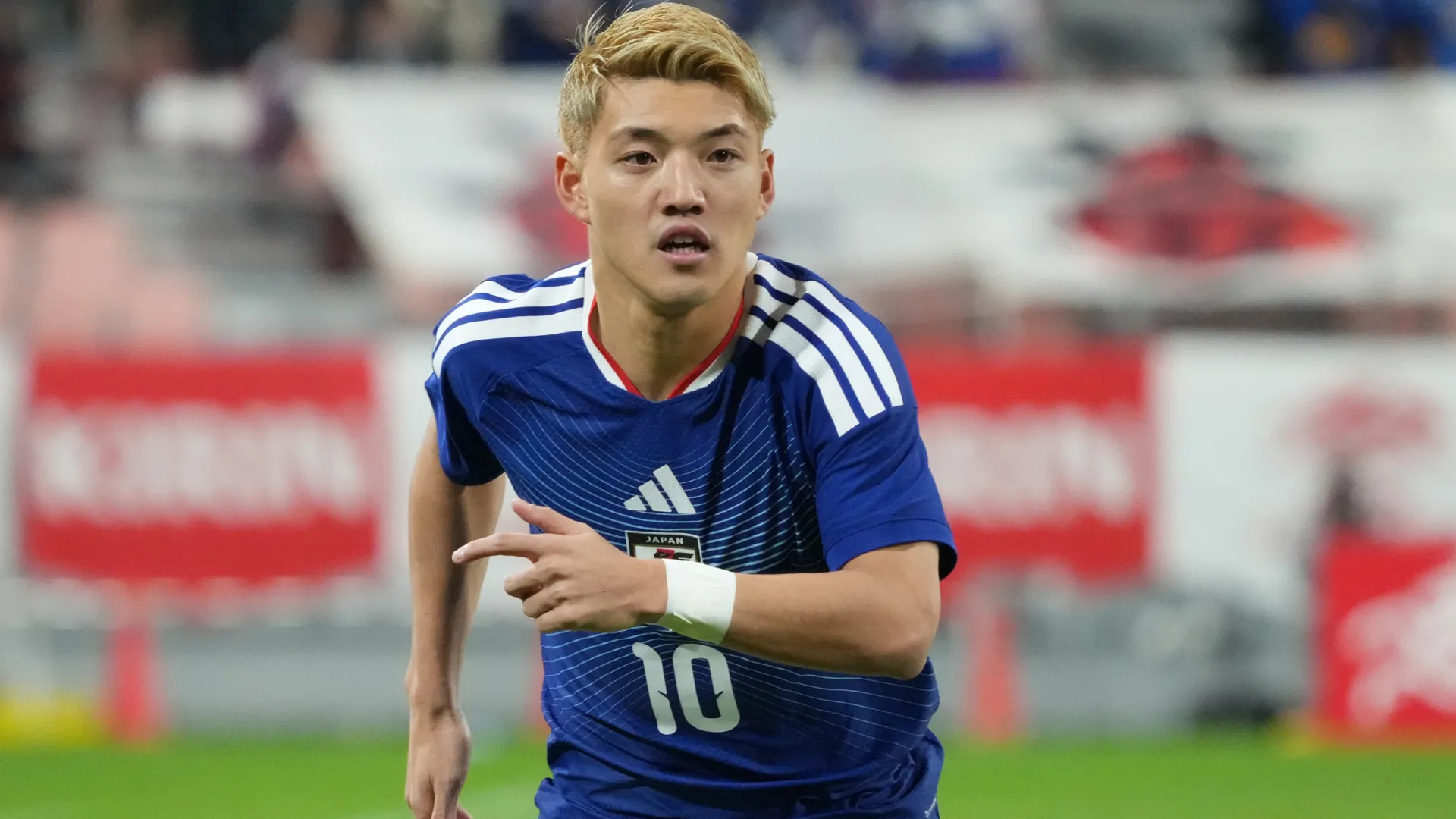
Ritsu Dōan of Japan (Getty Images).
Dōan registered double-digit goal contributions during the 2025/26 Bundesliga season, proving his ability to handle pressure at the highest level. He excels at retaining possession in congested areas and provides the creative flair necessary to unlock organized European defenses.
While his physical stature and aerial presence are limited, his technical brilliance is vital to the team’s attacking output.
Japan’s road to the 2026 tournament
The Samurai Blue delivered a masterclass during the AFC qualifiers, becoming the first Asian nation to mathematically secure their spot in North America. They dominated the competition, winning 13 of their 16 matches while scoring a staggering 54 goals and conceding just three.
In the second round, they achieved a flawless record with 24 goals scored and zero conceded against North Korea, Syria, and Myanmar. The third round presented a tougher challenge alongside Australia and Saudi Arabia, but they still finished top of their group with a +27 goal difference. This ruthless efficiency throughout qualification highlighted their readiness to compete against the world’s best.
Japan’s 2026 tournament group stage outlook
Drawn into a challenging but navigable group, the Samurai Blue will face the Netherlands, Sweden, and Tunisia in the opening stage. The Netherlands present the most difficult matchup and are the natural favorites to top the section, testing the Asian side’s defensive resilience.
Conversely, the fixture against Tunisia offers the most favorable opportunity to secure crucial points early on. Success in this group will hinge on their ability to break down Sweden’s organized defense, a task that will require immense creativity in the final third.
Given their recent track record against elite European opposition, advancing to the knockout rounds is a highly realistic expectation.
Readers looking to follow every match involving the Samurai Blue can also check our complete Japan TV schedule for the latest broadcast and streaming information.
Japan 2026 World Cup squad
| Player (Position) | Club |
|---|---|
| Zion Suzuki (GK) | Parma |
| Keisuke Ōsako (GK) | Sanfrecce Hiroshima |
| Tomoki Hayakawa (GK) | Kashima Antlers |
| Yūto Nagatomo (DF) | FC Tokyo |
| Ko Itakura (DF) | Ajax |
| Yukinari Sugawara (DF) | Werder Bremen |
| Shōgo Taniguchi (DF) | Sint-Truiden |
| Ayumu Seko (DF) | Le Havre |
| Tsuyoshi Watanabe (DF) | Feyenoord |
| Hiroki Ito (DF) | Bayern Munich |
| Junnosuke Suzuki (DF) | Copenhagen |
| Takehiro Tomiyasu (DF) | Ajax |
| Shūto Machino (MF) | Borussia Mönchengladbach |
| Ritsu Dōan (MF) | Eintracht Frankfurt |
| Keito Nakamura (MF) | Reims |
| Junya Itō (MF) | Genk |
| Daichi Kamada (MF) | Crystal Palace |
| Ao Tanaka (MF) | Leeds United |
| Kaishu Sano (MF) | Mainz |
| Takefusa Kubo (MF) | Real Sociedad |
| Yuito Suzuki (FW) | SC Freiburg |
| Daizen Maeda (FW) | Celtic |
| Ayase Ueda (FW) | Feyenoord |
| Kōki Ogawa (FW) | NEC Nijmegen |
| Kento Shiogai (FW) | VfL Wolfsburg |
| Keisuke Gotō (FW) | Sint-Truiden |
Final word on Japan
The Samurai Blue arrive in North America possessing the technical quality and tactical discipline required to challenge any opponent. Their deep roster of European-based talent provides a massive advantage, allowing them to execute a high-intensity pressing game with precision.
However, overcoming the physical dominance of certain European sides remains a hurdle they must navigate carefully. With expectations higher than ever among the FIFA World Cup 2026 teams, anything less than a historic run to the quarterfinals will be viewed as a missed opportunity for this golden generation.