


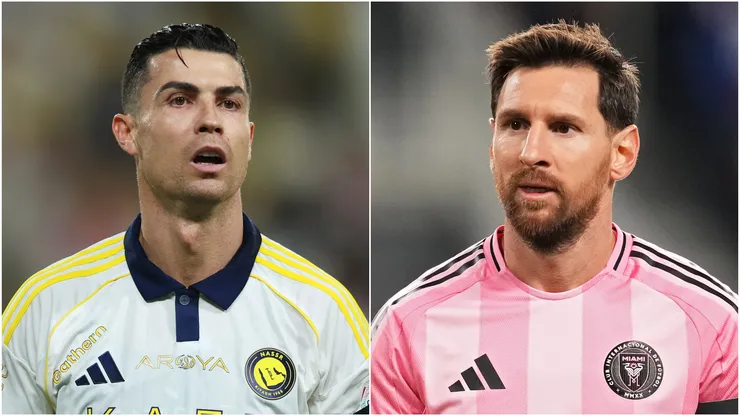
Lionel Messi has added another extraordinary chapter to his career, reaching a landmark that puts him ahead of Cristiano Ronaldo in one of the most remarkable statistical races soccer has ever seen. The Argentine superstar has once again shown that even at this stage of his career, he can continue rewriting records while producing numbers that separate him from almost every player who has come before him.
The latest achievement came during another memorable night for Inter Miami, where Messi produced the kind of performance that has become synonymous with his career. What makes the milestone particularly striking, however, is the speed at which he reached it and the age at which he achieved something that has taken Ronaldo considerably longer to accomplish.
Messi makes history in Miami
Messi reached the landmark on August 5, 2026, scoring twice as Inter Miami defeated Atletico de San Luis 4-2 in the Leagues Cup. The brace gave the Argentine another two goals to add to an already extraordinary career total and pushed him into a statistical category that had previously belonged to no one.
Messi became the fastest player in soccer history to score 920 official senior career goals, reaching the figure in only 1,166 matches. That number becomes even more impressive when compared with Ronaldo’s path to the same milestone.
Cristiano Ronaldo needed 1,259 matches to reach 920 goals, meaning Messi arrived at the same figure 93 games faster than his longtime rival. The comparison offers another fascinating twist to a rivalry that has dominated soccer statistics and individual awards for more than a decade.
The achievement also highlights the different ways the two superstars have built their enormous scoring records. Ronaldo has maintained an extraordinary longevity and currently leads the overall official career scoring charts, but Messi has consistently produced a superior scoring rate during the matches used for this comparison.
The stats that separate Messi and Ronaldo
The headline figure is impressive enough, but the circumstances surrounding it make Messi’s achievement even more remarkable. He reached 920 official senior goals at 39 years and 42 days old, becoming the youngest player ever to reach that number, as well as the fastest.
Ronaldo reached the same 920-goal mark at 39 years and 356 days, meaning Messi achieved the milestone more than 10 months earlier in terms of age. The distinction adds another layer to a rivalry that has repeatedly produced debates over goals, assists, efficiency and longevity.
The numbers also demonstrate how efficiently Messi has scored throughout his career. With 921 goals in 1,166 matches, he is averaging roughly 0.79 goals per game, while Ronaldo’s figures in the same comparison stand at 835 goals in 1,166 appearances, or around 0.72 goals per match.
That efficiency has been one of the defining characteristics of Messi’s career. His ability to score at an extraordinary rate while simultaneously creating chances for teammates makes his statistical profile unusually complete for a player who has spent so much of his career operating as an attacker and playmaker.
Messi’s goal total keeps climbing
Messi’s current total has moved beyond the 920 mark following his latest performances, with the supplied figures putting him at 921 official senior career goals. Ronaldo, meanwhile, remains comfortably ahead in the overall career scoring race and continues to chase the unprecedented 1,000-goal barrier.
The current numbers show Ronaldo with 976 career goals in 1,330 matches, compared with Messi’s 921 in 1,166 appearances. Ronaldo therefore retains an overall advantage of 55 goals, meaning the race between the two icons remains far from settled despite Messi’s historic advantage in reaching the 920 milestone.
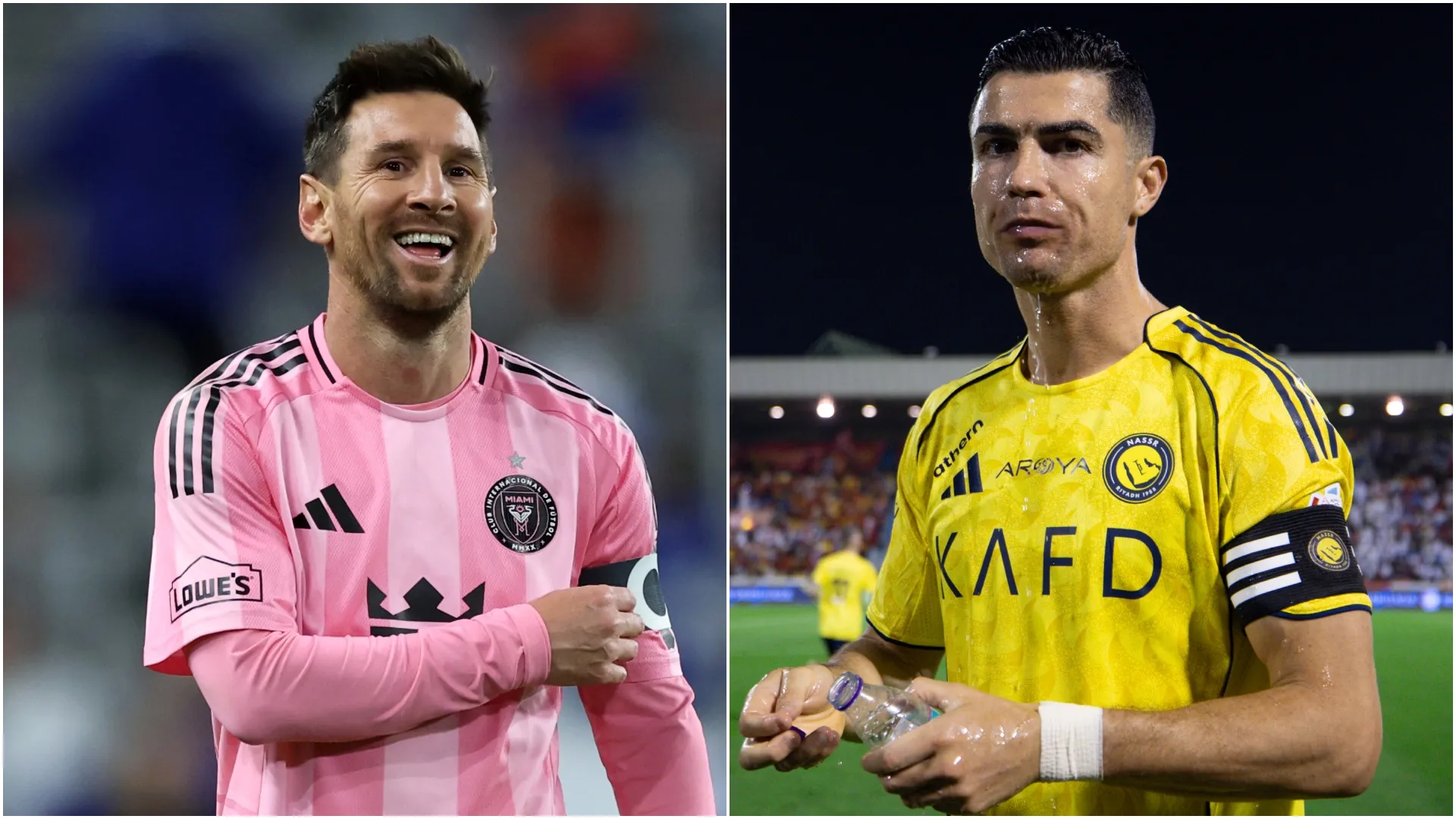
Inter Miami’s Lionel Messi and Al Nassr’s Cristiano Ronaldo.
That distinction is important because the fastest-to-920 record does not mean Messi has overtaken Ronaldo as the all-time leading scorer. Ronaldo still owns the higher overall goal tally, while Messi has reached the same major milestone more efficiently and in fewer appearances.
The possibility of both players reaching 1,000 career goals continues to provide another fascinating storyline late in their careers. Ronaldo remains closer to that figure because of his overall scoring lead, while Messi’s superior efficiency means every additional appearance carries the potential for another statistical milestone.