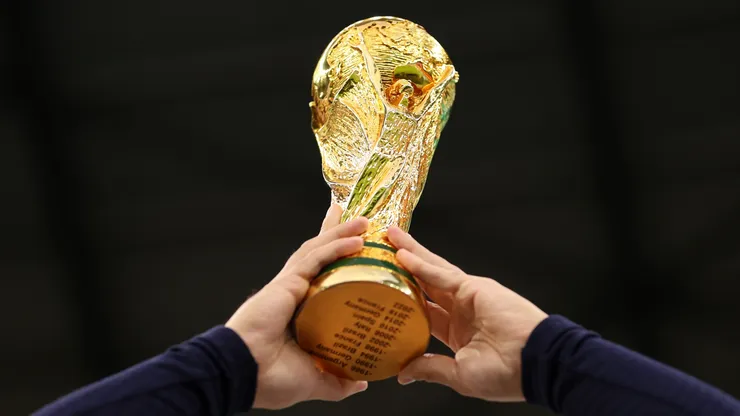
The 2026 World Cup will be the largest edition in the tournament’s history, but it will also serve as the stage for several new rule changes in global soccer. Adjustments are still being finalized with less than seven months until kickoff, and one of FIFA’s most recent announcements directly targets concerns raised during the 2025 Club World Cup.
The United States has hosted multiple major soccer events, including the 2024 Copa América and the 2025 Club World Cup, all with the aim of preparing for the 2026 World Cup. One of the main worries ahead of the tournament, which kicks off in June of next year, is the extreme heat players will face, a concern that also surfaced during the Club World Cup. Now, FIFA has taken steps to address the issue.
FIFA announced Sunday that the 2026 World Cup will feature a three-minute pause in the middle of each half for a designated “hydration break.” While cooling breaks have been used in recent years, this marks the first time a specific timeline and duration will be formally established, giving players a structured window to recover and fans clearer expectations for when play will resume.
With matches now effectively split into quarters (featuring a 15-minute halftime break and short stoppages around the 22nd and 67th minutes) the measure aims to protect player health and safety during a tournament held at the peak of summer. Coaches will also be allowed to communicate with players during these pauses, creating opportunities for tactical adjustments.

Heat, a major concern during Club World Cup
To suit global audiences, several matches in the 2025 Club World Cup, especially those involving European teams, were scheduled for midday in the United States. While convenient for fans watching from across the Atlantic, the heat created serious concerns among players who struggled to cope with the high temperatures.
One of them was Chelsea’s Enzo Fernández, who required medical attention for heat exhaustion during the match against Fluminense. Before the final, the midfielder voiced his frustration: “The heat is incredible. The other day I got a bit dizzy during a play and had to go down to the ground. Playing in this kind of temperature is very dangerous… Hopefully next year they change the schedule at least, so that it’s more of a show, and football stays beautiful and exciting.”
FIFA president Gianni Infantino later addressed the issue directly during a media briefing in New York: “Every criticism we receive is a source for us to study and analyze what can do better. Of course the heat is an issue. Last year, at the Olympic Games in Paris, games during the day, in all sports, took place in very hot conditions. Cooling breaks are very important and we will see what we can do, but we have stadiums with roofs and we will definitely use these stadiums during the day next year.”
With the World Cup spread across three countries, venue conditions will vary, and not all stadiums can guarantee relief from extreme heat. Now, FIFA has taken a major step by formally defining the timing, duration, and purpose of in-match cooling breaks for the first time.
200+ Channels & Local Sports
- Price: Plans starting at $14.99/mo (Latino)
- Watch Ligue 1, Copa Libertadores & World Cup Qualifiers
Every MLS Match in One Place
- Price: $12.99/mo (Now included with standard subscription)
- Watch every MLS regular season game, Playoffs & Leagues Cup
Many Sports & ESPN Originals
- Price: $11.99/mo (or ESPN Unlimited for $29.99/mo)
- Features LaLiga, FA Cup & NWSL
2,000+ Soccer Games Per Year
- Price: Starting at $8.99/mo
- Features Champions League, Serie A & Europa League
Home of the Premier League
- Price: Starting at $10.99/mo
- 175+ Exclusive EPL matches per season