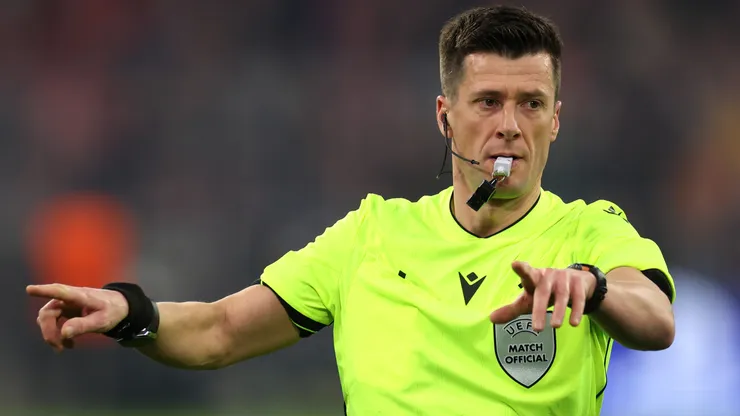
The 2026 World Cup is gearing up to be a historic event. It marks the first time the tournament will be co-hosted by three different nations—the United States, Mexico, and Canada—while debuting a massive 48-team expansion format. To match this grand scale, FIFA aims to make a generational leap in officiating technology, elevating the Video Assistant Referee (VAR) interface to a whole new level for television viewers.
FIFA has officially partnered with Lenovo, naming the tech giant the Official Technology Partner of the FIFA World Cup 2026. The company is actively developing several major visual upgrades for the North American showcase, with its main innovations directly impacting the VAR ecosystem.
The centerpiece of this collaboration is the integration of advanced, generative AI-enabled 3D avatars built from the real physical likenesses of the players. With these 3D models, semi-automated offside VAR replays will showcase the actual digital twins of the players involved, completely replacing the generic, computerized mannequins used in previous tournaments.
Additionally, Lenovo will infuse AI technology into the referees’ body cameras, optimizing their operating systems to ensure stability. The technology partnership also extends into the fan experience, designing immersive tools for live match broadcasts and interactive city-guided applications for traveling supporters.

“We believe the upcoming 2026 World Cup will be the event with the deepest AI integration in sports history,” explained Lenovo Chairman and CEO Yuanqing Yang. “We are going to see AI integrated into the fabric of the sport, focused on the most famous players, and we will also see the referee’s camera in action, which will be incredibly engaging for the viewing public”.
The 13 rule changes set for the 2026 World Cup
Beyond the broadcast upgrades, the International Football Association Board (IFAB) has approved 13 comprehensive regulation adjustments scheduled to debut at the tournament. These updates focus heavily on increasing the pace of play, expanding VAR protocols, and refining the game’s foundational laws.
Pace of play initiatives
- Throw-in countdown: Players will face a strict five-second countdown to take a throw-in. Exceeding the limit results in the throw-in being awarded to the opposing team.
- Goal kick delays: Goalkeepers will have a maximum of five seconds to execute a goal kick. Unjustified delays will penalize the team by awarding a corner kick to the opponent.
- Timed substitutions: Substituted players must completely exit the pitch within 10 seconds. Failure to do so forces the incoming player to wait on the sideline for one full minute of active play before being allowed onto the field.
- On-field medical treatment: If a player receives medical evaluation or treatment on the pitch, they must leave the field and remain on the sideline for exactly one minute (with the game clock running) after play has resumed.
VAR protocol adjustments
- Second yellow cards: VAR is now authorized to intervene in red-card situations that result from a clearly incorrect or erroneous second yellow card.
- Mistaken identity: Video officials can directly correct the head referee if a yellow or red card is accidentally shown to the wrong player.
- Corner kick reviews: VAR can alert the referee if a corner kick was clearly and wrongly awarded, provided the review is immediate and does not disrupt the flow of play.
Modifications to the Laws of the Game
- Law 3 (The players): Teams will be permitted up to eight substitutions in senior ‘A’ international friendly matches, with the option to extend that number to 11 if both nations reach a mutual agreement prior to kickoff.
- Law 4 (The players’ equipment): The use of non-dangerous protection gear or apparel is permitted, provided it is properly covered.
- Law 5 (The referee): Referees are officially cleared to wear body cameras (bodycams), subject to the approval of the individual tournament competition.
- Law 8 (The start and restart of play): During a dropped-ball scenario, the ball will be deemed automatically lost for the team that would have otherwise maintained or won possession had play not been halted.
- Laws 10 and 14 (Determining the outcome of a match & the penalty kick): Official clarification has been added to outline the exact protocol if a penalty taker accidentally double-touches the ball during a run-up.
- Law 12 (Fouls and misconduct): If the referee applies the advantage during a “Denial of an Obvious Goal-Scoring Opportunity” (DOGSO) and the phase of play ends in a goal, the offending defender will no longer receive a yellow card, as the foul did not ultimately prevent the goal.
200+ Channels & Local Sports
- Price: Plans starting at $14.99/mo (Latino)
- Watch Ligue 1, Copa Libertadores & World Cup Qualifiers
Every MLS Match in One Place
- Price: $12.99/mo (Now included with standard subscription)
- Watch every MLS regular season game, Playoffs & Leagues Cup
Many Sports & ESPN Originals
- Price: $11.99/mo (or ESPN Unlimited for $29.99/mo)
- Features LaLiga, FA Cup & NWSL
2,000+ Soccer Games Per Year
- Price: Starting at $8.99/mo
- Features Champions League, Serie A & Europa League
Home of the Premier League
- Price: Starting at $10.99/mo
- 175+ Exclusive EPL matches per season